

The first part covered the notable macros I found on the trip, now let’s turn to the little guys. These actually contained many of the more interesting finds.
Lots to cover, hoo boy. Here goes.
* = lifer
** = new for BC on iNat
Cydia fletcherana * **
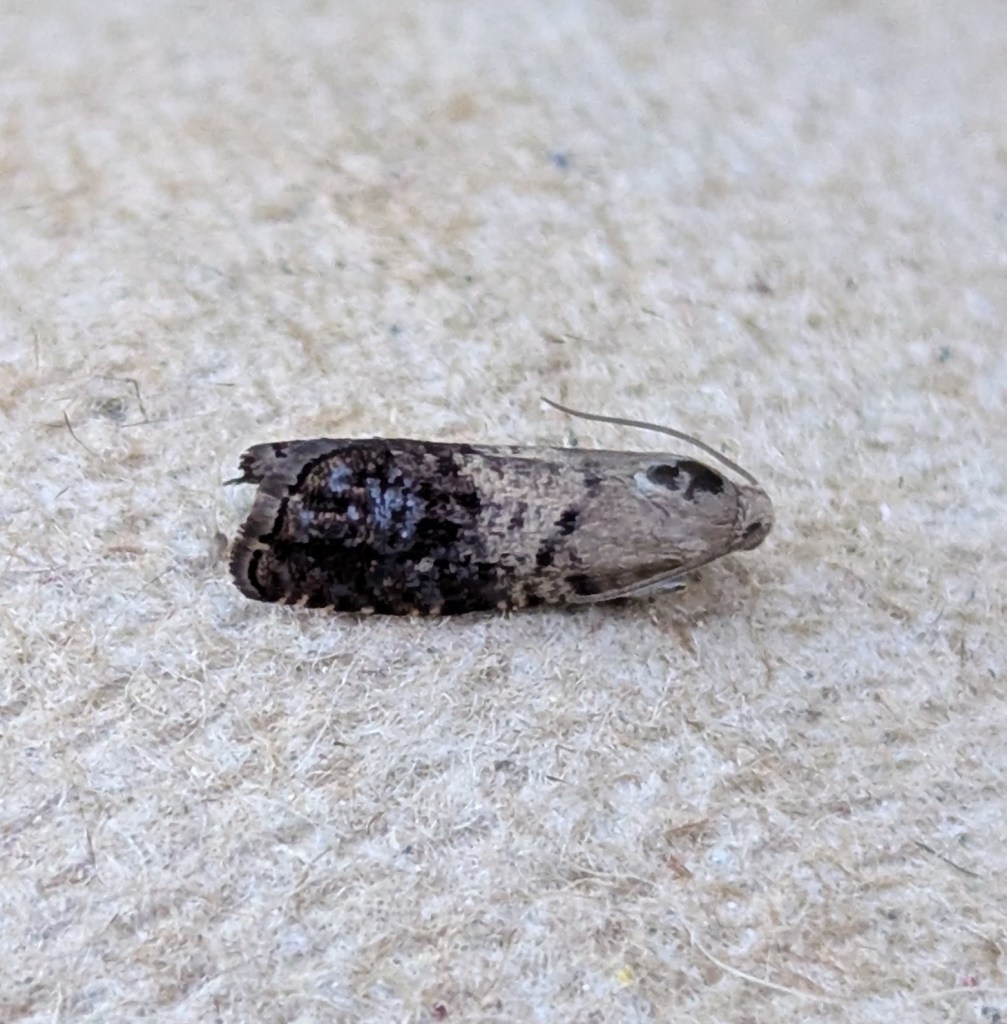
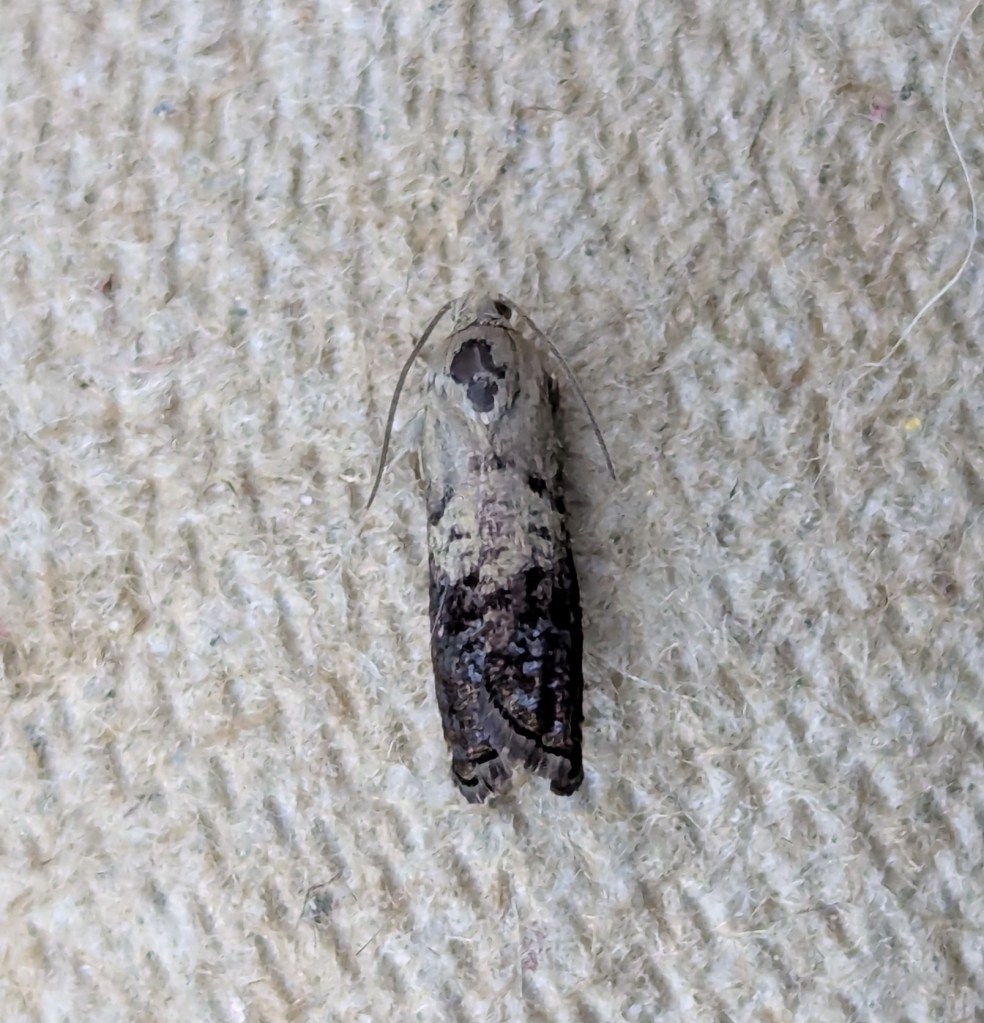
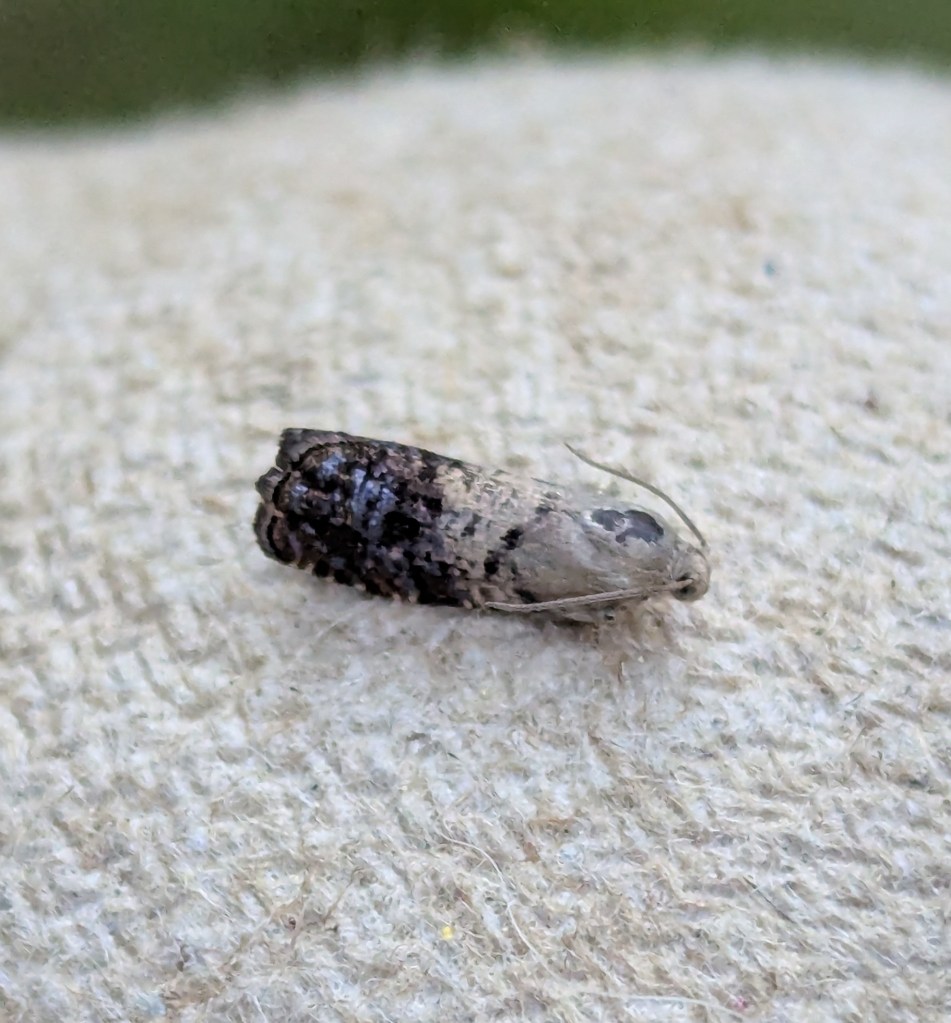
Let’s start with this fella. Brilliant. I saw a single individual, found in a trap I set up at my airbnb location just 8 minutes south of Golden in a town called Nicholson. I wasn’t able to set up traps there very often – the light would have offended the other guests, and there were guests virtually every night. A distinctive moth with a dark dorsal semicircle shaped marking. I had the ID confirmed on iNat by Jason Dombroski, an expert in Tortricids.
Dave Holden pointed out there are 2 records on BOLD from 2014 for this species, but nothing beyond that. This should be an excellent candidate to add to the BC Checklist.
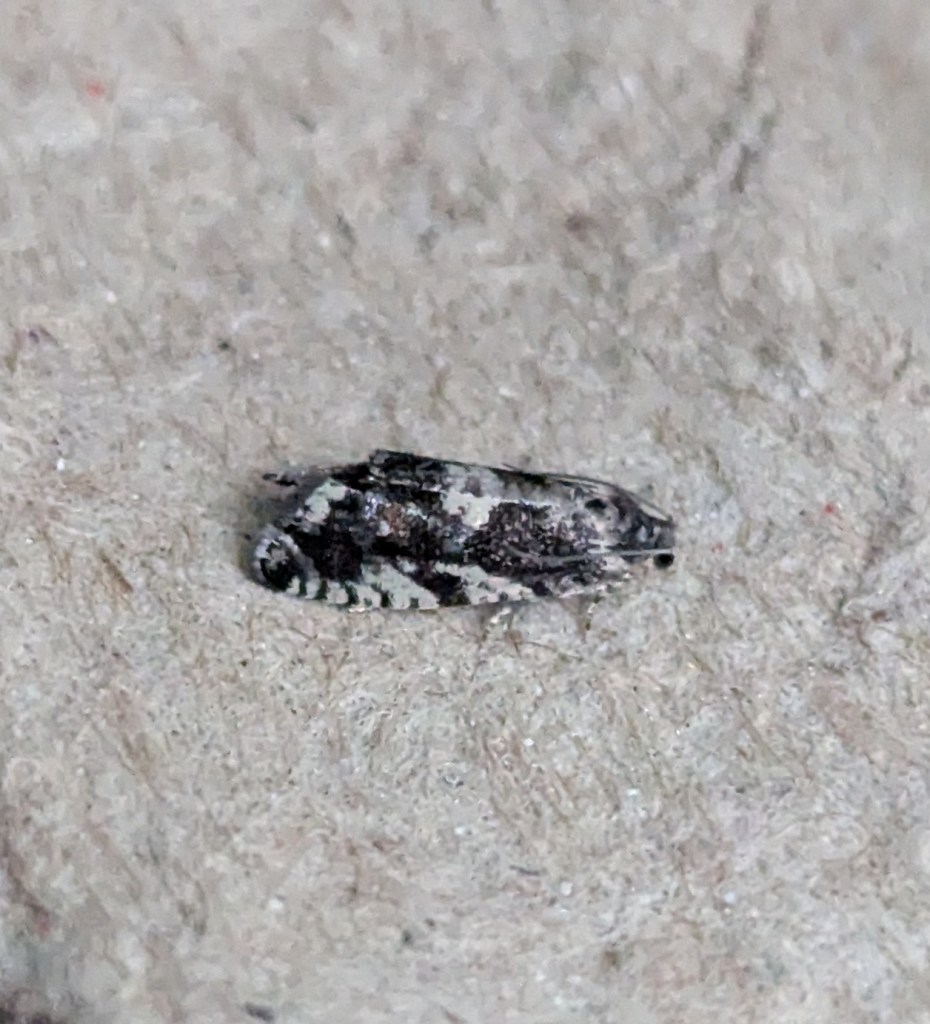
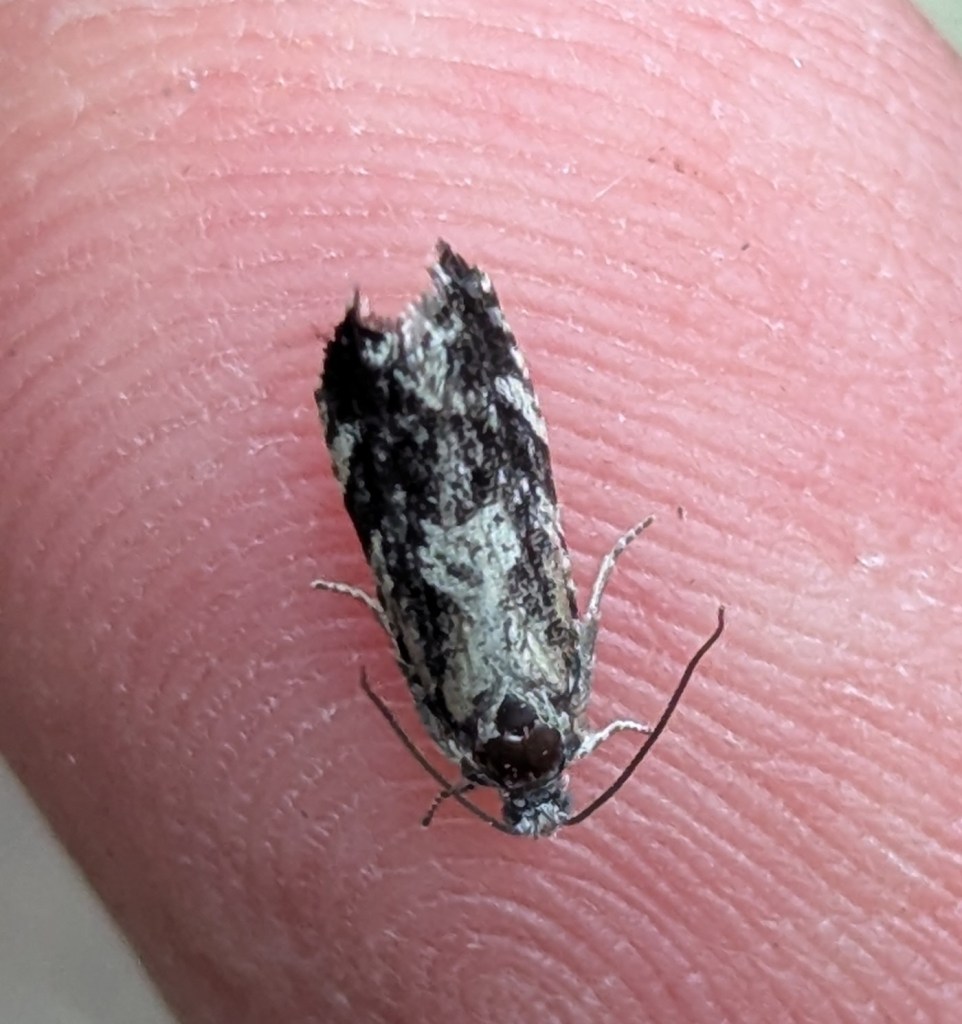
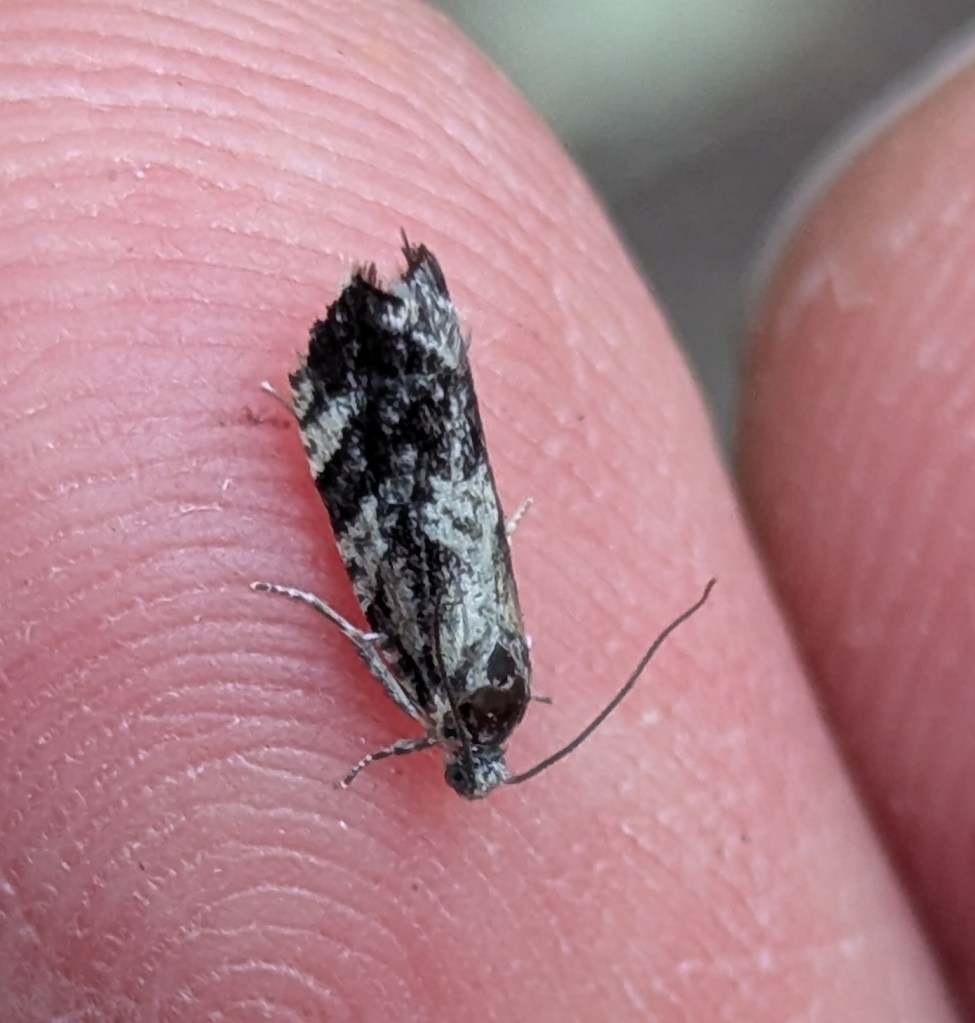
A second Cydia. It was odd, I must have remembered this from browsing iNat or bugguide, because I recognized it right away. I was quite surprised to find out it was a lifer. Neat monochromatic, stocky little fellow.
Eido trimaculella (Three-spotted concealer) *
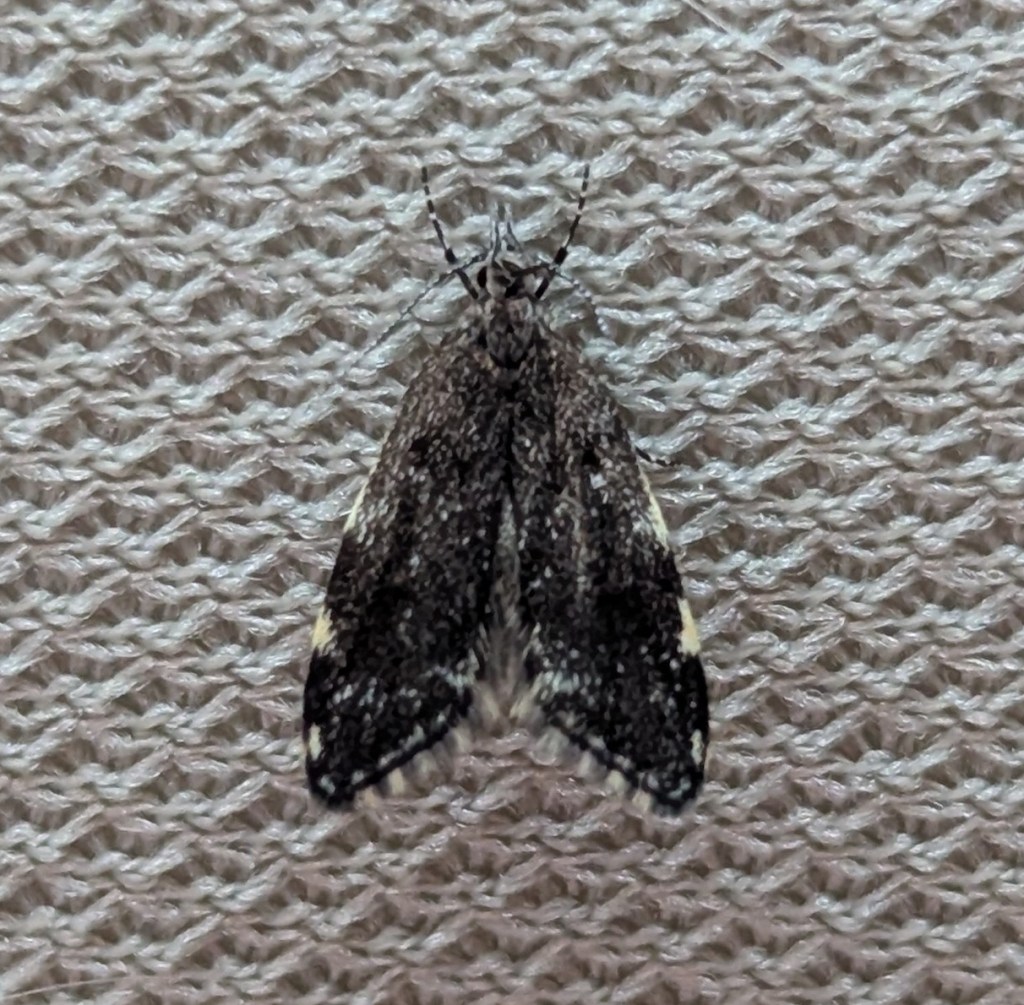
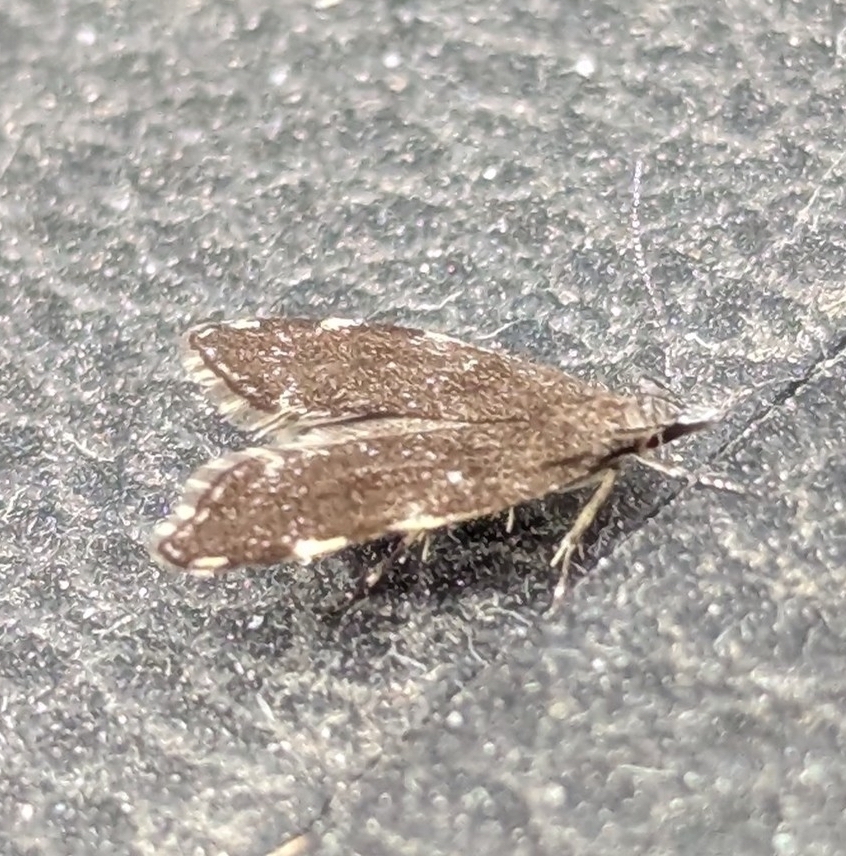
One morning I’d finished emptying the nets and was driving into town to pick up some coffee cream before I started my day of work, when I saw this flying around the car while I drove. I didn’t recognize it, so I stopped to photograph. Lifer.
Eupithecia assimilata (Currant pug) *
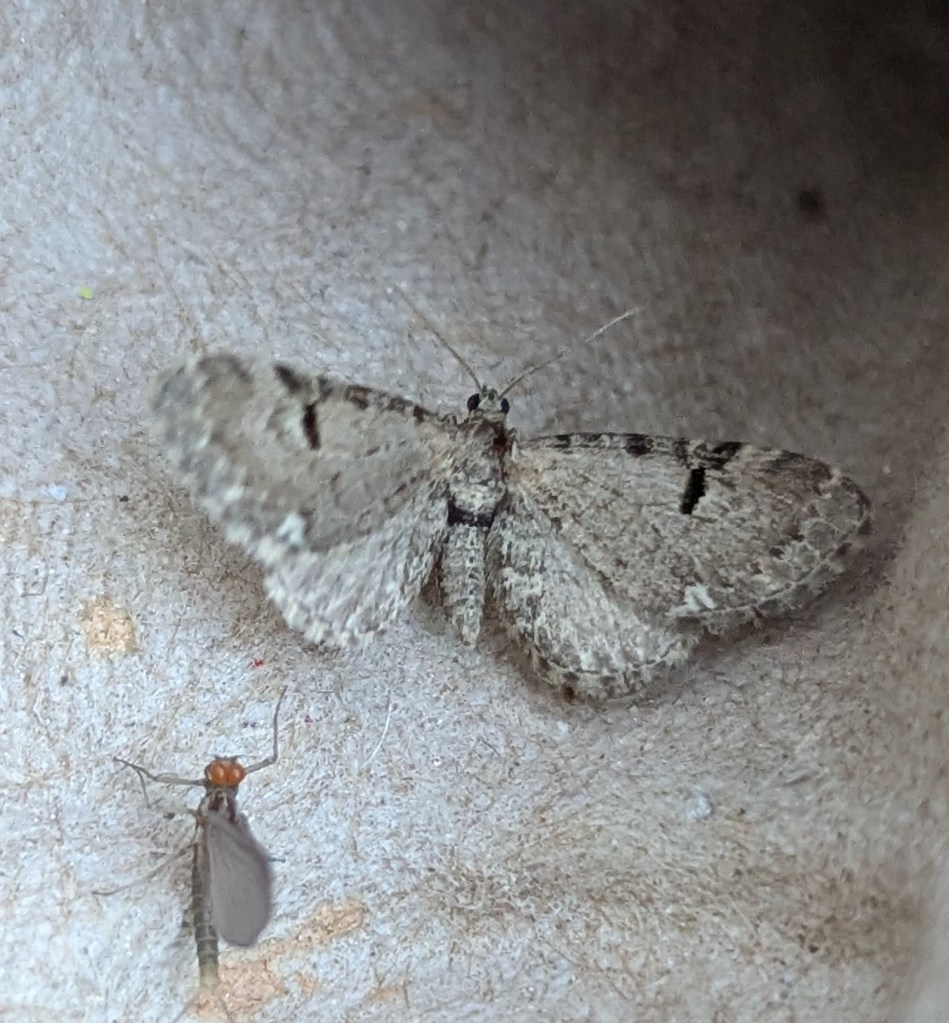
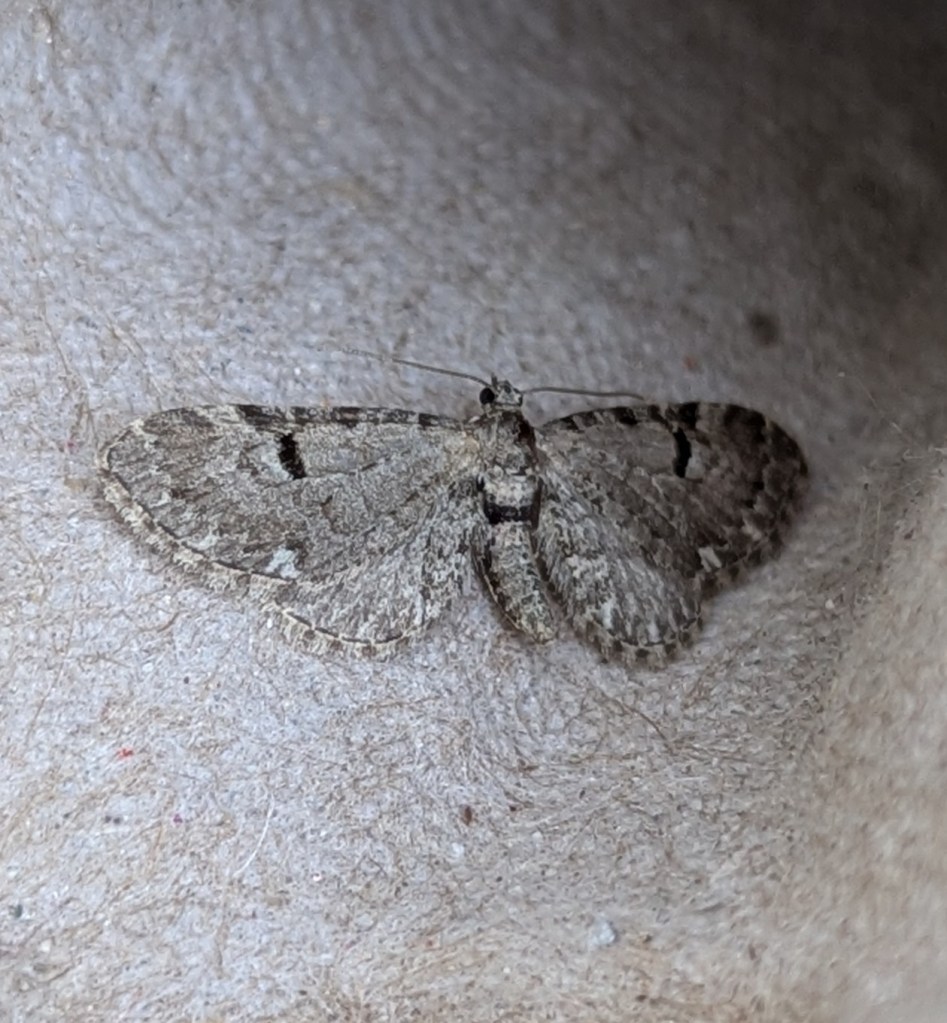
I’ve done well on Eupithecia this year. This must be my fourth or fifth lifer from that genus. But in all honesty, it’s partly thanks to devoting more time to figuring them out, and partly thanks to iNat’s ever-improving image recognition algorithm. I could still be mistaken on this ID of course, but the strong markings along the costa, the overall grey colouration, the thick black dashes on the wings, the white mark beneath them and the black band on the abdomen – all looked spot on to me.
Olethreutes astrologana (Astronomer moth) * **
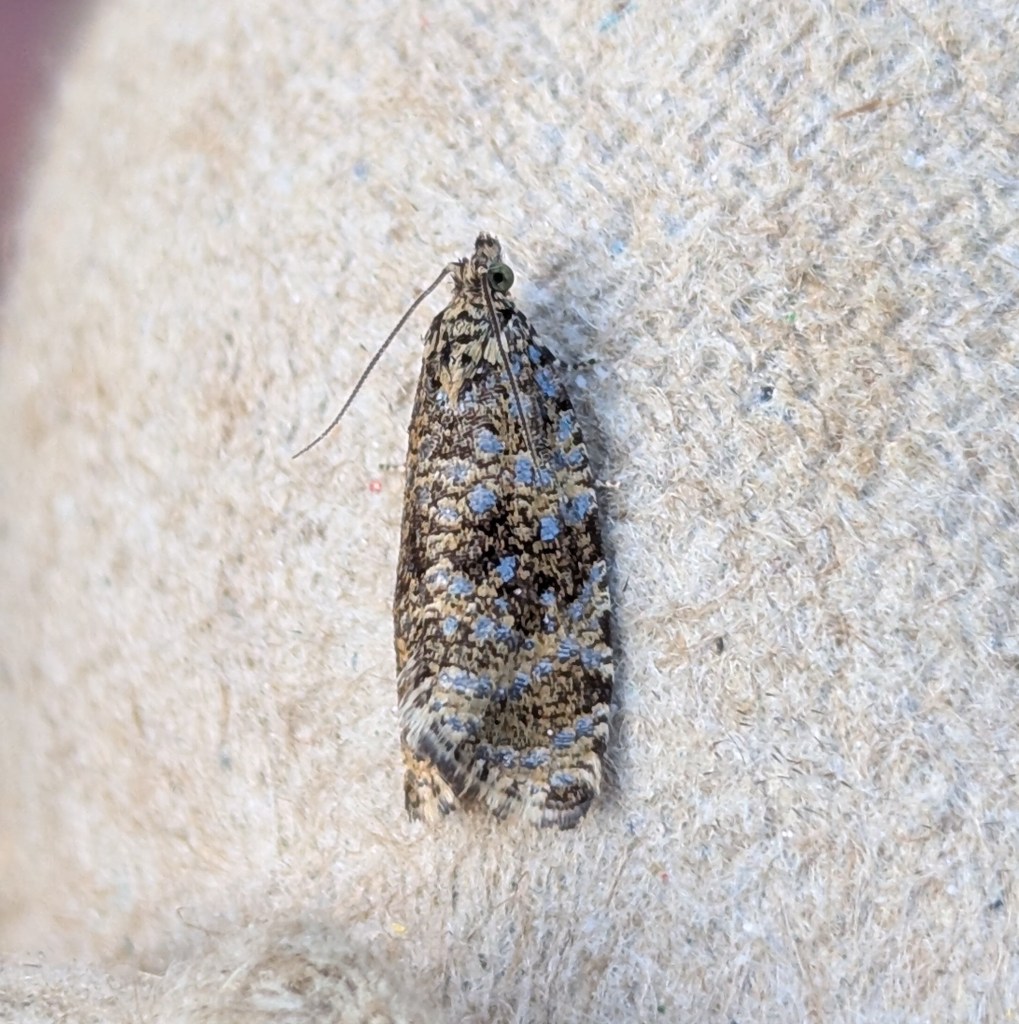
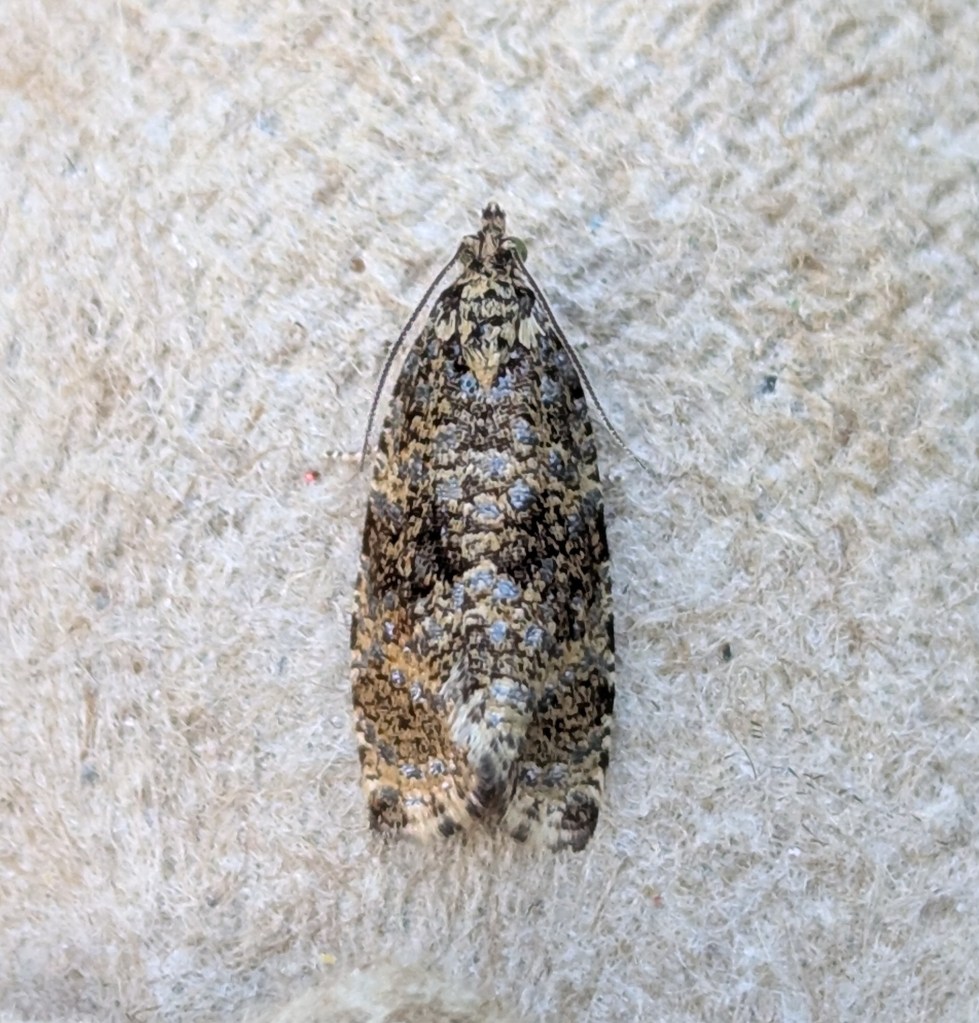
A definite highlight. I actually saw this species twice, but the second time I was so desperate for my morning coffee, I hadn’t the wit to prevent it flying off. A well-named moth: very starry-skied indeed.
Sparganothis xanthoides (Mosaic Sparganothis moth) *
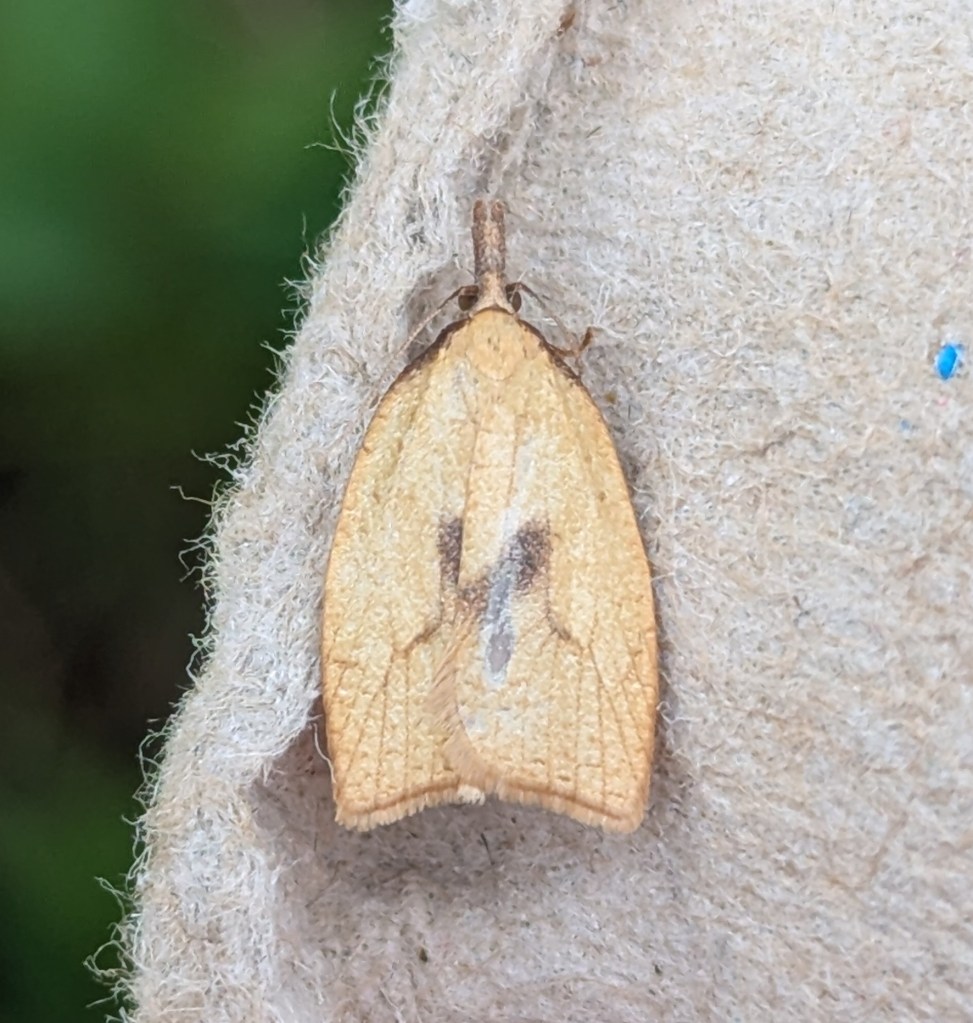
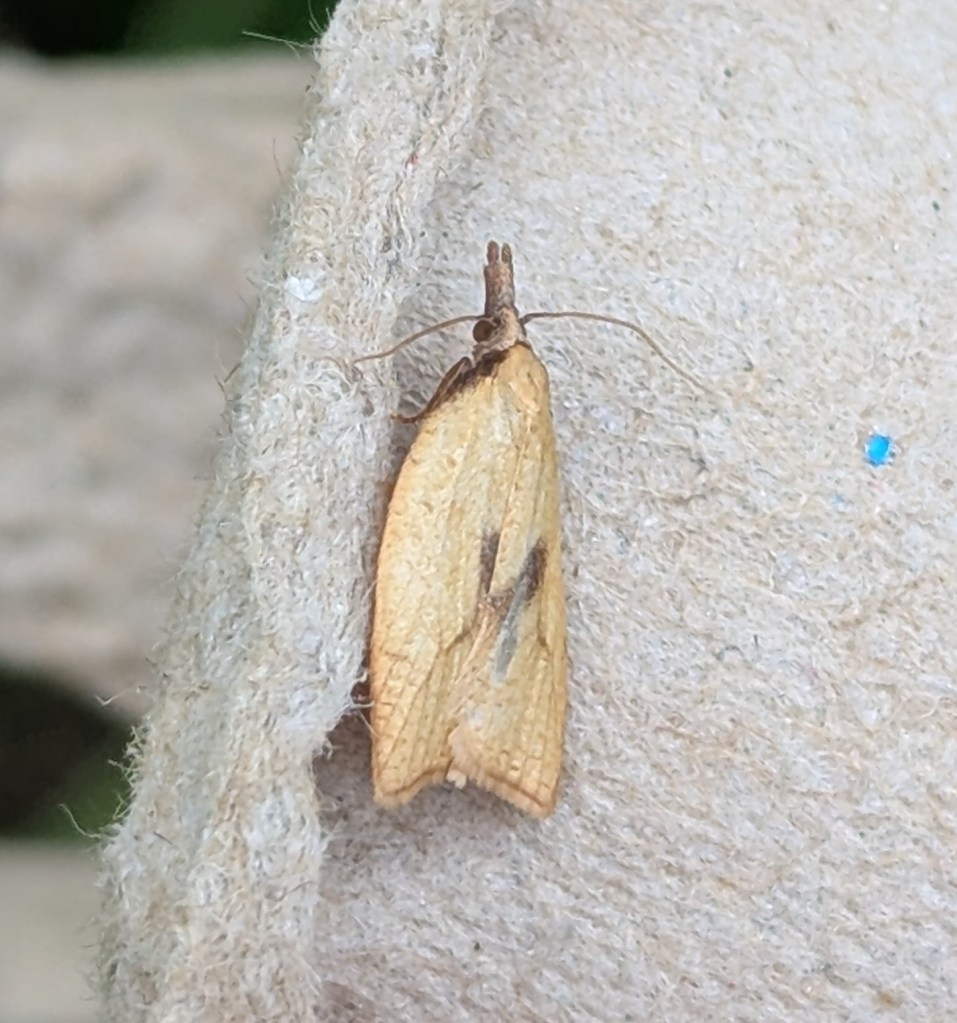
Interesting little Tortricid. Apparently they’re pretty widespread, even in BC. But certainly not common. They’re far better represented in Eastern North America.
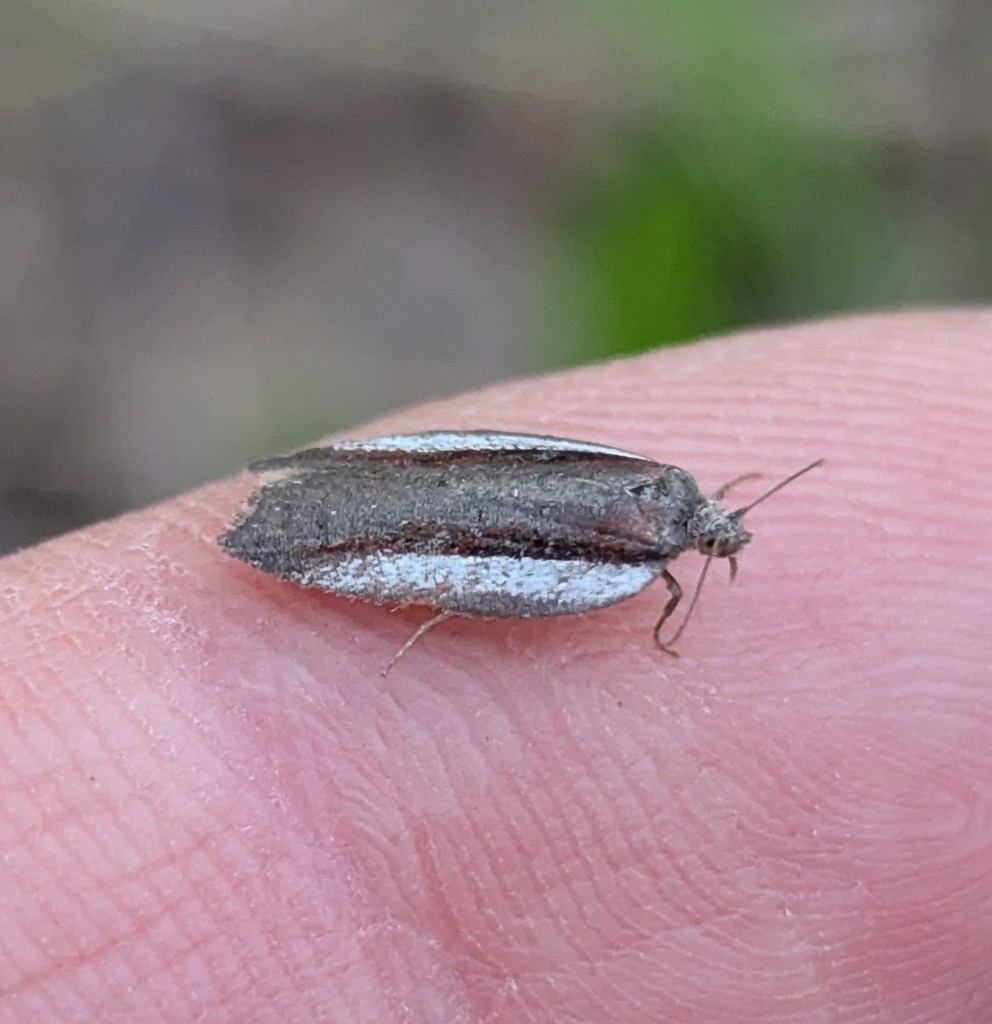
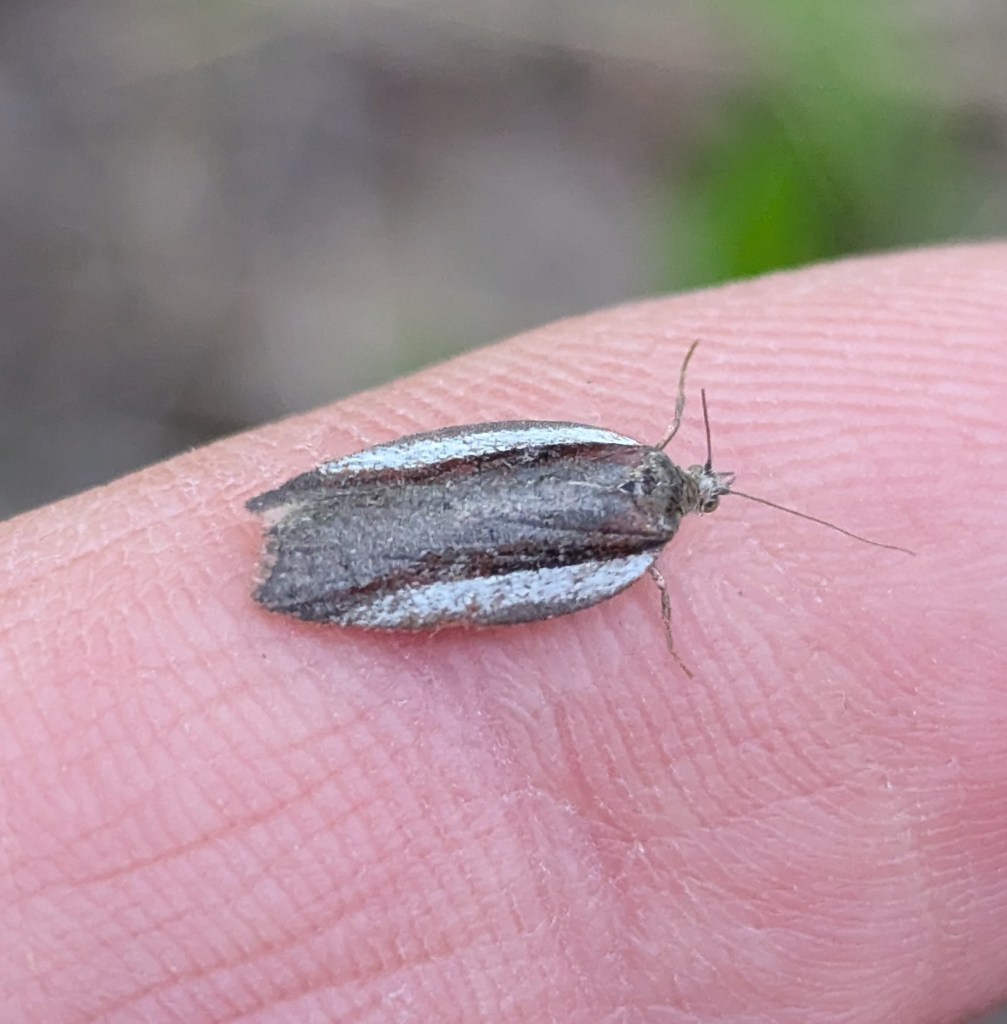
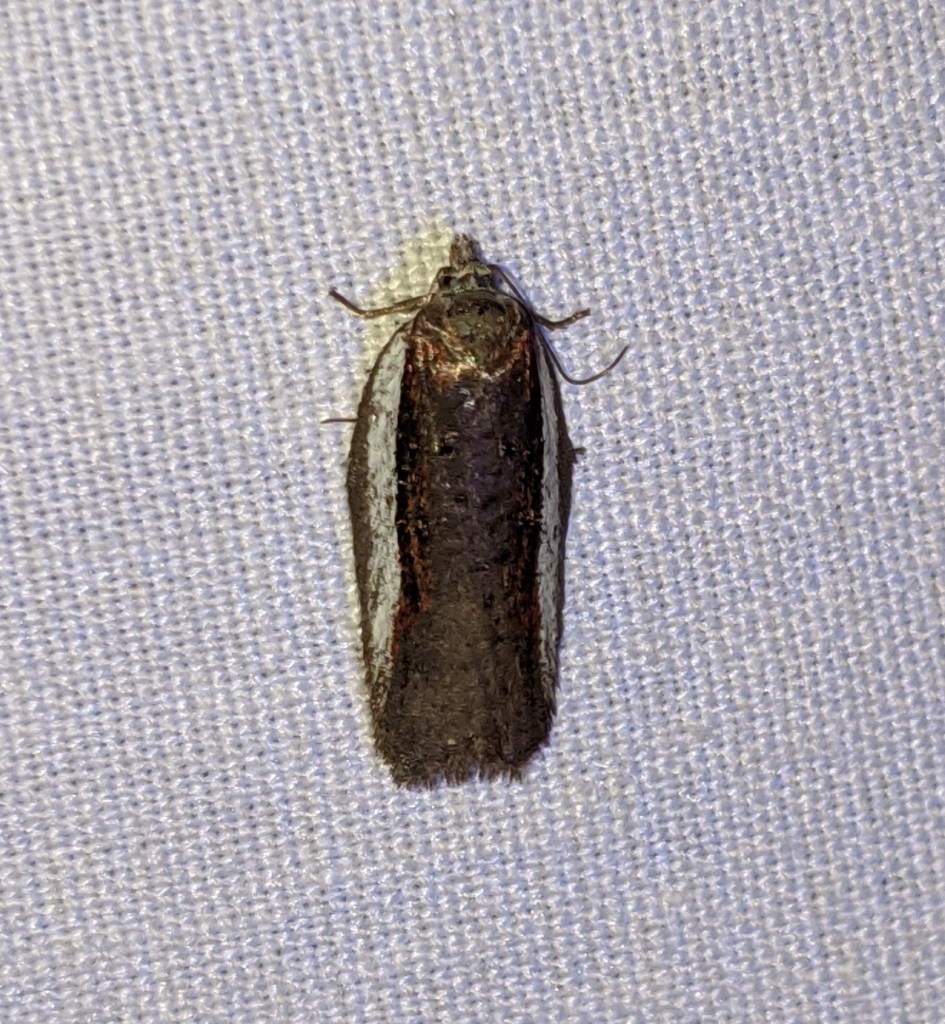
Not a lifer – just a great moth. This was only the second time I’ve seen one – the third photo was from 5 years ago up in Prince George, BC. There are still only 5 iNat observations of this moth in BC.
Chionodes sattleri * **
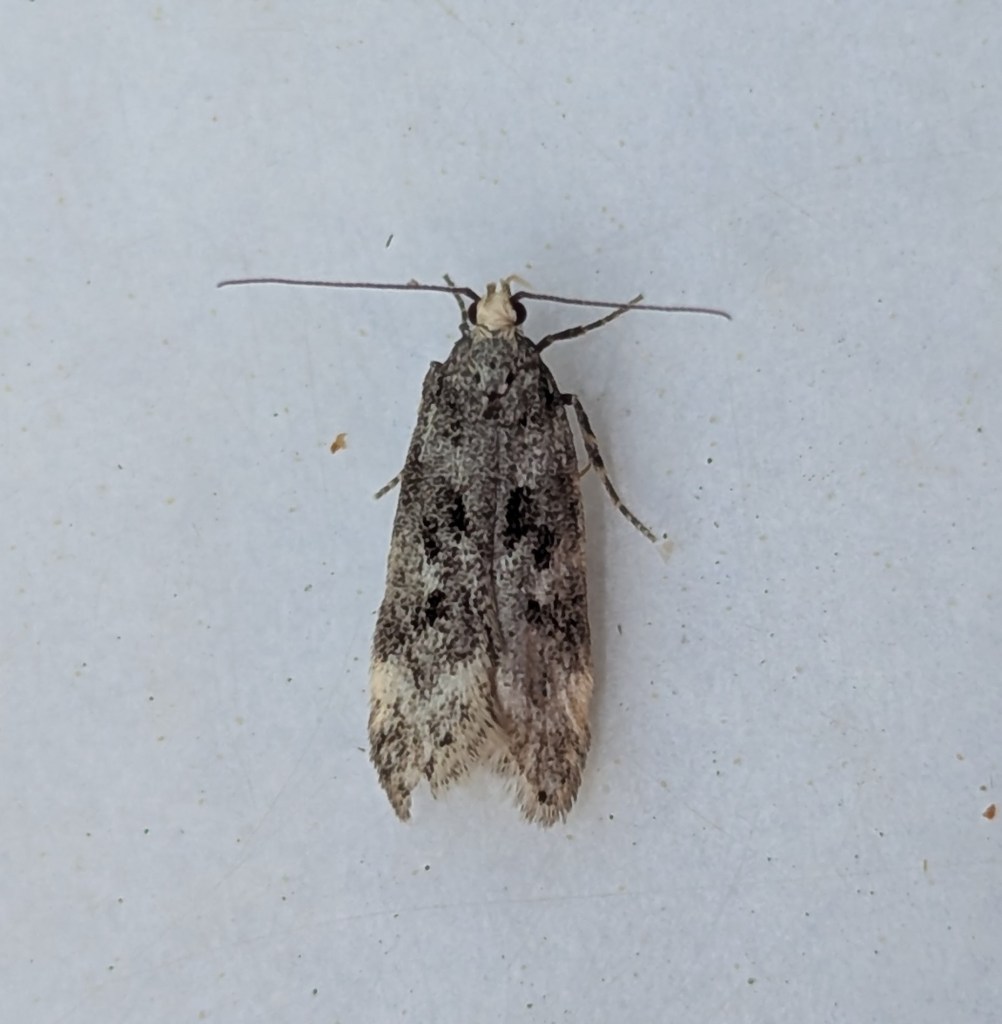
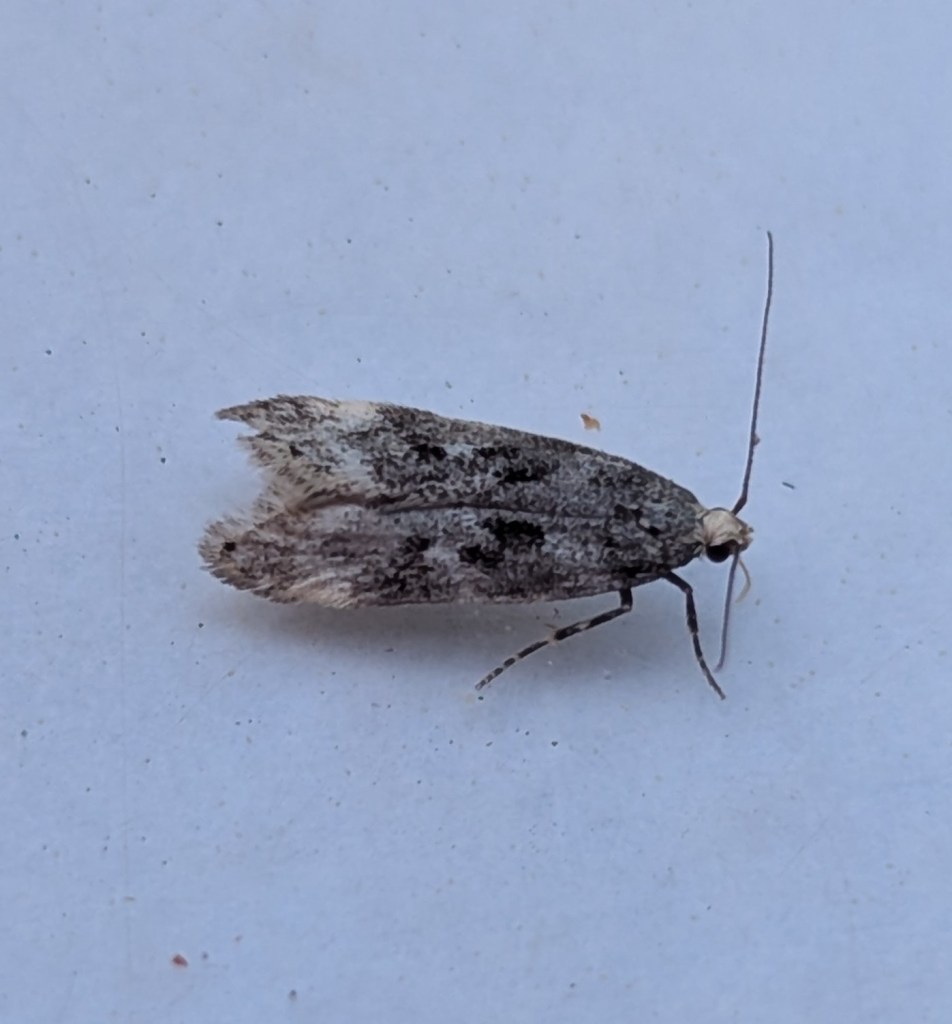
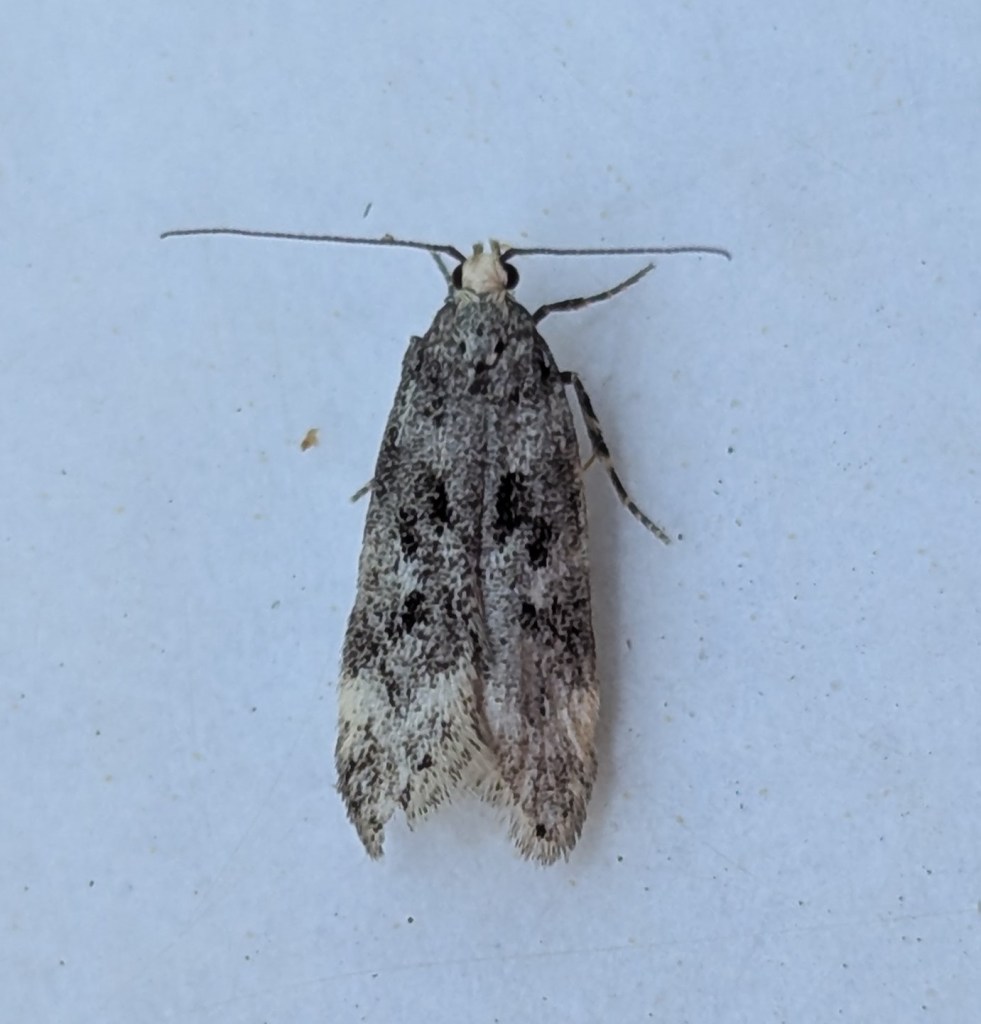
Very cool. Chionodes are tough, especially when they’re faded… but the markings look bang on for this species. Another one to confirm with bugguide or the BC Leps crew. This would be a first for BC iNat.
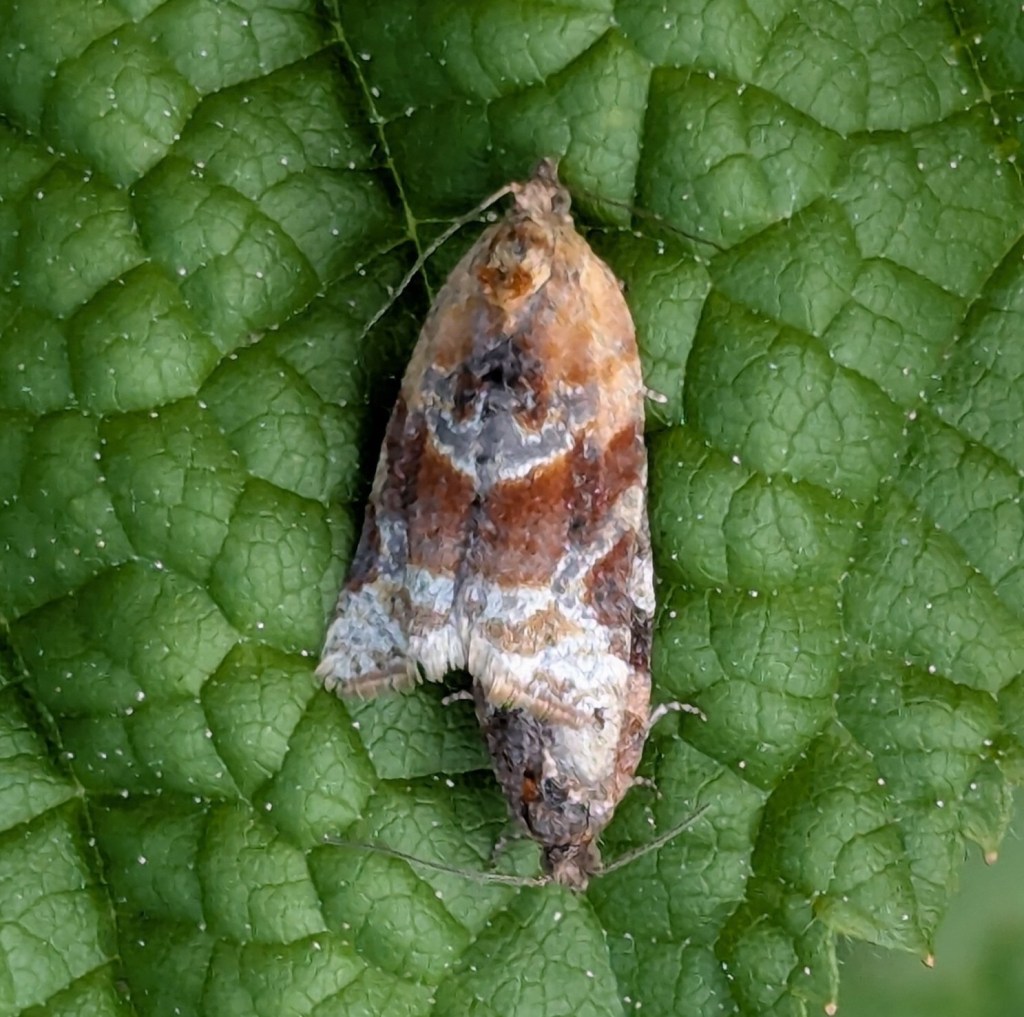
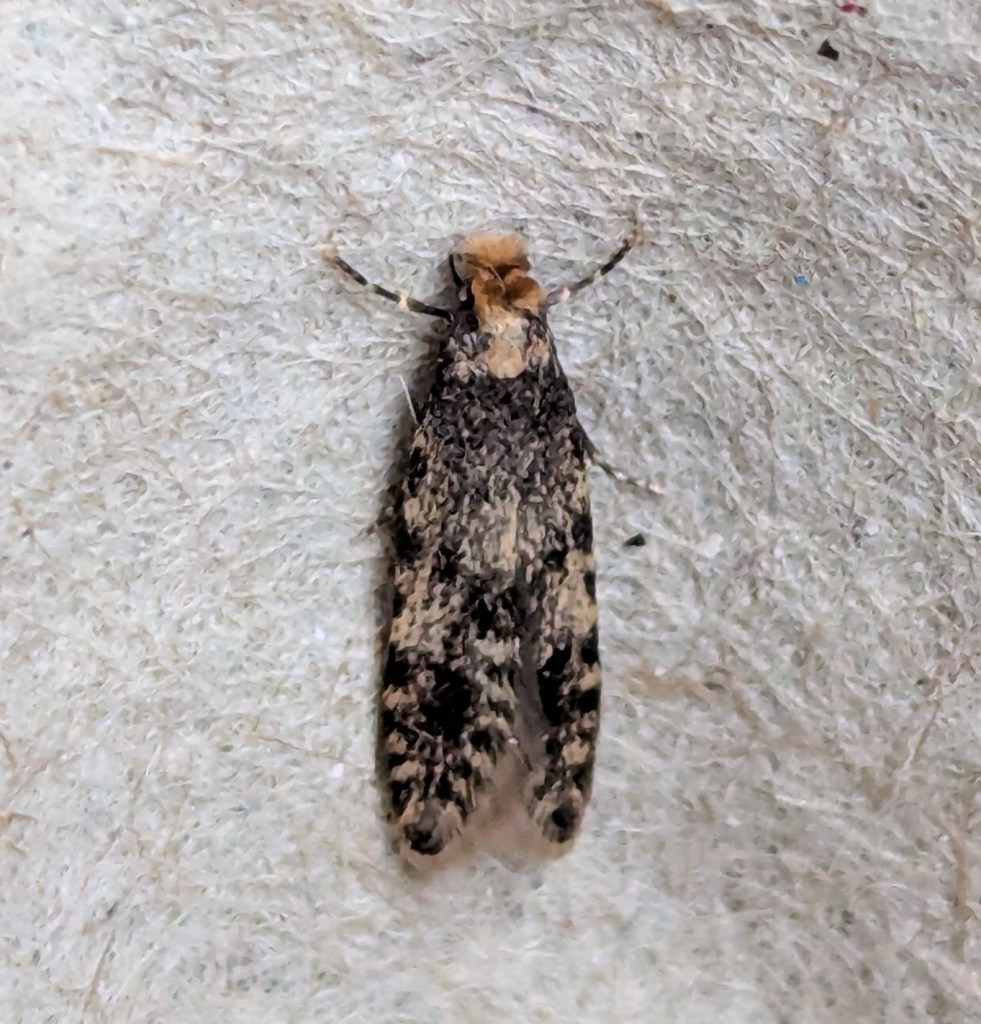
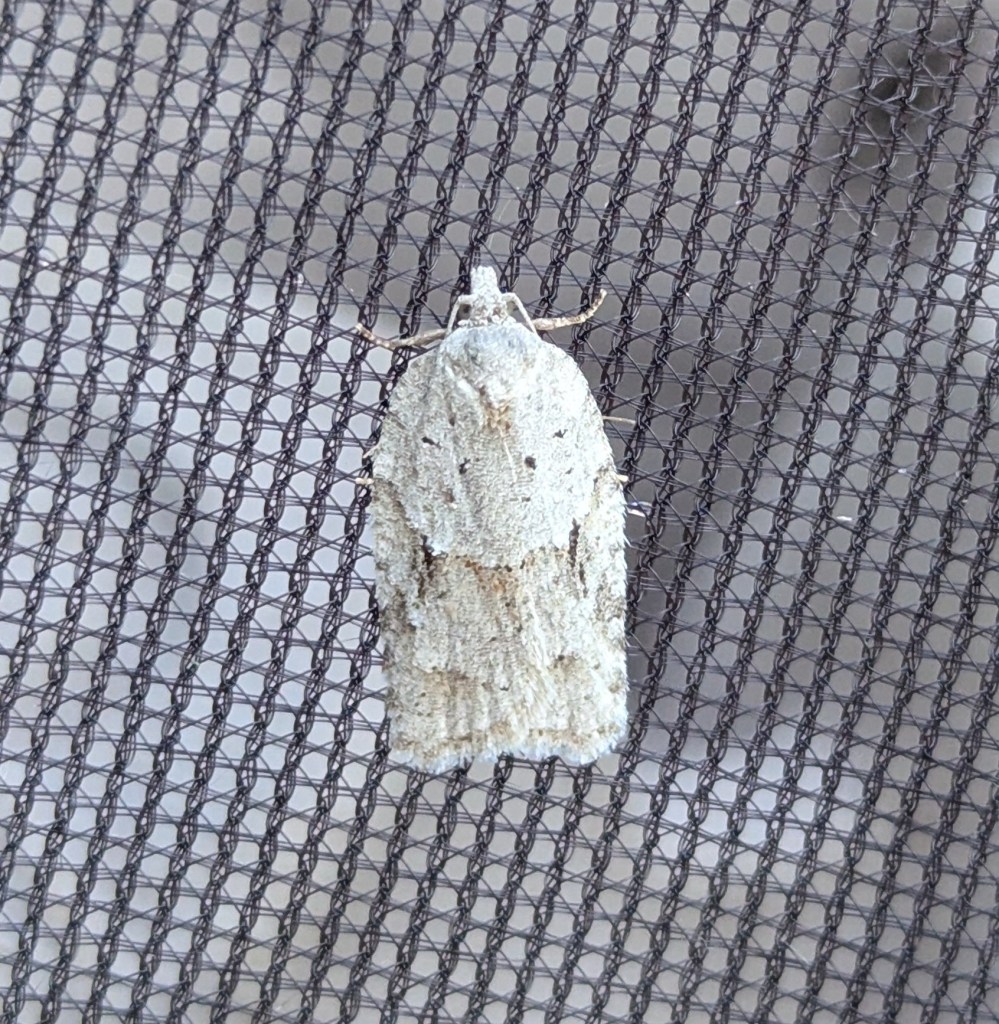
I stumbled across these two on a leaf (mating, I would assume – look close) when I was out scoping for new locations to set up nets. Interesting-looking moth. Quite uncommon – only the second sighting in BC for iNat.
Homosetia marginimaculella * **
My second Homosetia! And neither have been on the BC checklist! Last year one of the highlights from a long weekend in Sparwood was seeing a Homosetia costisignella, since added to the BC Checklist. This one already has a handful of sightings on iNat, but none yet confirmed. Can’t think what else it could be.
Acleris placidana (North American Black-headed Birch Leaffolder moth) *
Well that’s a hell of a common name. The NABHBLM.
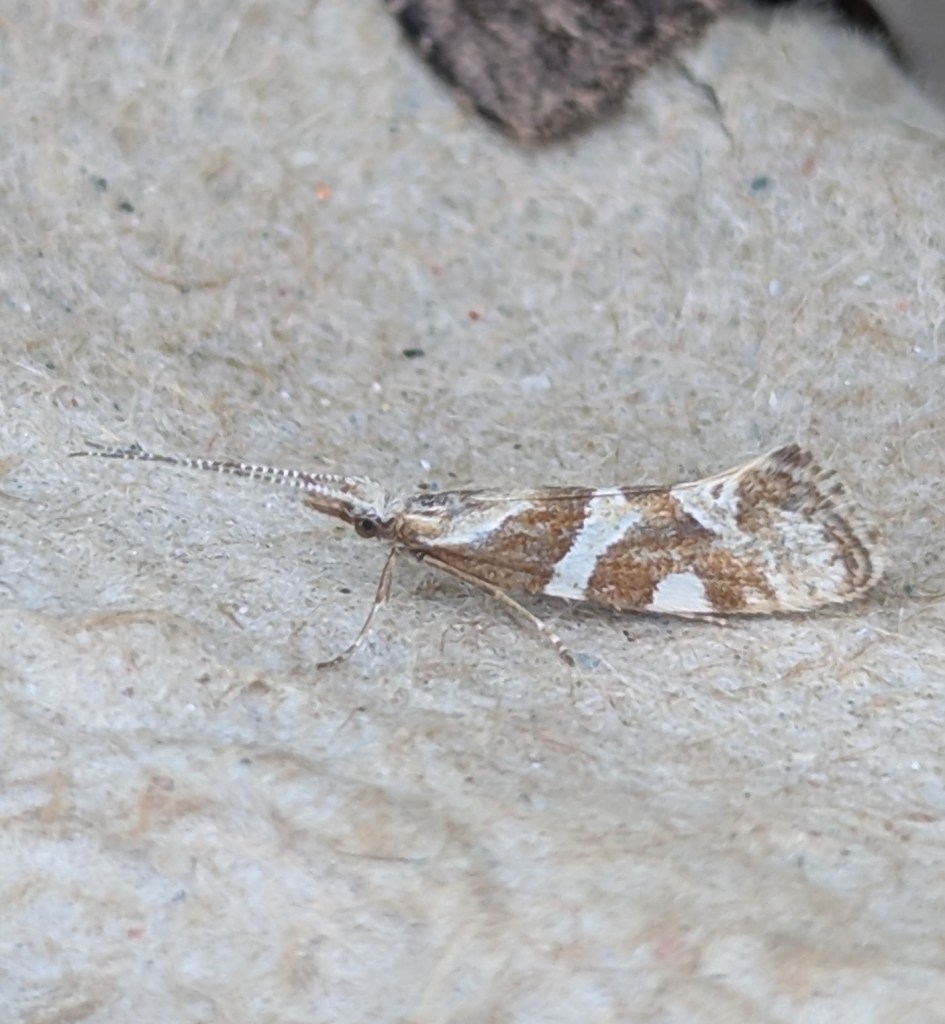
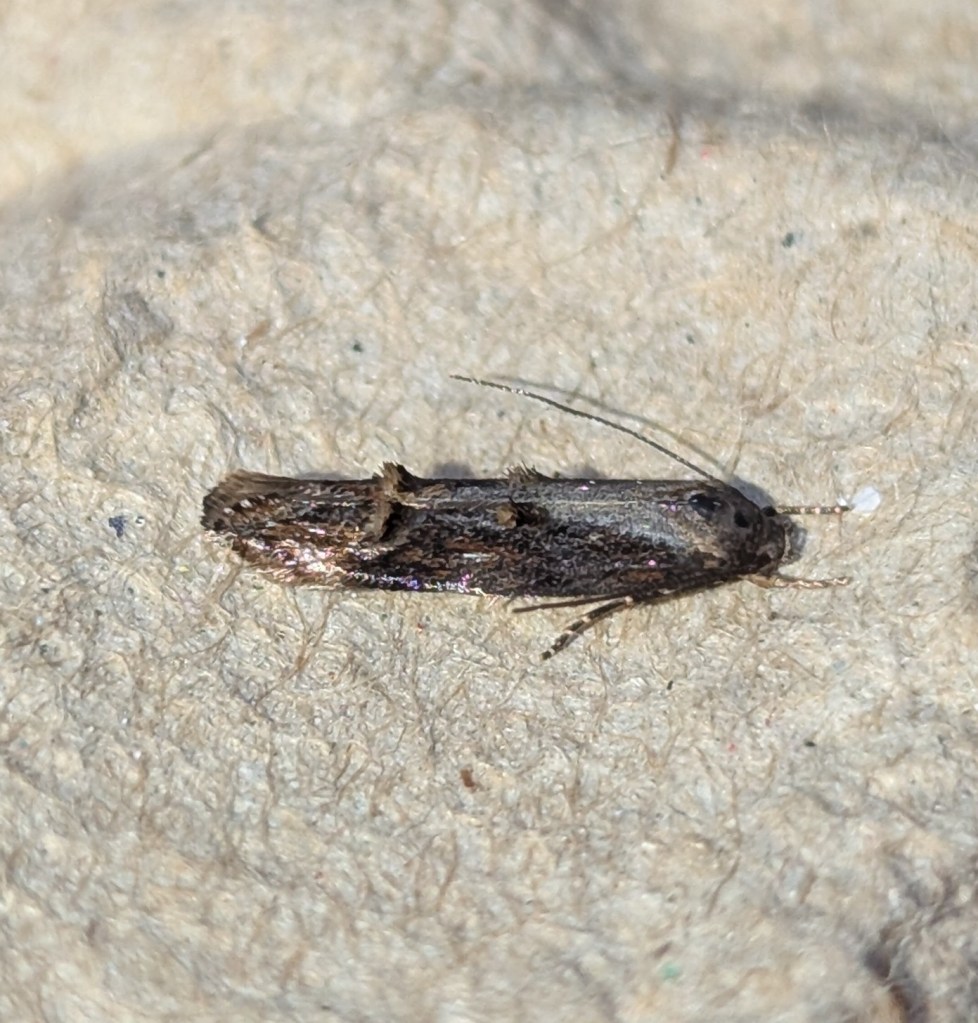
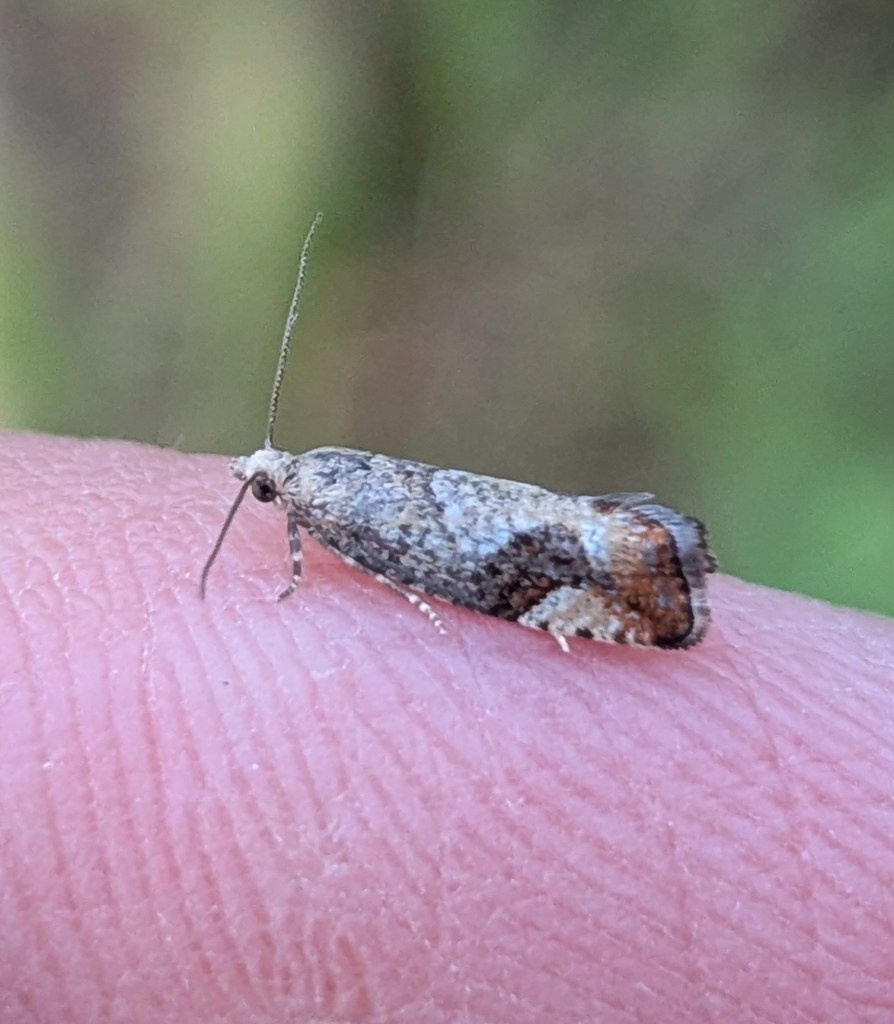
Such an elegant little moth, I was so thrilled to see another. Very uncommon, but this was my third sighting.
Think I’m right on this ID. Could’ve sworn I’d seen it before, though.
This wasn’t a lifer, having seen one last fall. But they became quite common in Golden by the end of June and it was great to see them in larger numbers in various conditions so I could get a better feel for them. Epinotia is a big genus and there are others that look similar.
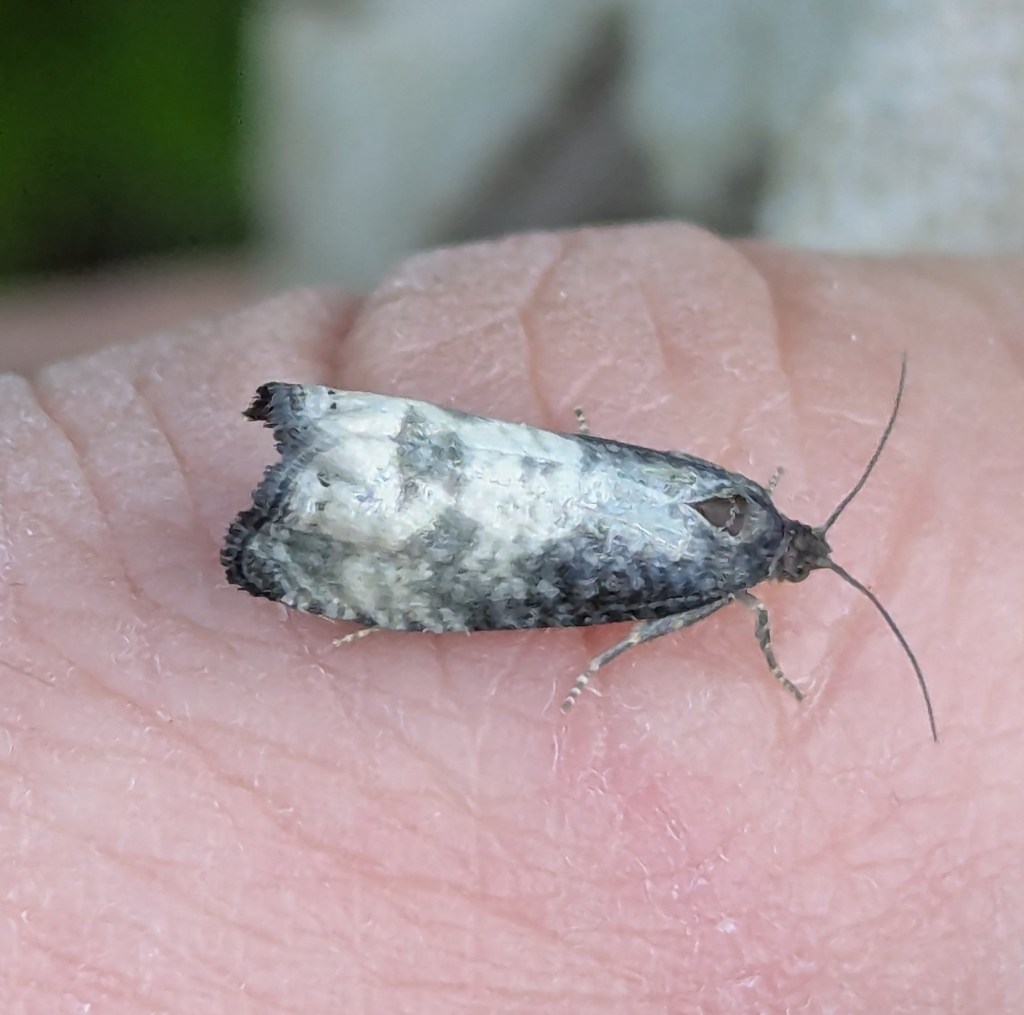
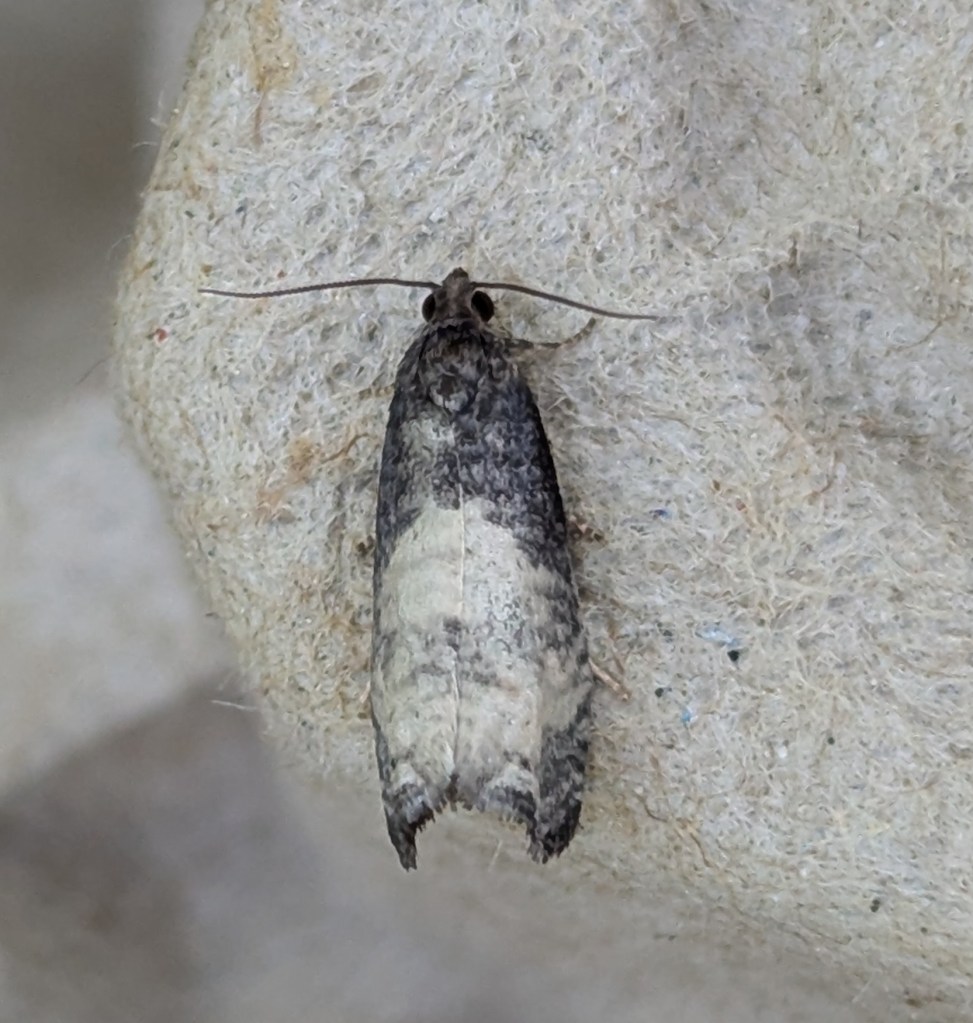
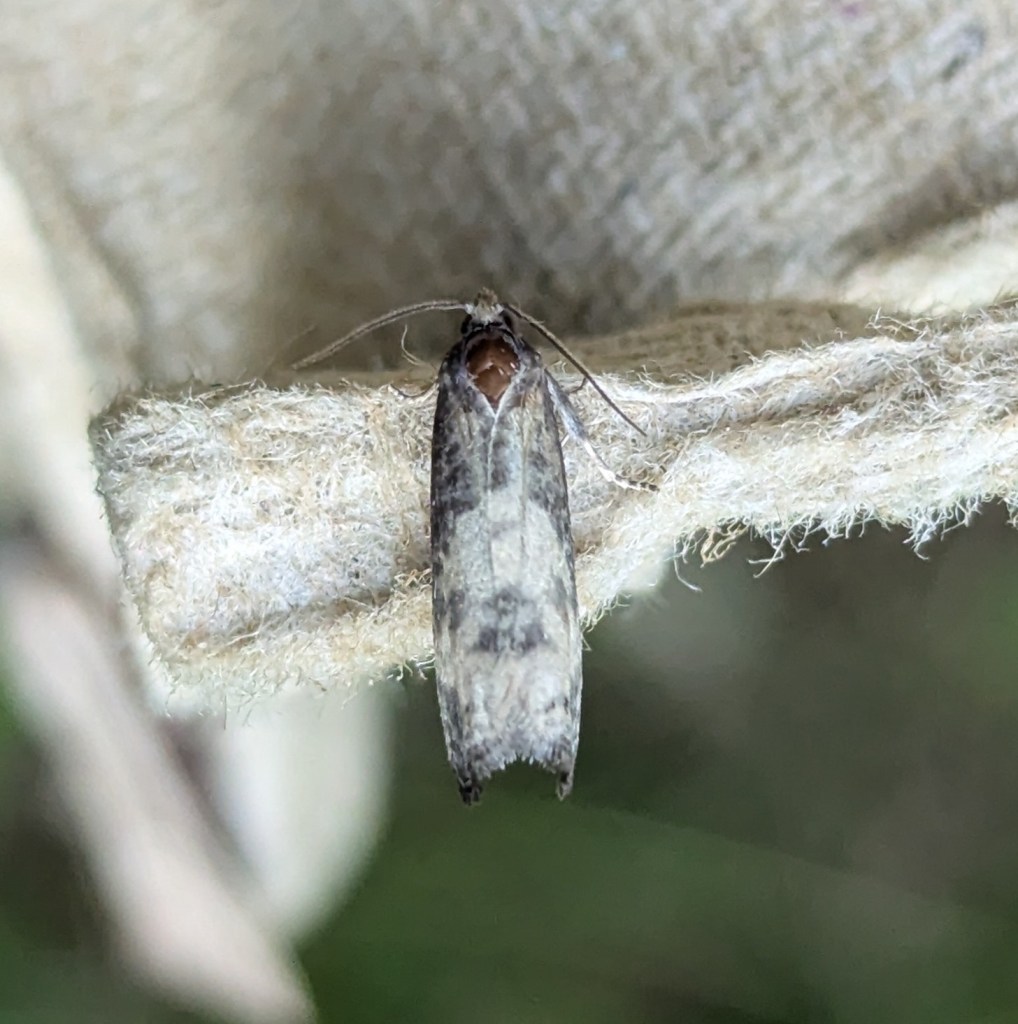
This was a real puzzler; I spent a lot of time hunting for an ID. iNat’s algorithm suggested Epiblema obfuscana, not in BC. Normally that would be a red flag, but given the sheer number of new species I’d been adding to iNat for the province, it seemed plausible. I got corrected on bugguide. Pretty moth; lovely shades of blue-purple. Only 3 observations in BC prior to mine – they were quite common around Golden.
Gelechia lynceella * **
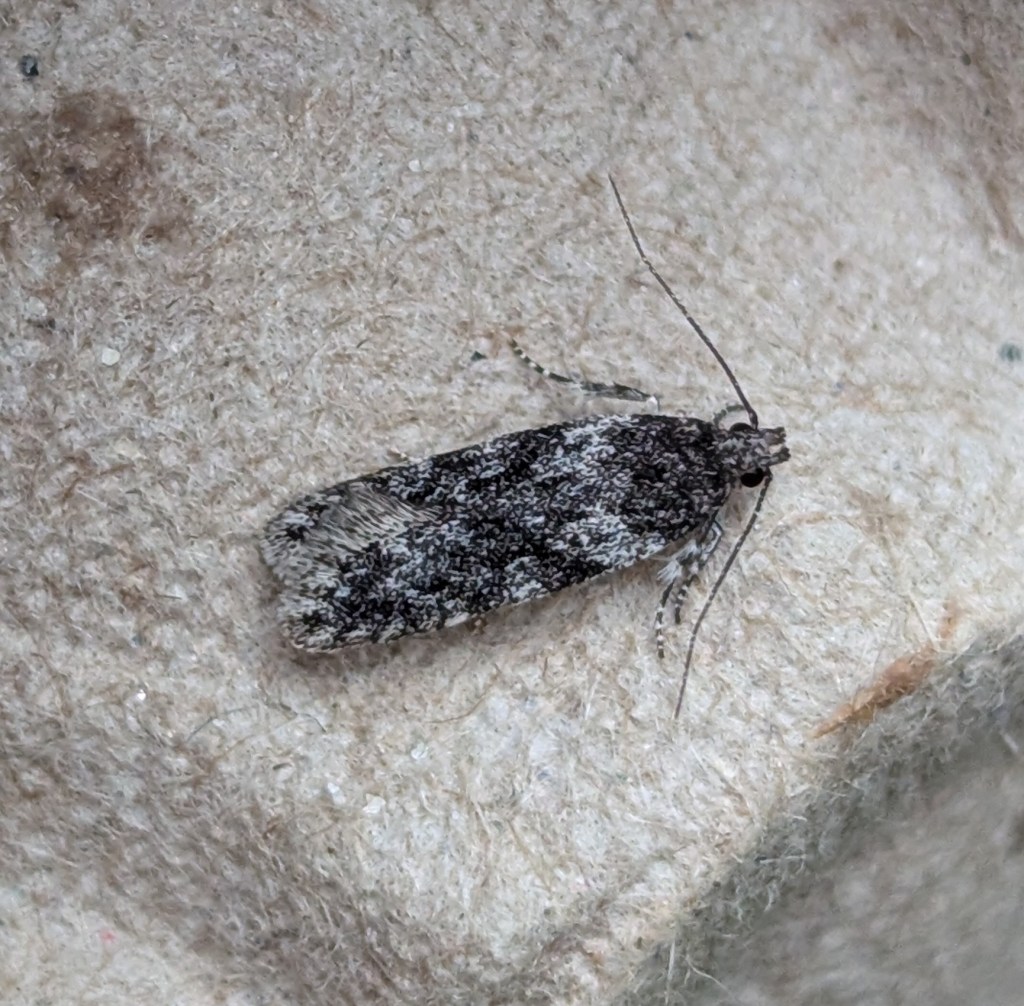
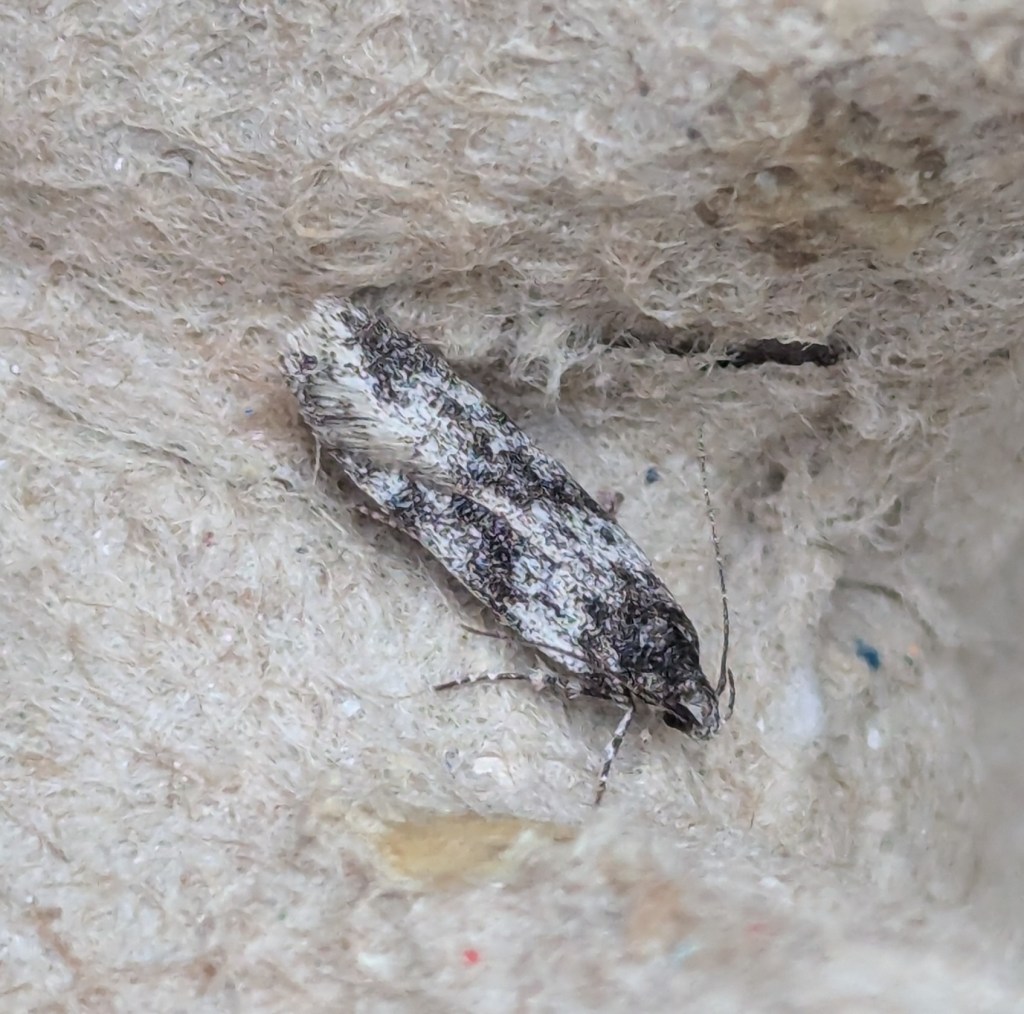
Confirmation still required for this. Very Chionodes-like; they’re closely related.
Ancylis diminuatana * **
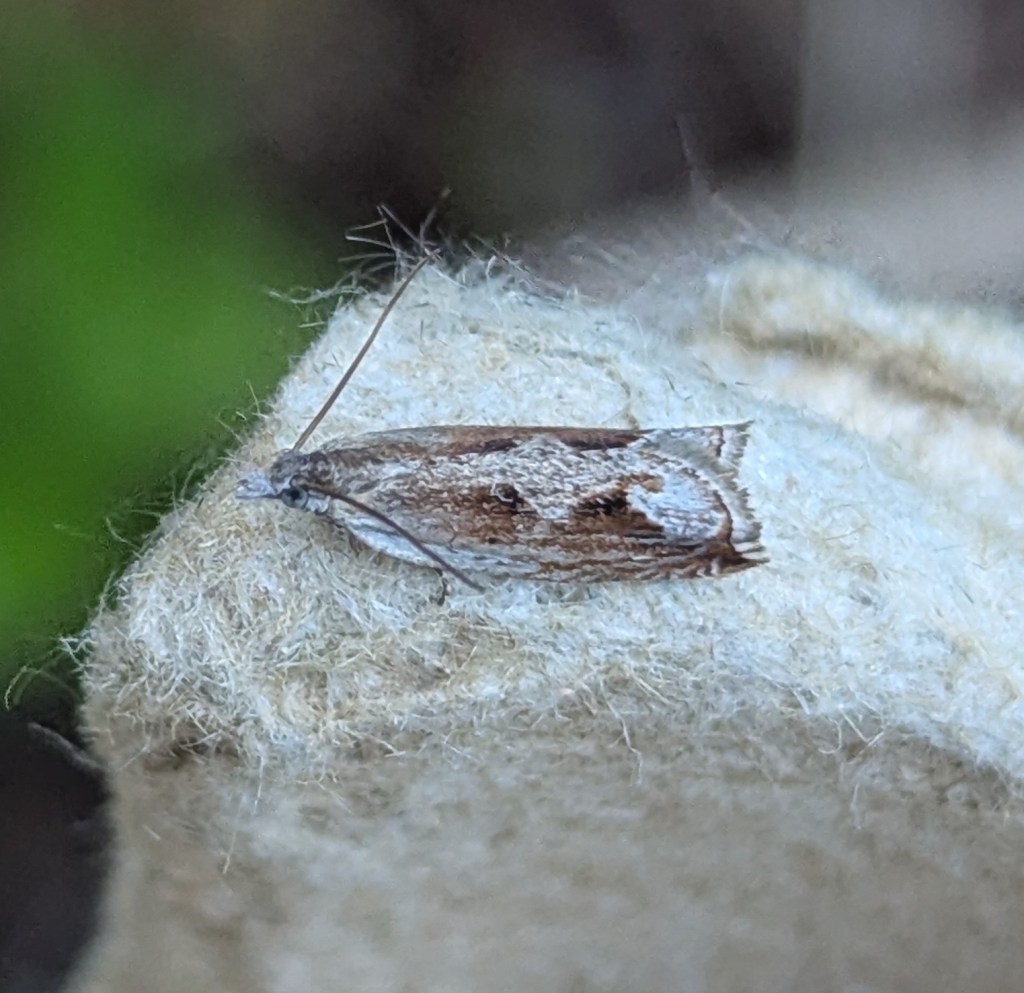
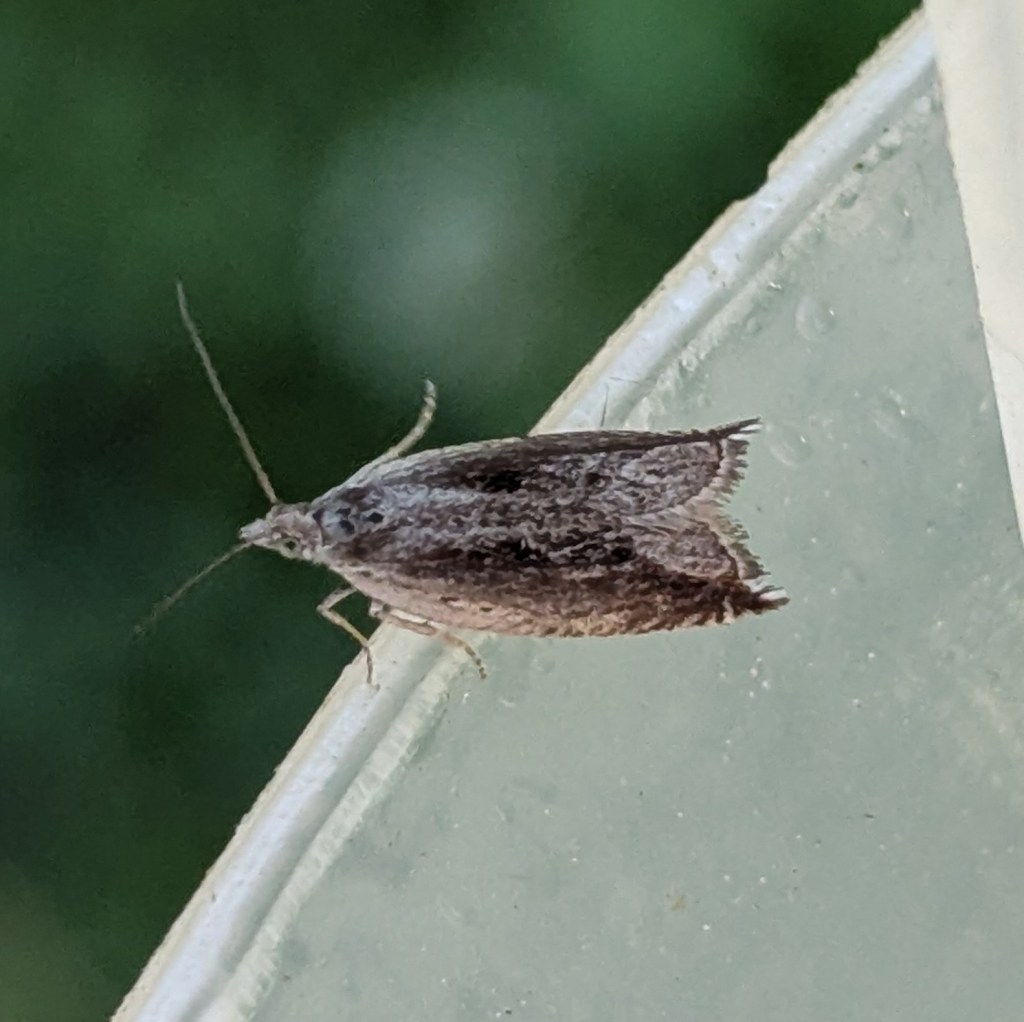
Pretty. Very diminua.
Retinia albicapitana (Northern pitch twig moth) *
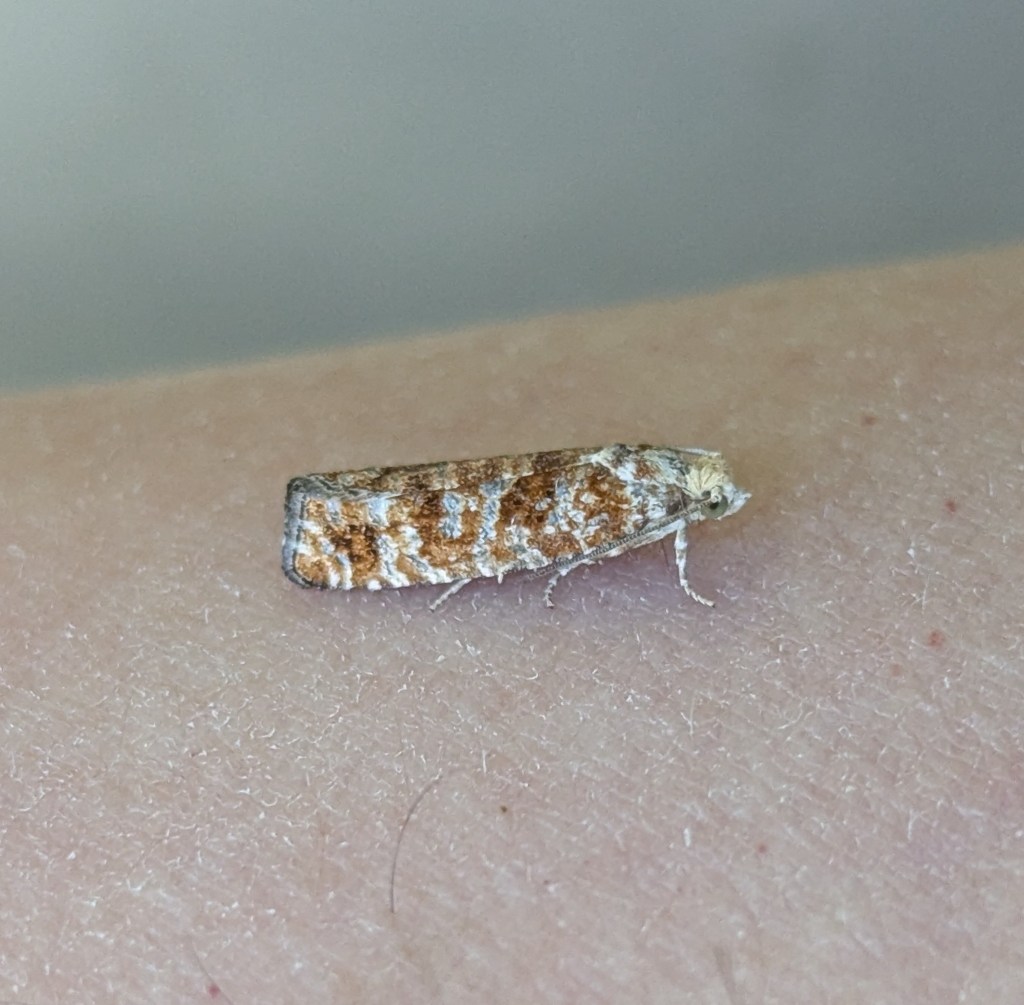
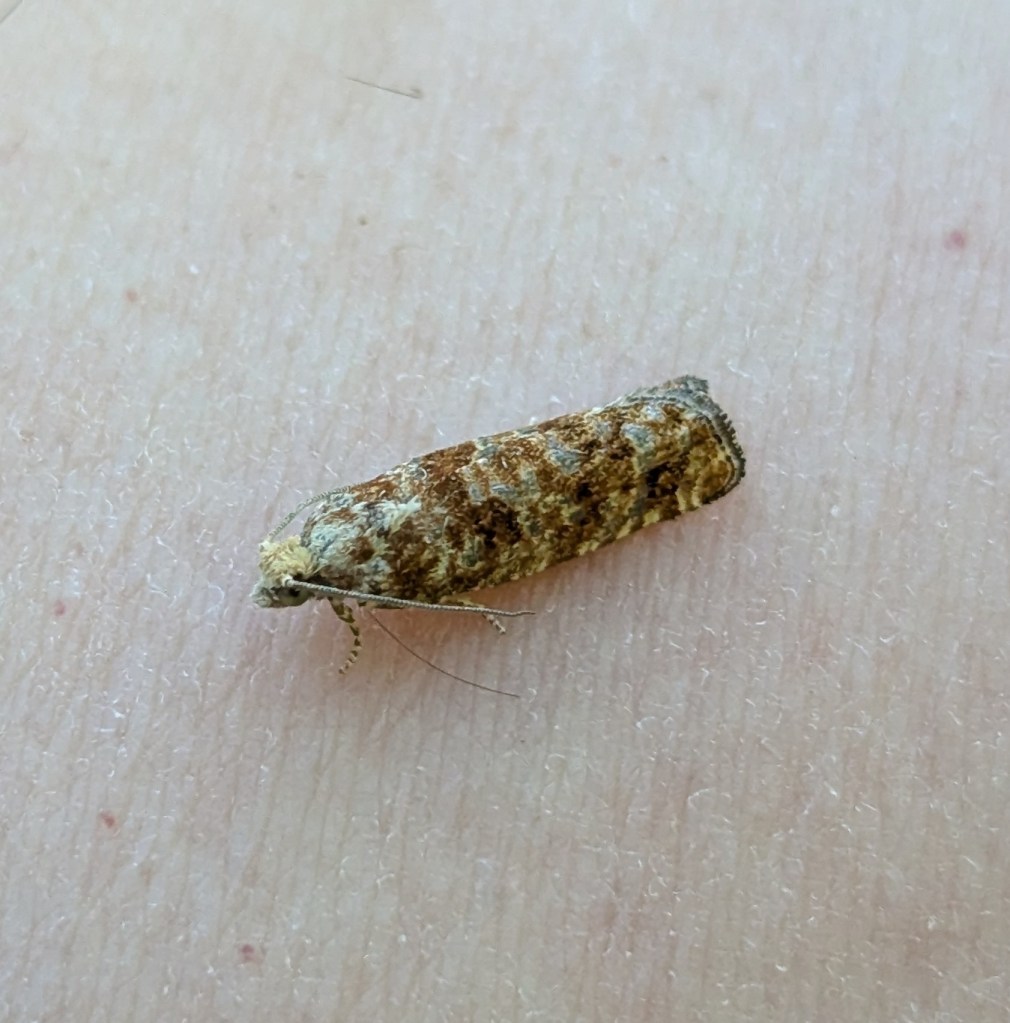
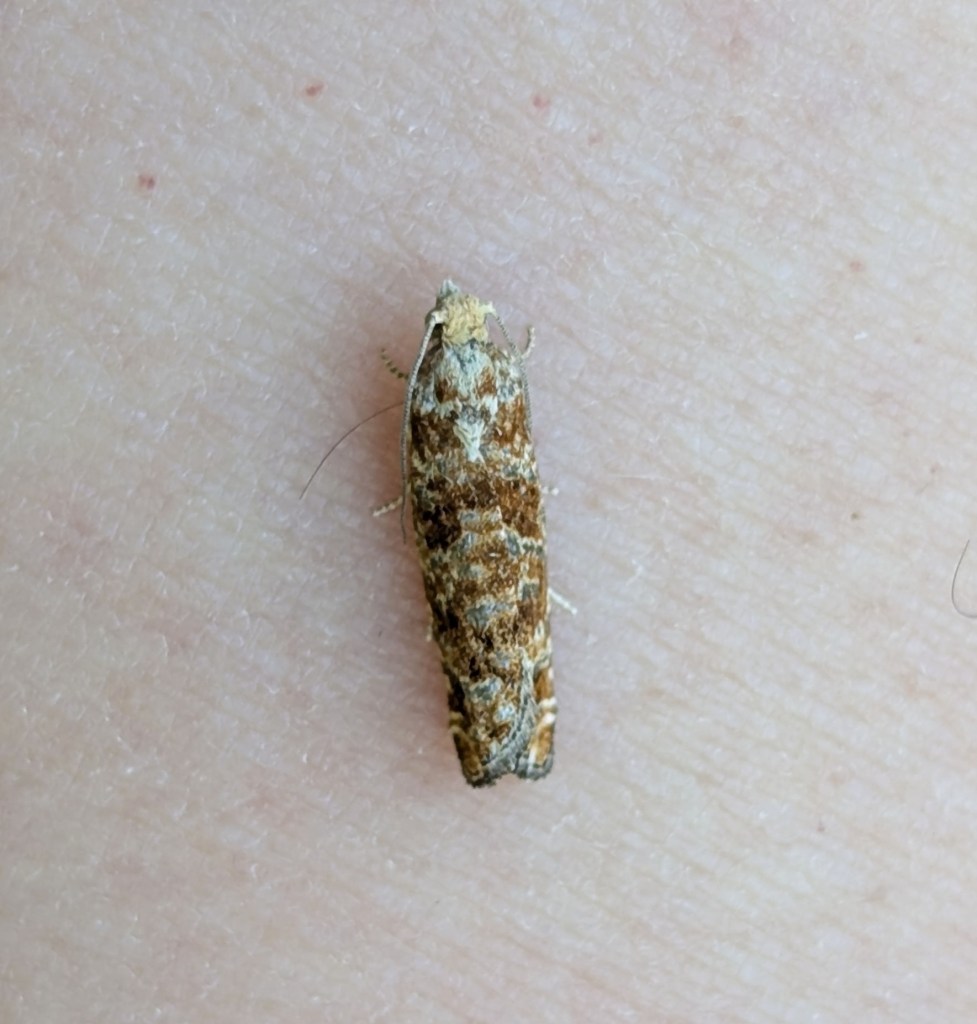
Tentative. But looks right. That genus is tricky.
Sciota basilaris (Yellow-shouldered leafroller) * **
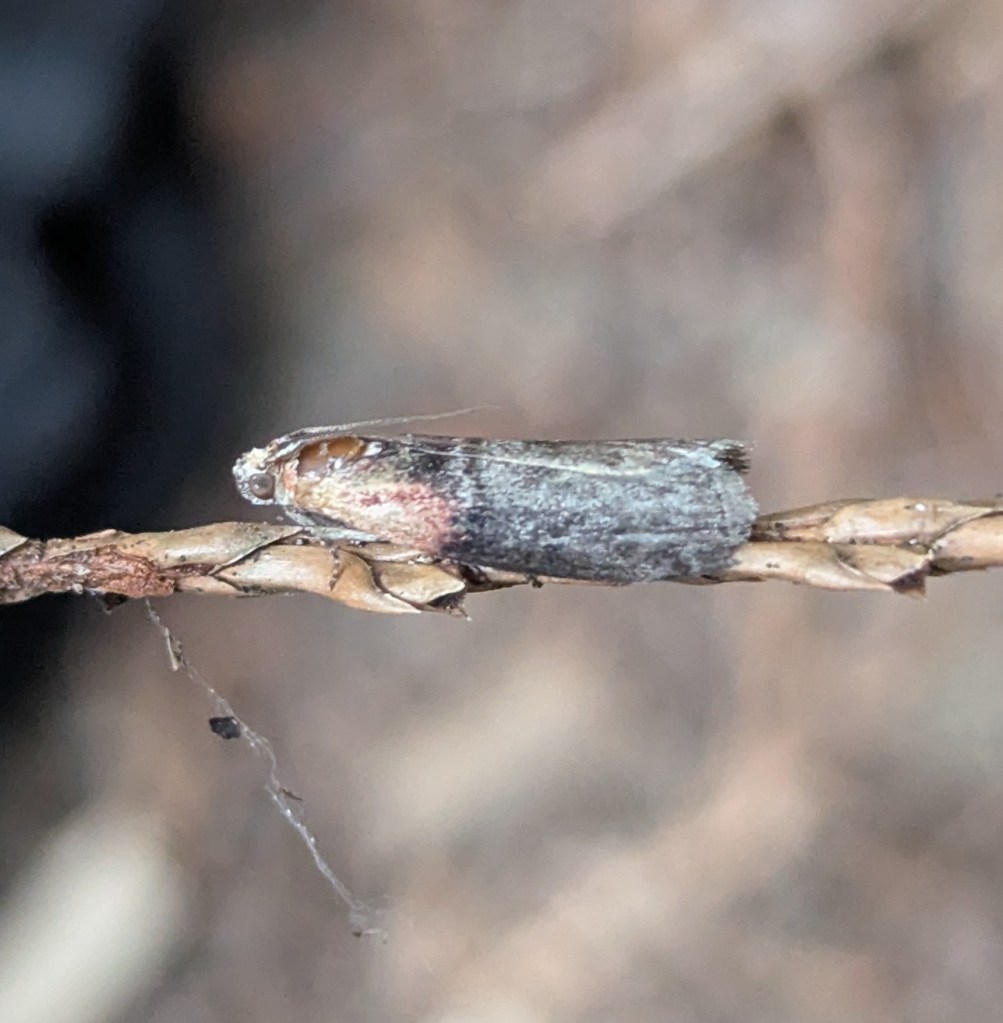
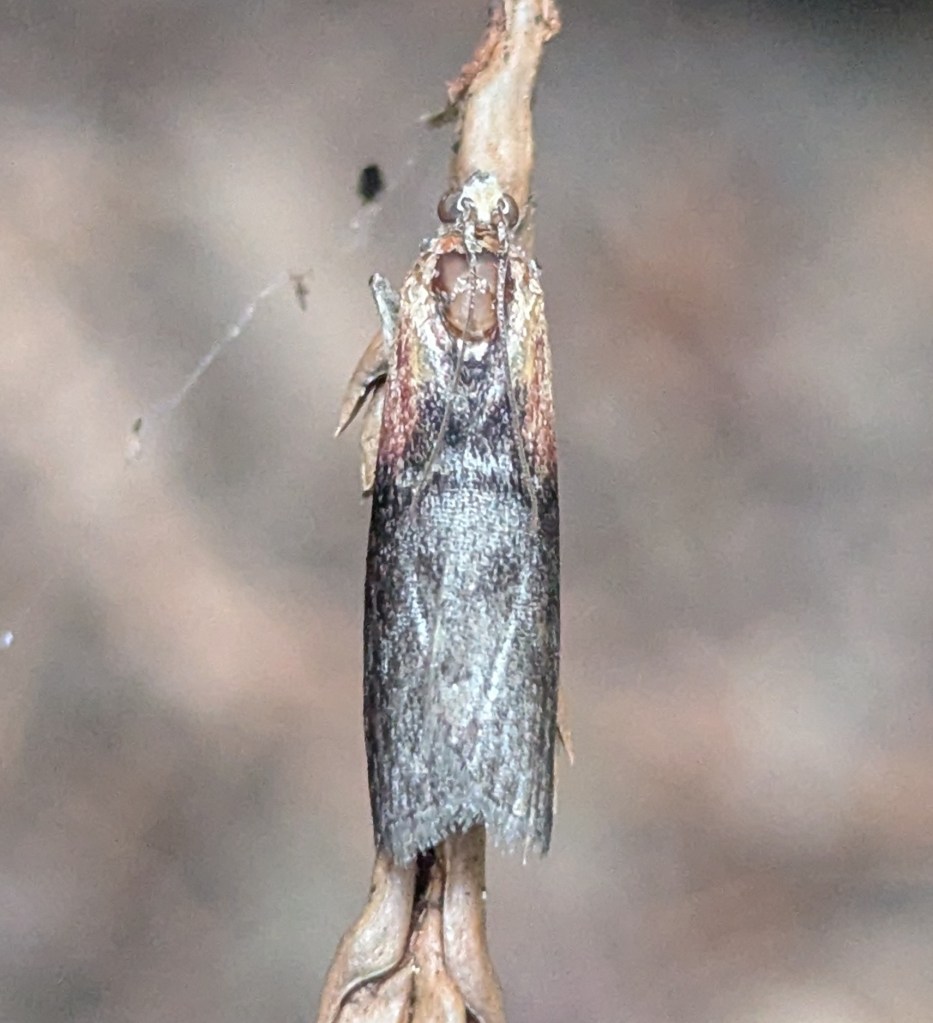
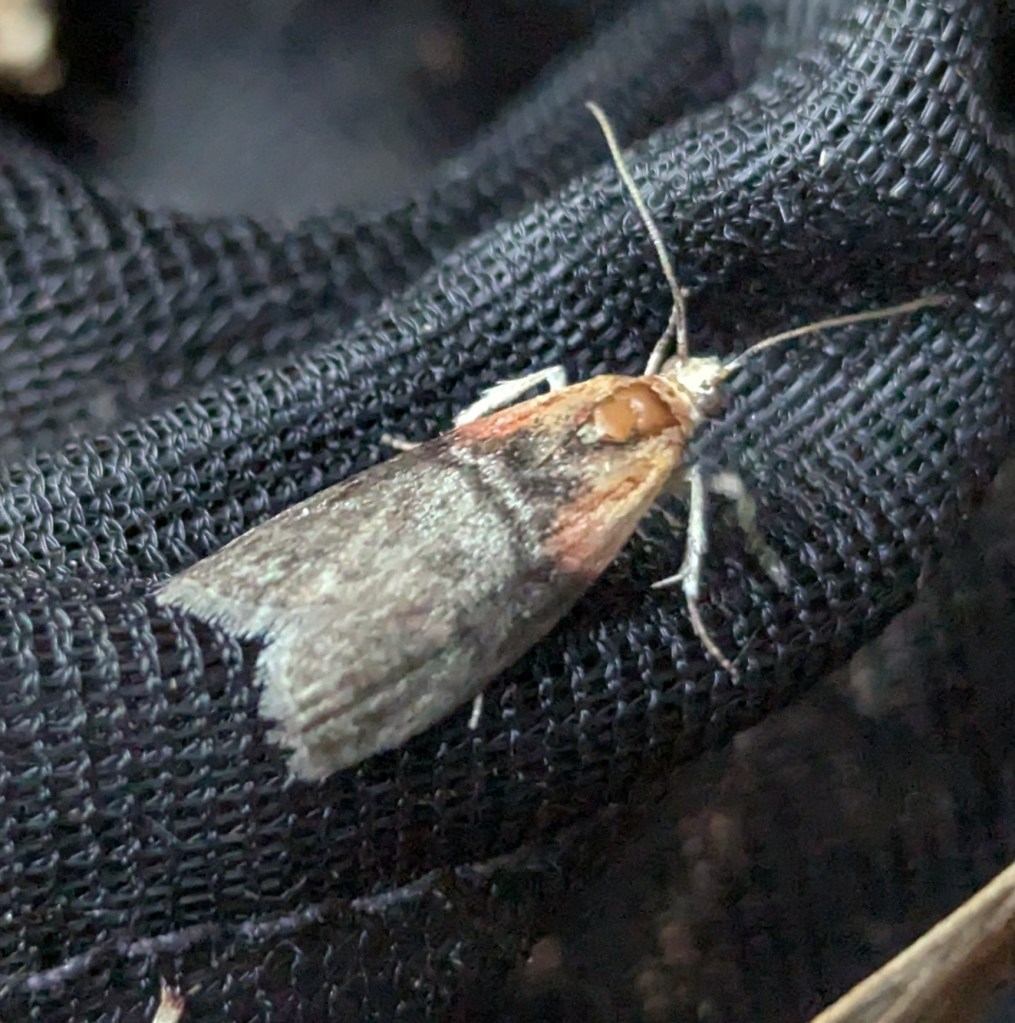
Well this was an interesting fellow – very different. This would be the first BC observation on iNat but there are several observations from nearby Alberta. Like many of the oddities I listed on this page, it’s primarily an East Coast species.
Ancylis mediofasciana (Serviceberry Leaffolder)
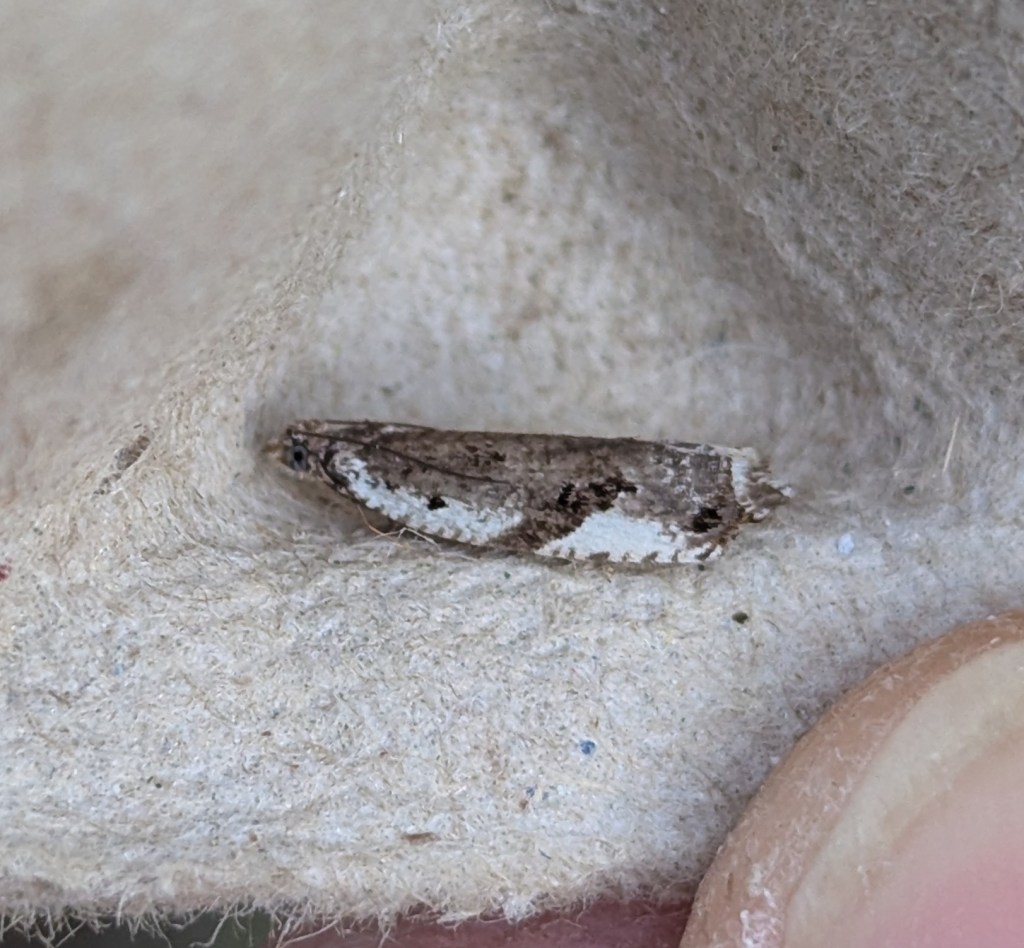
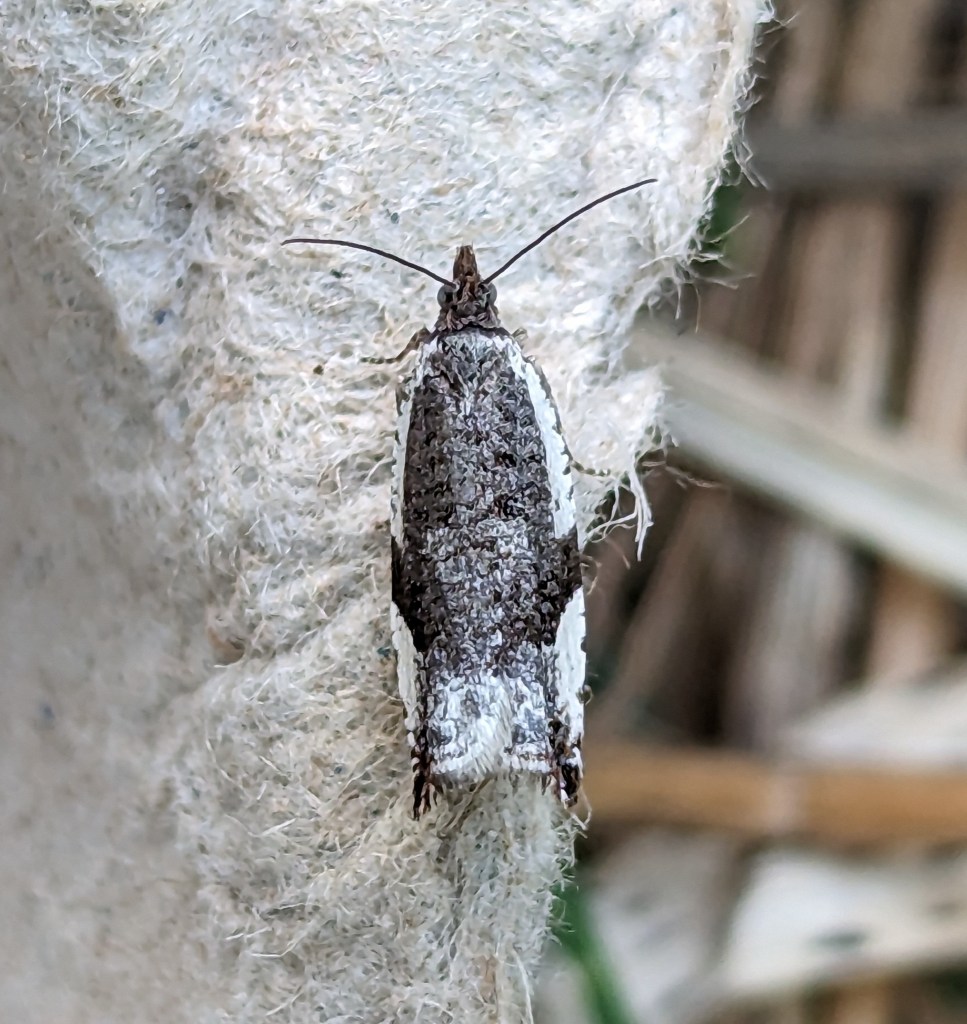
Neither a lifer, nor new for BC, but I was delighted to see it again. Another Ancylis moth. The second (and far better) shot, I took in Fort St John a couple of years ago.
Aristotelia rubidella (Ruby Aristotelia moth) *
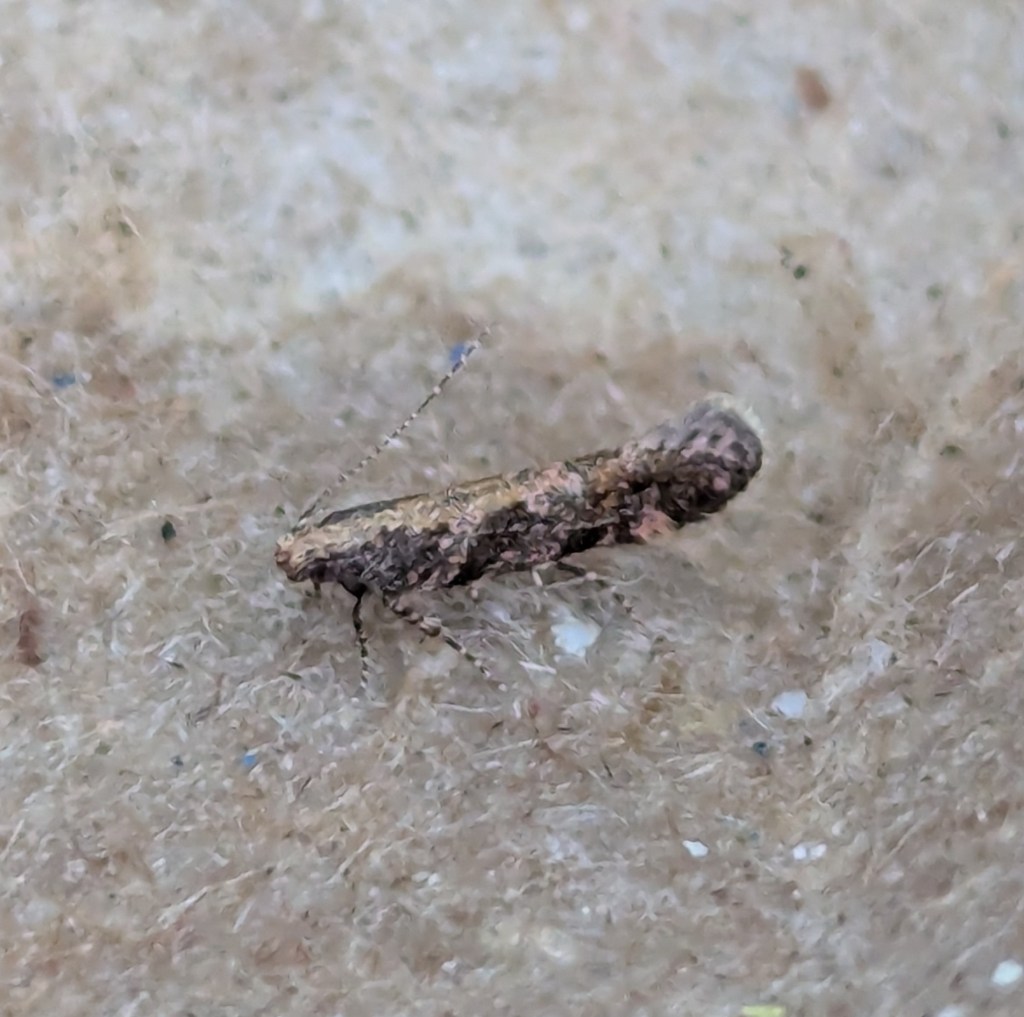
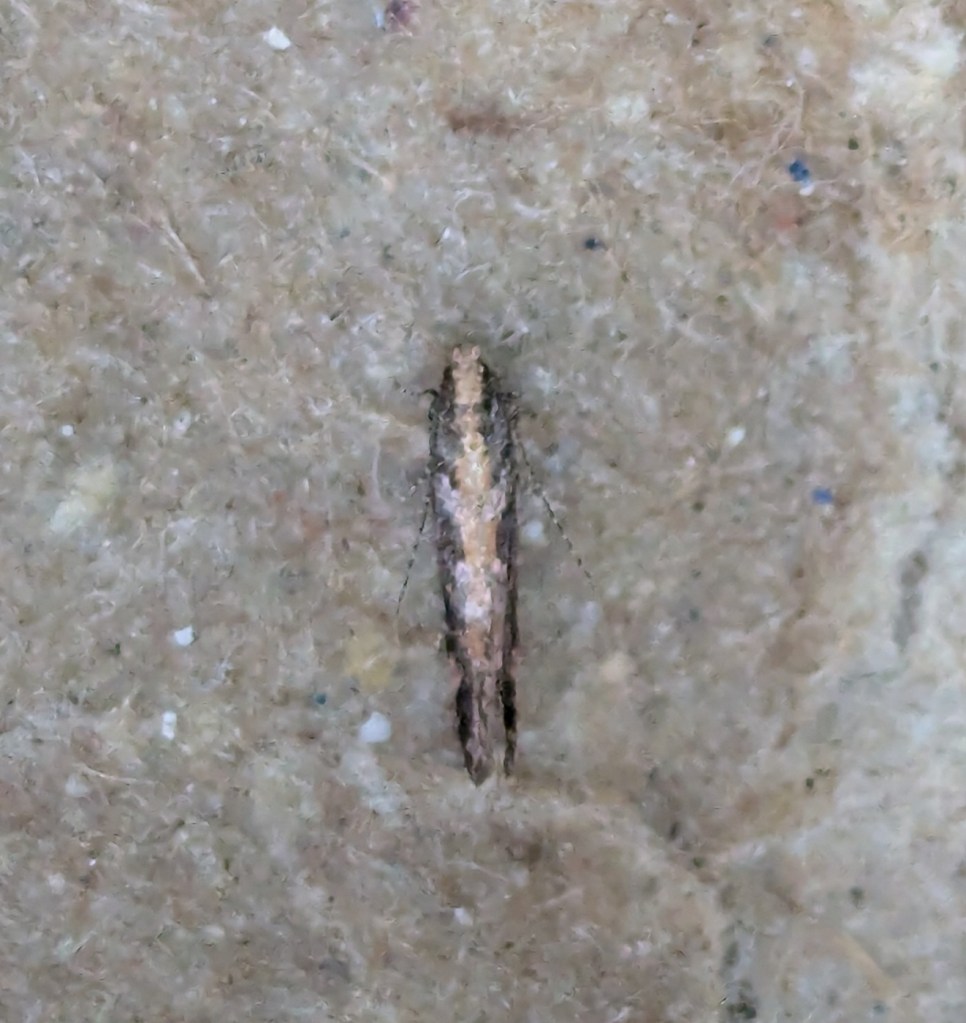
Honestly, I could be way off on this one. I really don’t have a feel for Aristotelia at all and the little sods are bloody miniscule. But somehow I convinced myself of this ID. It’s clearly Aristotelia, and this ID seems plausible if not most likely.
Choristoneura conflictana (Large Aspen tortrix) *
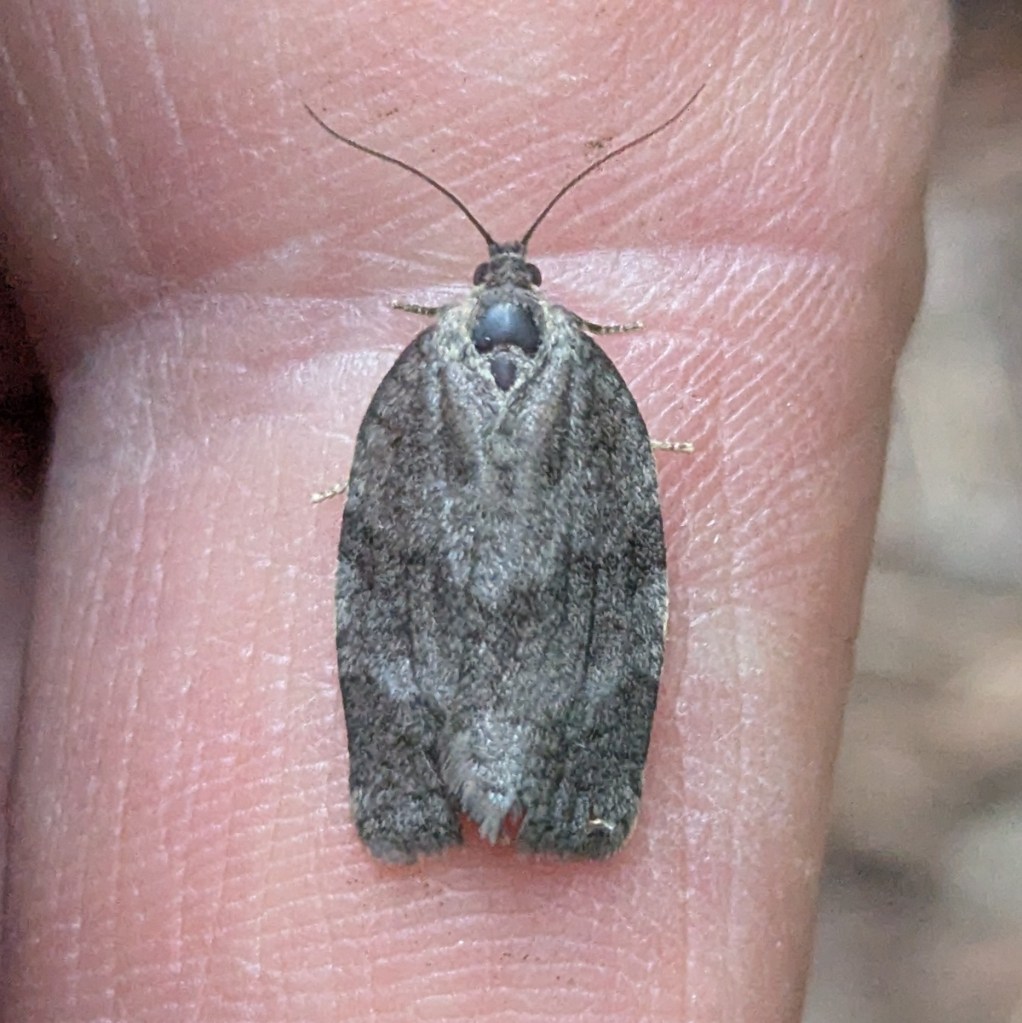
Last but not least, a Choristoneura. Good grief. Choristoneura are one of the most populous species in the province – in fact, I put up the following instagram video of an evening in Princeton last fall, just to showcase how abundant they can be (and what a total PITA they can be). But this chap was like nothing I knew.
And that’s it! Great trip. As I mentioned above, the micros contained the most interesting observations I saw. Next time I’ll have to target July/Aug for the region to see what comes next.
 BC Moths