
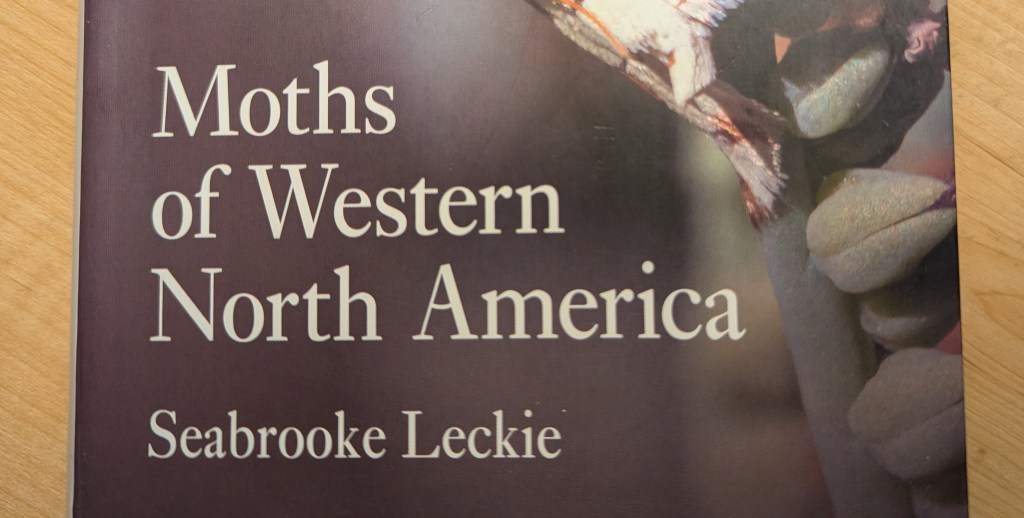
This week marked the long-awaited publication of Seabrooke Leckie’s Moths of Western North America field guide, and I was positively chomping at the bit to get my hands on a copy. What a glorious book it is! Really beautiful. And absolutely chock full of information. I’ve been glued to its pages since it arrived.
This isn’t a book review, by the way – I wouldn’t know to begin. Just an overview and a few early personal impressions.
The book is the product of 6 years of work by the author, and it shows. It’s a big thick tome, nearly 700 pages, covering 1900 of the species found in western North America, from the Mexican border all the way up to central BC.
To give you a taste, I’m going to risk invoking the wrath of the lawyers, and share a photo of a single page. This one happens to include one of my photos of Catocala unijuga, taken at my parent’s place in central BC. (I contributed photos for 45 of the species described in the book.)
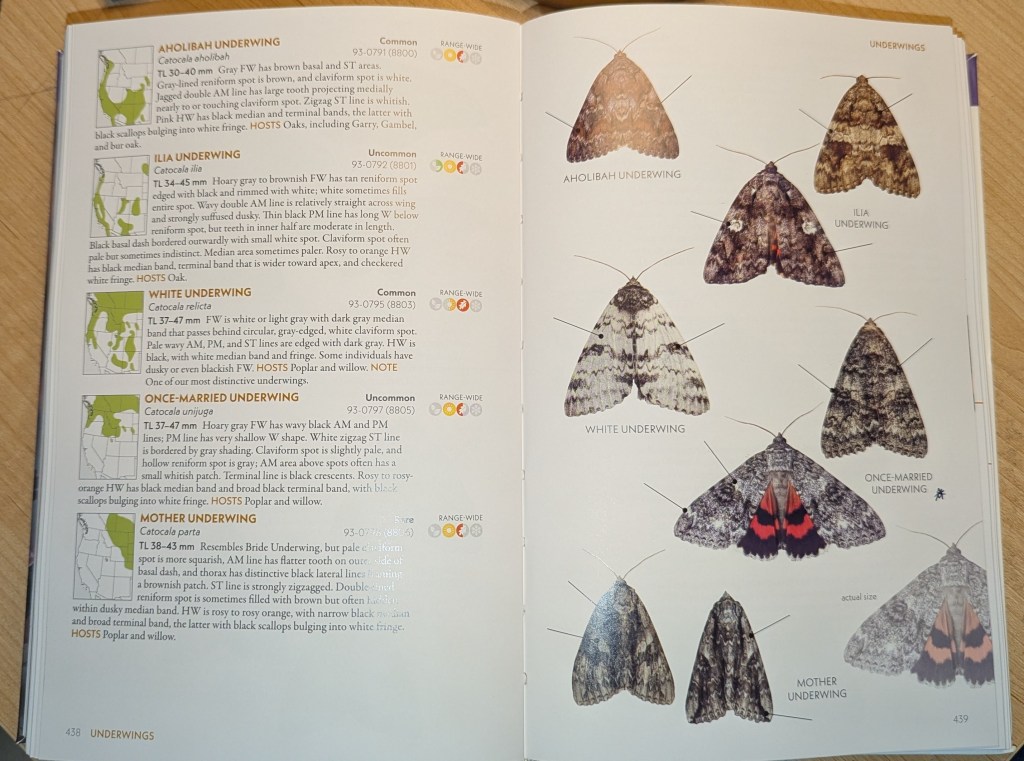
The layout is extremely readable and easy to follow. As you’d hope from any field guild, each species includes a range map, a seasonal flight chart, their Hodges and MPG number (now called a P-number), size, abundance, key identification notes and known host plants. Diurnal moths are explicitly flagged.
I particularly love that the moths are presented as you’d find them in nature – not pinned and spread, which entirely robs them of their jizz (forgive the birding term) and makes field identification tougher.
I think my only criticism is around the book’s index. I was surprised to find that not all species were listed, e.g. Tolype. Some are included, some aren’t – I’m not sure why it’s not exhaustive. Ideally it would also contain higher taxa – families certainly – to make it easier to jump to the right section.
But all in all, it’s a wonderful book, I’m quite delighted. This is going to be an important resource going forward. After spending a few days with it, quite honestly it’s shocking to me there was nothing like this for our region until now.
 BC Moths