
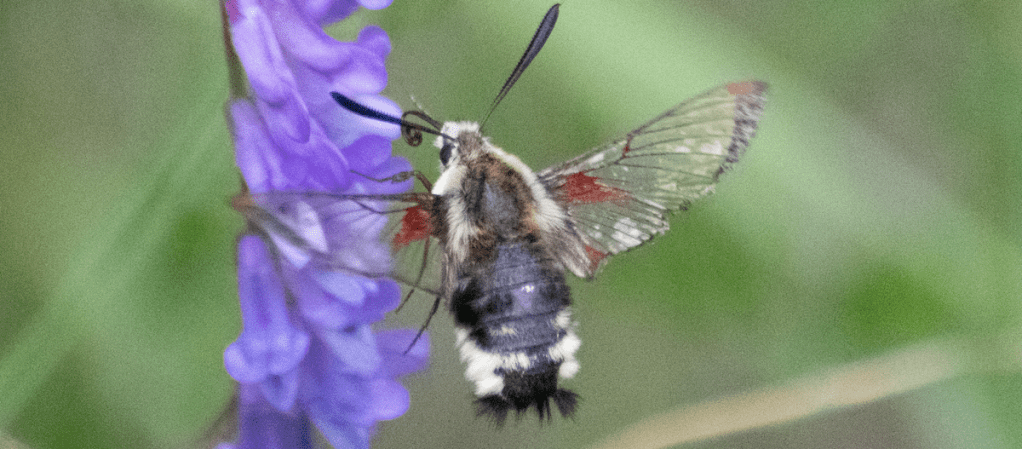
This is last of 3 posts on the subfamilies of the BC Sphingidae, the sphinx moths. There are 11 species in this subfamily in two tribes. Like my other posts on the Sphingidae, this’ll be a little light on photographs for now. I’ve only seen 4 members of this group.
Dilophonotini
The Hemaris are a holarctic genus, with 3 members found in BC. Like the Sesiidae family (clearwing moths), they have scale-free transparent patches in their wings. At this stage I’ve seen so few I won’t attempt to describe the differences: for that, go to PNW moths.
Hemaris thysbe (Hummingbird clearwing moth)
(20-24mm) This species seem pretty well distributed in the province with a lot of observations up north and in the Peace. It’s quite a bit larger than the other 2 Hemaris species. I believe I saw one of these in Tumbler Ridge last year, but couldn’t get a photo off quick enough. Fast little sods.
Hemaris diffinis (Snowberry clearwing moth)
(12-17mm) This species is only known from the Peace River region.
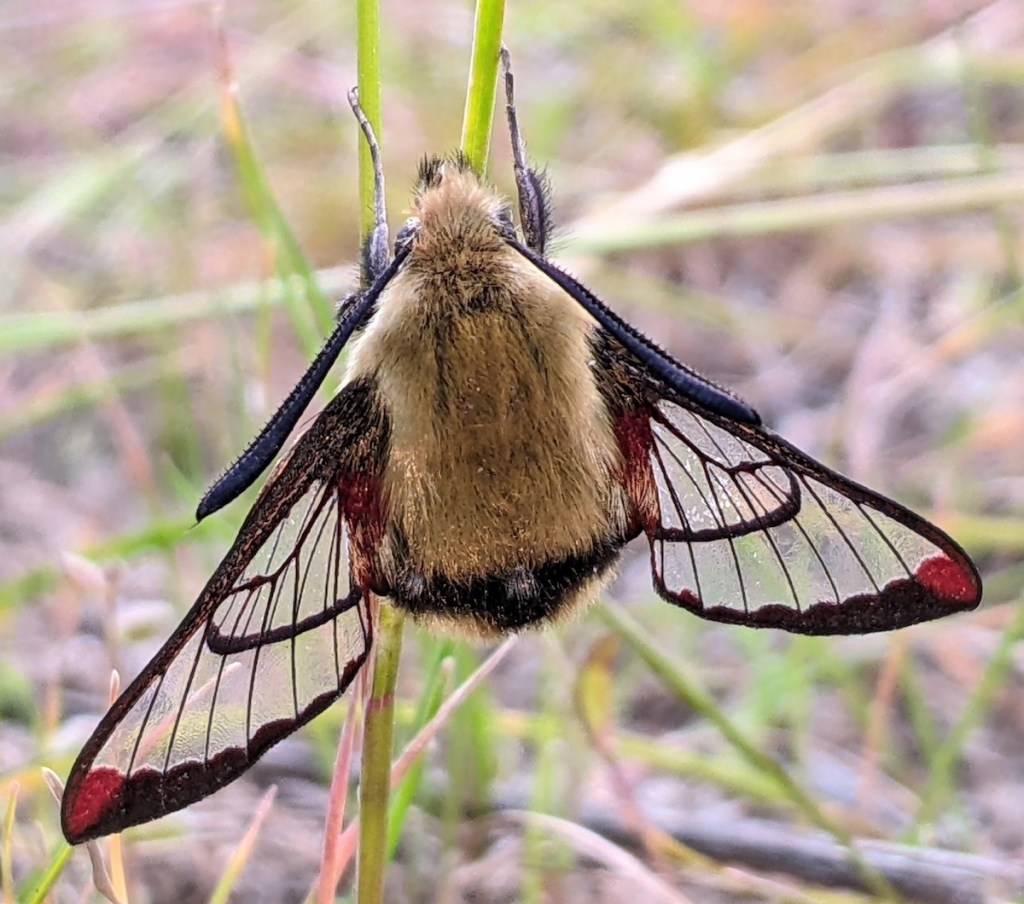
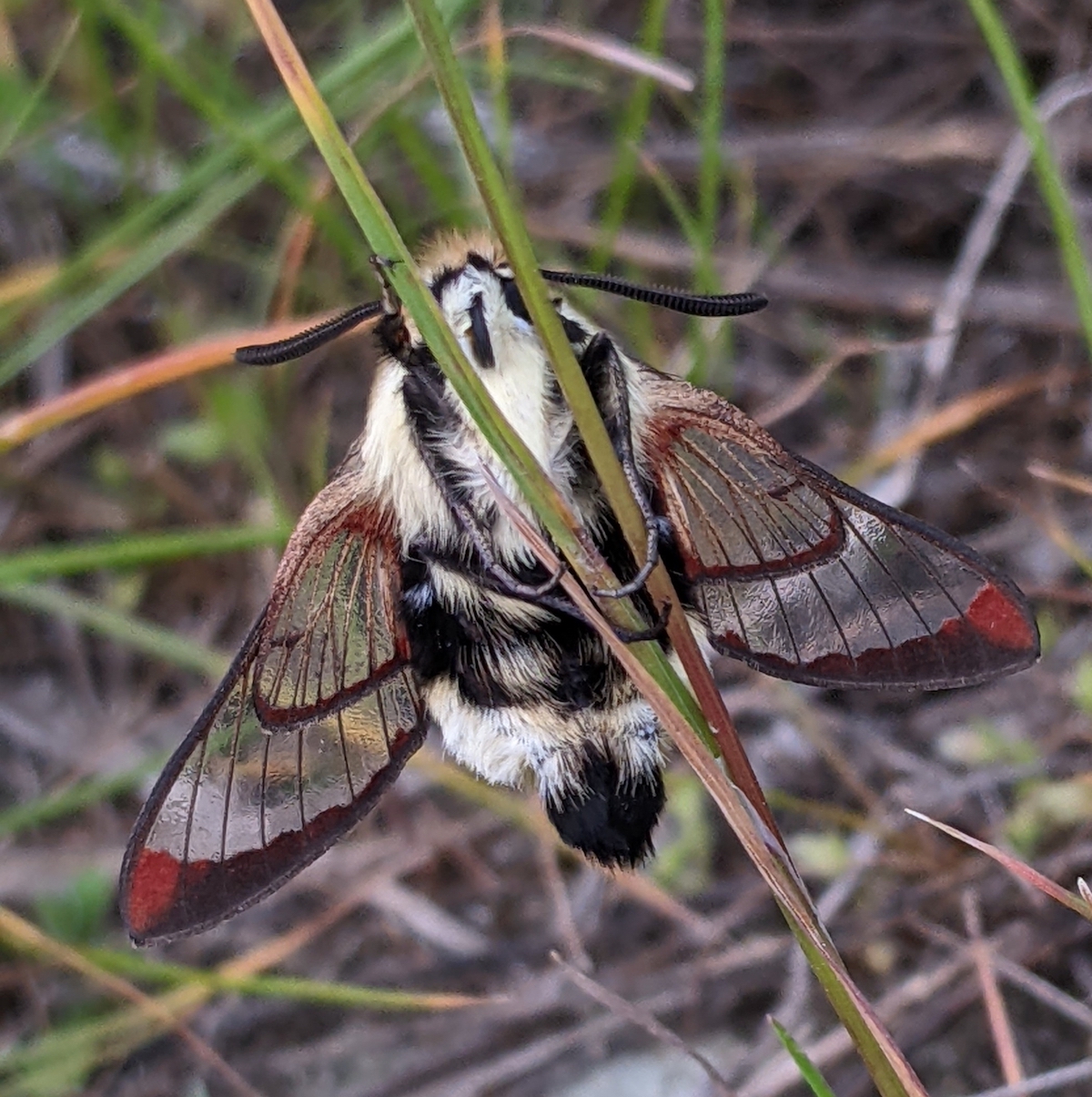
Hemaris thetis (Rocky mountain clearwing)
(17mm) The only species of clearwing I’ve seen and the only one found in lower mainland. In flight, quite resembles a bumblebee. The pictures below are of one specimen I encountered on a cool morning in late May in Okanagan Falls.
Macroglossini
Proserpinus lucidus (Pacific green sphinx / Bear sphinx moth)
(21-23mm) Listed as probable in BC – there are iNat observations as close as Spokane, WA. Interesting moss-green and pink colouration, pretty distinctive if you stumble across one. Curiously, this species flies Dec-April over winter with the bulk of observations in January.
Proserpinus clarkiae (Clark’s sphinx)
(17-18mm) Attractive day-flying sphinx moth. Found in the south of our province, with the exception of the lower mainland.
Proserpinus flavofasciata (Yellow-banded day sphinx moth)
(21mm) A distinctive, day-flying bumblebee mimic. PNW moths it’s uncommon to rare, but may be more common after forest fires.
Darapsa choerilus (Azalea sphinx)
Listed as uncertain for BC, this is an eastern species but likely to occur in the Peace – there are a handful of observations from Alberta. No observations yet on iNat or PNW moths for the region. Brown-orange-red. Quite distinctive.
Hyles euphorbiae (Leafy-spurge hawkmoth)
This species was introduced in BC to control the spread of Euphorbia virgata, the slender leafy spurge. Looks like that species is becoming quite widespread so it’s entirely possible this species will establish itself over time. The 2015 BC checklist mentions that it’s likely to become established due to dispersal populations from Alberta. A little similar in appearance to H. gallii, but wouldn’t be mistaken for one.
Hyles gallii (Bedstraw hawkmoth)
Extremely common. Found all over the province with a lot of the observations in the lower mainland; I see these each year on Bowen Island.
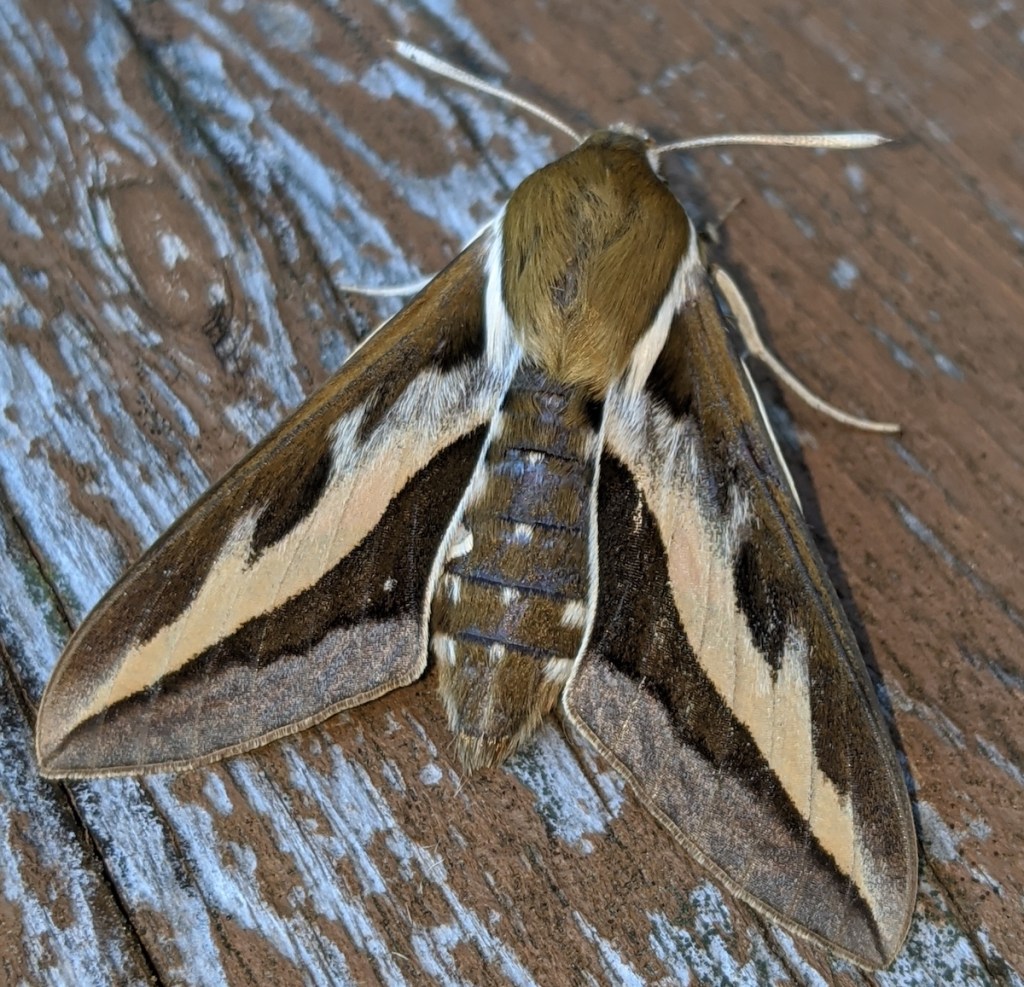
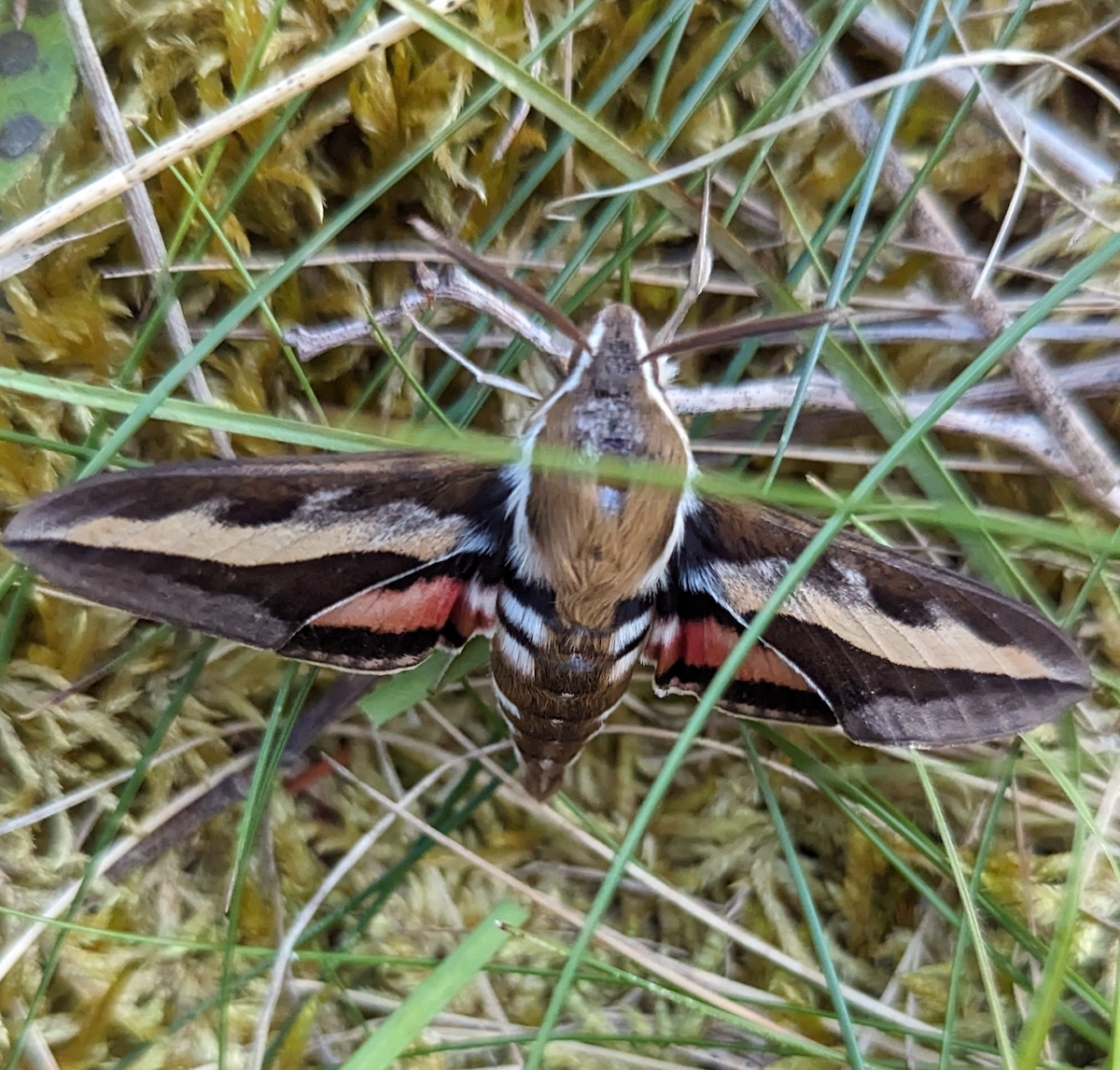
Hyles lineata (White-lined sphinx)
These are also very common – even in the lower mainland – but oddly I’ve only seen a single one outside Merritt in 2022, see (rather indifferent) pictures below. Very distinctive – the white lines are extremely prominent.
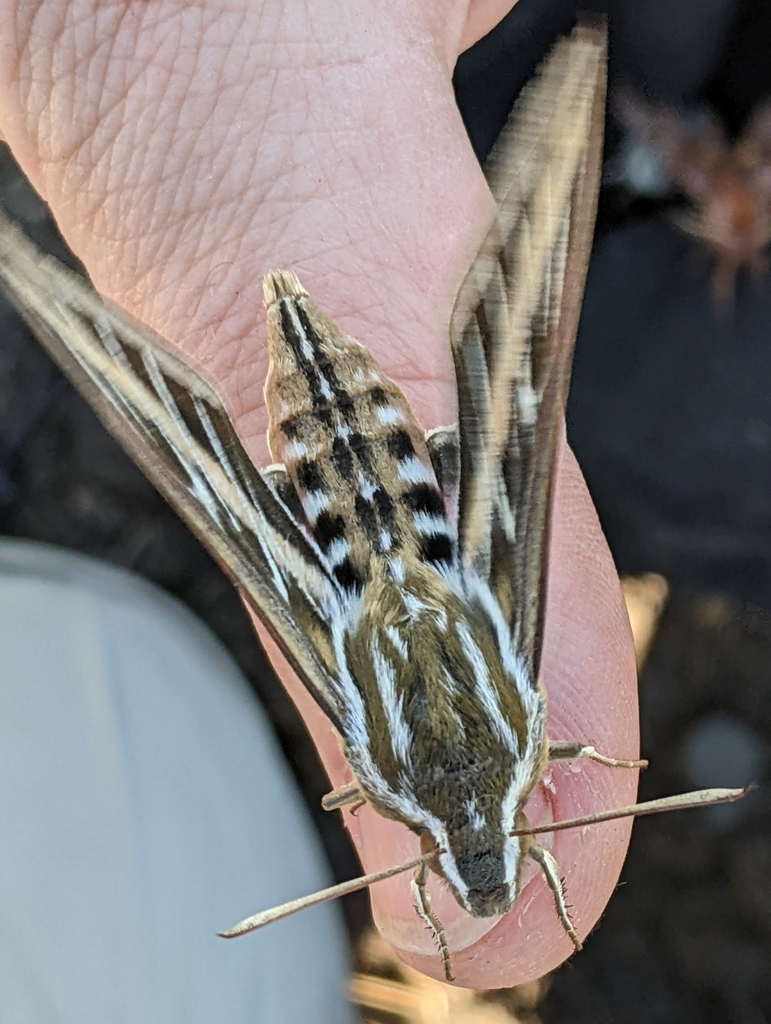

Deilephila elpenor (Elephant hawkmoth)
Bright pink and golden moth, extremely pretty. This is an introduced species from Europe that a sphingid collector released around Vancouver before 1995. Since then it’s become established in the lower mainland and extends a little south of the border. Here on Bowen they’re extremely common: I’ve seen no less than two dozen here in the last 3 years. I feel like they’re becoming more common; last year was the first year I stopped photographing them, there were just too many. Strongly attracted to light, I mostly find them in the nets in the morning.
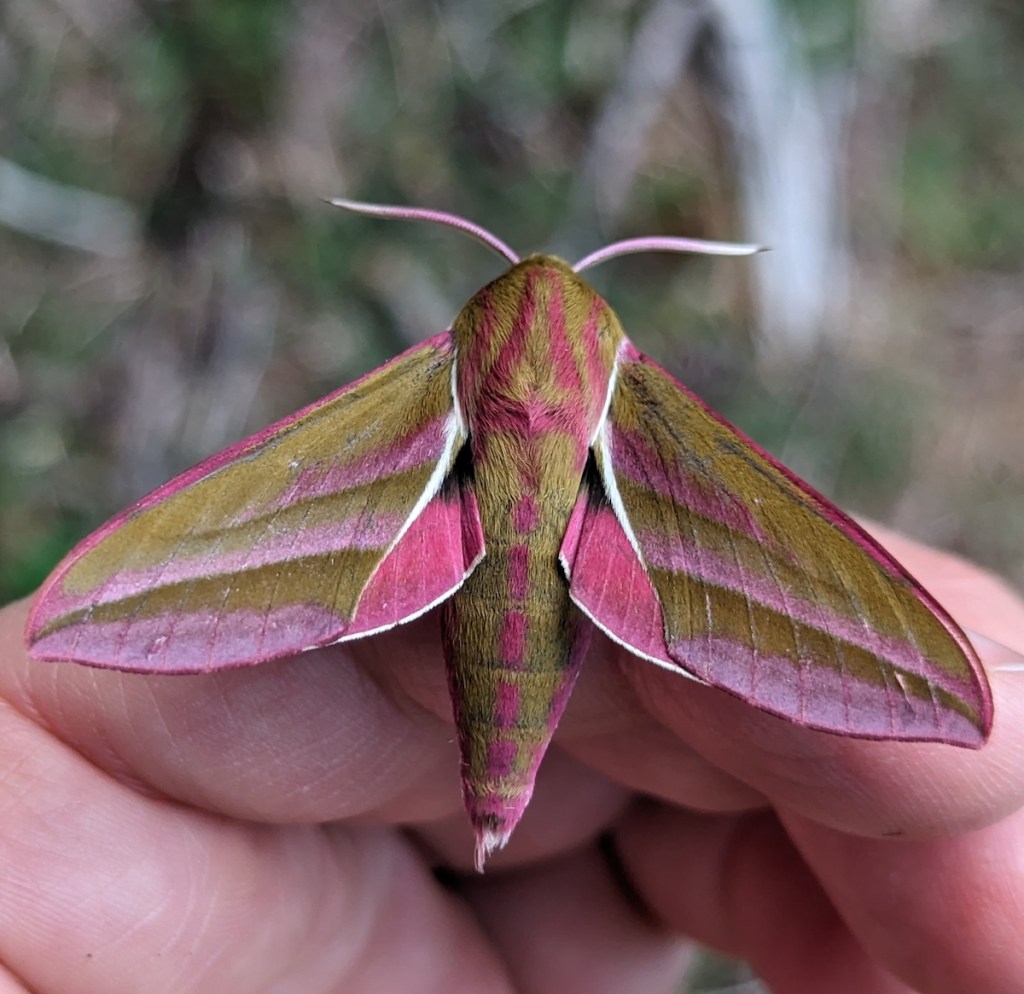
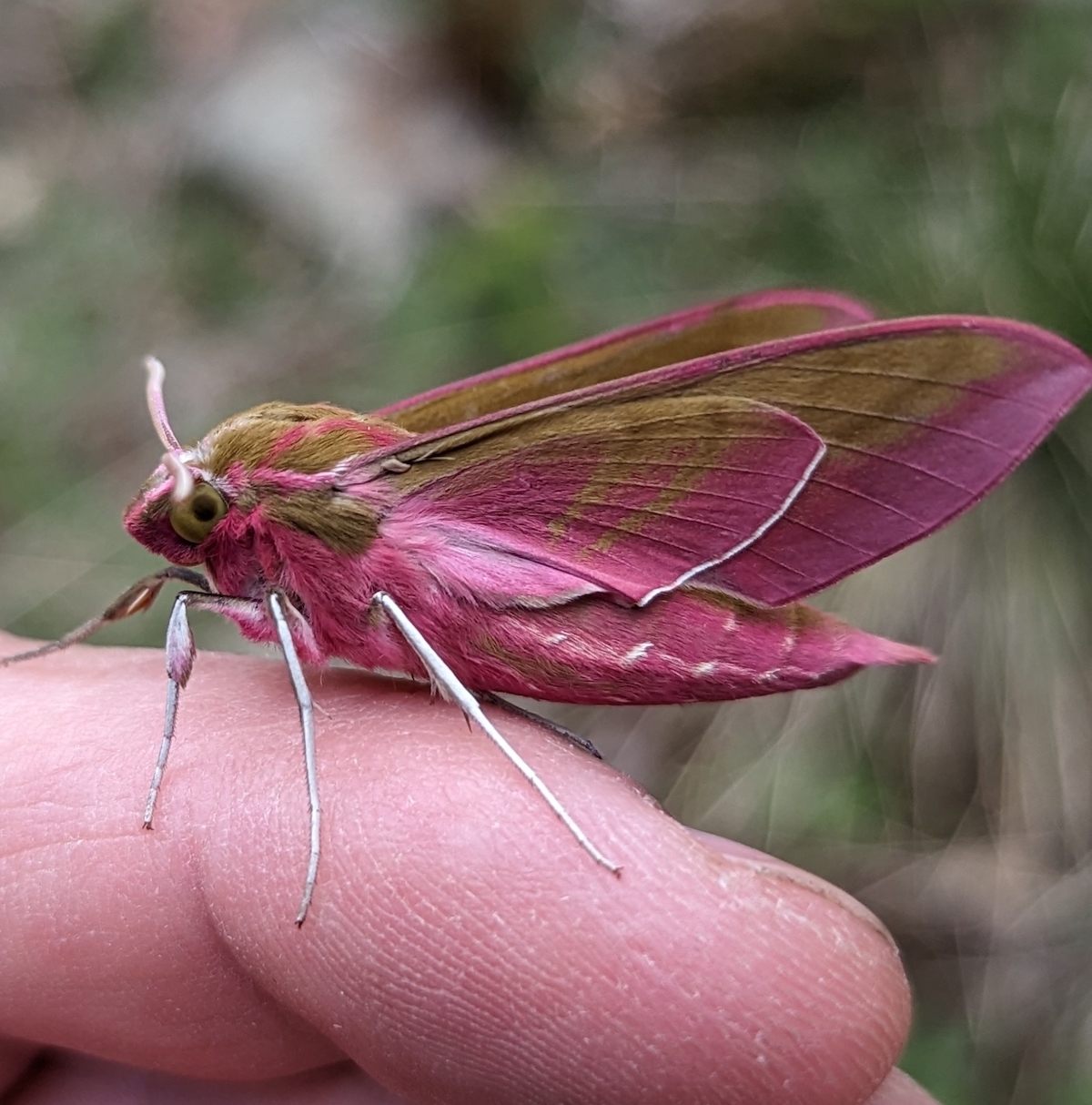
Powerful flyers. Last year I was emptying a trap on the west side of the island and pulled one out. It was warming up its wing muscles and I threw it into the air to give it a bit of lift (and to get it out of the way so I could look at some of the more interesting catches!). A junco had been watching my activities with great interest and once the hawkmoth was in the air, flew to intercept (this is often a grim moment in the mornings when I accidentally feed the local birds). But instead of watching it getting snorked up by the bird, I got to witness a battle of hawkmoth vs. junco – it was quite startling to see just how agile the moth actually was. It probably went on for 20 seconds. The junco made several sorties from bushes and tree to get it, but each time the moth escaped, relying on its agility to switch direction too quickly for the bird. Juncos are pretty small and agile themselves, so it was quite unexpected.
 BC Moths