
Coming from birding, taxonomical names for Lepidoptera suddenly take on a whole new significance. Bird identification is easy (sorry, fellow birders but it really is). Pop to your local bookstore and you’ll find an wealth of field guides to help out. Or forget the whole “book” thing (it’s so passé): download an app or go online. There are plenty of people anxious to help ID your bird. Whatever your medium, the vast bulk of birds on the planet are extremely well known and with a little work you can find them presented in Glorious Technicolor, what times of year they’re around, their different plumages, gender differences, dental records, and so on. After 12 years of birding I don’t know the scientific names for the most birds because I just don’t need to. We all use the common names here in North America. It’s only when I have spare time or travel that I find myself examining the taxonomy to see how these strange foreign birds relate to the birds I know.
Mothing is different. There’s a chronic paucity of information out there, so you have to scramble to find the tiniest nugget of information to help with identifications. Many species don’t have common names; many are so poorly known their taxonomy is up in the year; many more are unknown of science. There are no relevant books in your local bookstore and knowledgeable people and sources are in short supply. So with moths, taxonomic names suddenly become an important clue.
It’s been fascinating writing up the various factual posts on this blog about the families, subfamilies, tribes, genera. Each one’s forced me to step back and evaluate the scientific names themselves to find some meaning: there’s always something there, even if it’s not immediately obvious. Given that my latin and greek is even worse than my French (and that’s saying something: my French sucks) I often don’t get very far, but at least now I’m paying attention.
Take Euxoa flavicollis. This was a moth I saw around Merritt earlier this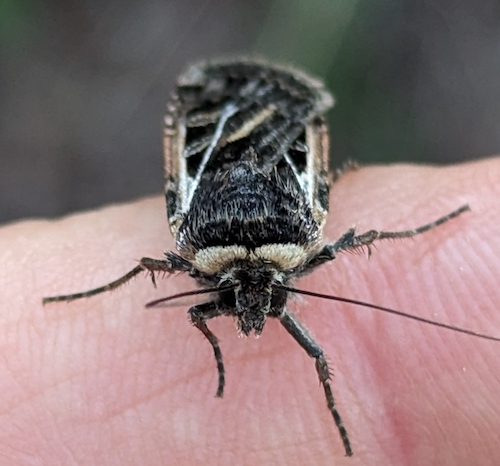 year. I’d been forced to sleep in my car for the night and was grumpy and frozen to the bone as I emptied the net, but I distinctly recall saying “oooh baby!” when I saw it. It was a decent sized moth, perhaps a bit nondescript to a non-moth-er, but it struck me as an Euxoa species right away. When I got home I went online and performed my usual labor-intensive ritual of searching iNat, bugguide, PNW moths, MPG – nothing. I figured it was listed in one of them, it usually is. But I still couldn’t find the sucker. It wasn’t until a few months later that somebody ID’d it on bugguide. Turns out the answer was staring me in the face the whole time. Flavi. Collis. Flavicollis – yellow collar, nitwit! The most distinctive feature of the moth which I’d gaped at. Because I hadn’t been paying attention to the scientific names when I was hunting for it, I’d missed the ID. Lesson learned.
 BC Moths