
Alrighty! Let’s take a look at another not-so-well-represented lepidoptera family in BC. Reviewing taxons like this helps stave off the fact that the only moths outside the last few weeks are sodding Operophtera. Like, seriously: no other species whatsoever. Zilch. This has been a bleak Christmas. I need a flight to the tropics, stat.
The Lasiocampidae are more commonly known as tent caterpillars and lappet moths. There are around 1950 known species worldwide, but BC only has 4 in the two subfamilies listed below. Family members are typically sexually dimorphic1 with the females being significantly larger than the males but I’m not sure about whether that’s the case for the species here in BC. Adult lasiocampids can’t feed – their mouthparts are vestigial and non-functional.
Lasiocampinae
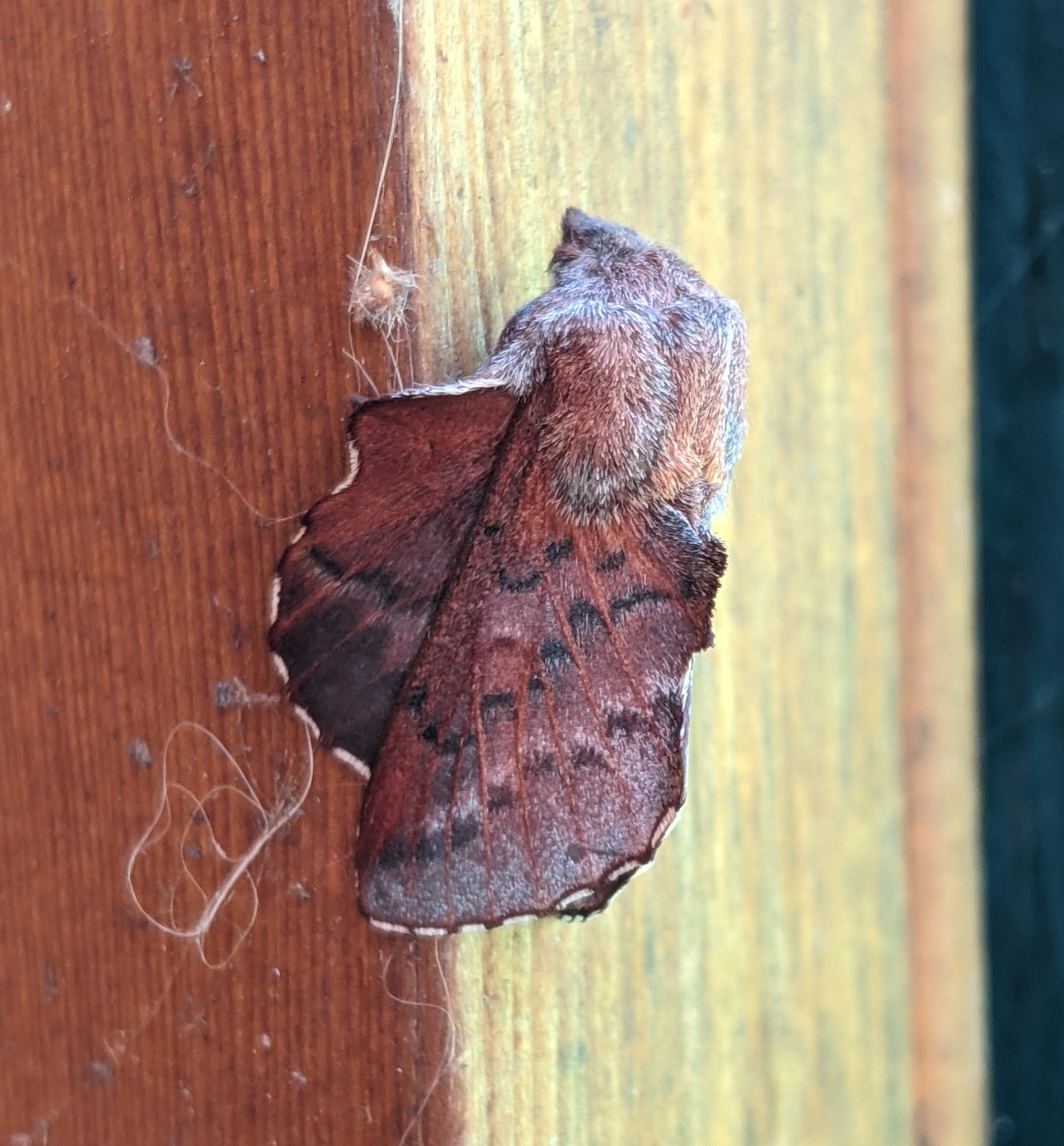

Phyllodesma americana (American lappet moth)
Extremely common BC moth. That odd shape is due to the hindwing extending beyond the forewing. Most moth have the hindwings neatly tucked away underneath the forewing. See this post on the Paonius genus of hawkmoths for another illustration.
These are professional floppers: any time you touch one they leap on the ground and flop around like they’re covered in ants. I have a memory of encountering other lasiocampids in South America with the same behaviour. For larger-bodied moths that encounter a threat but can’t take off right away, some play dead, some run like crazy, some cling to the moth net like grim death, and some flap around like these chaps. Evolutionary defence strategy, I’d assume.
The second P. americana photo above is from Fort St. John in May, 2023. It’s quite different than the specimens I’ve seen elsewhere in the province: much greyer overall. I’m not clear from my reading whether there are actually different subspecies in the province or if they’re just exhibiting regional variation. But it’s a startlingly different-looking moth than our local chaps.
Malacosoma
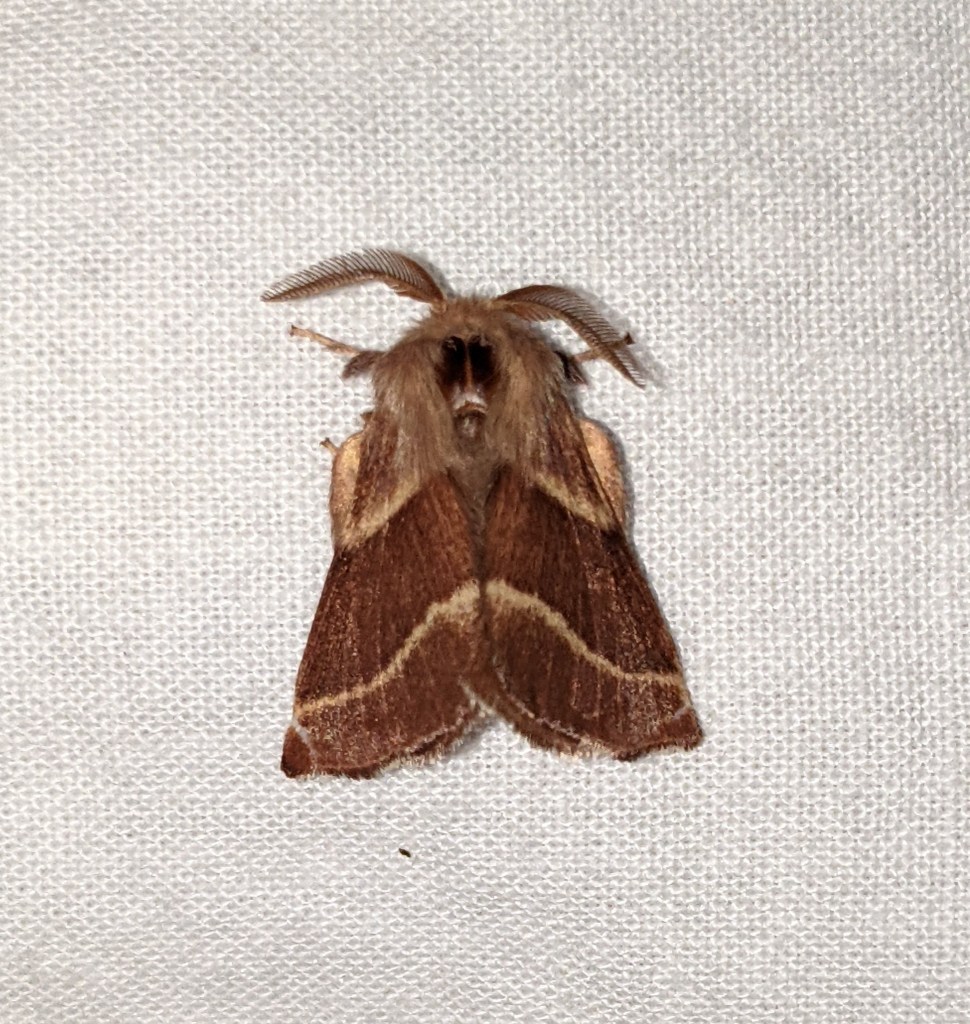
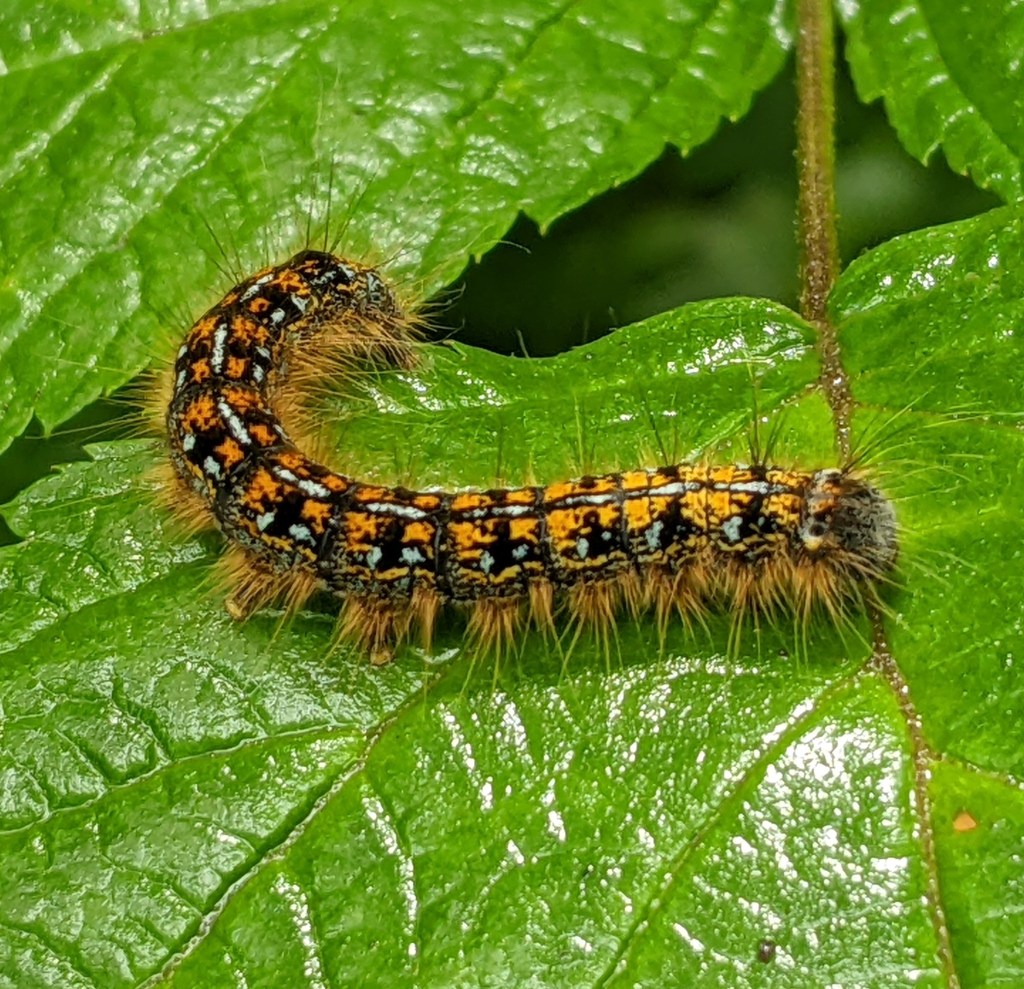
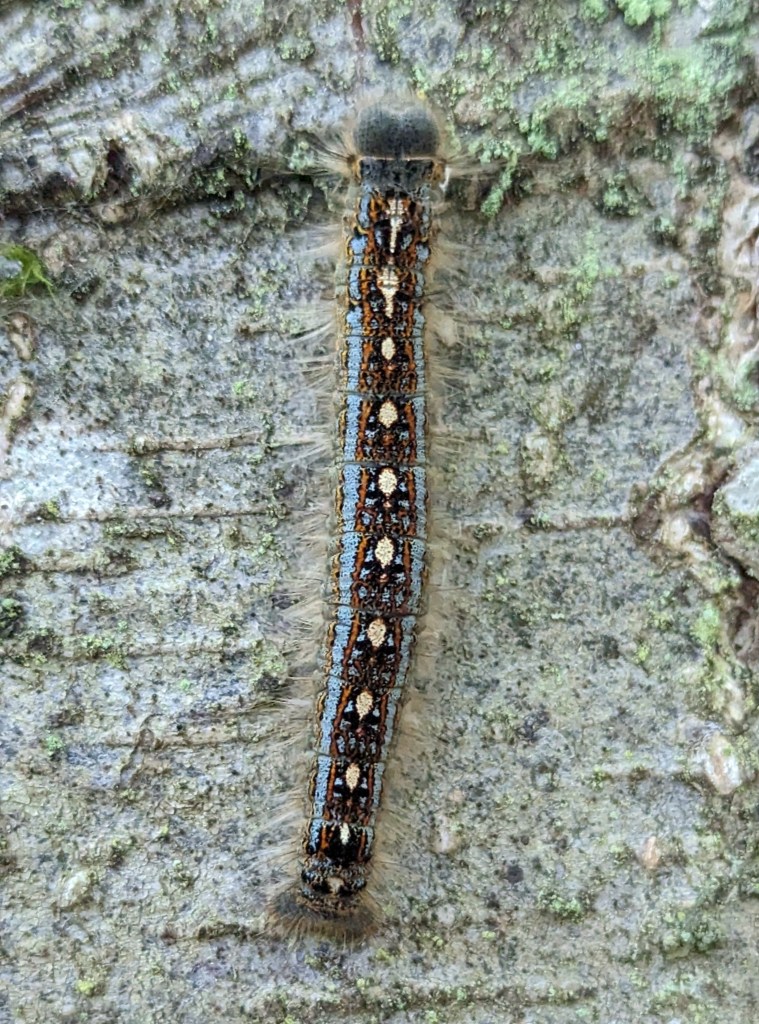
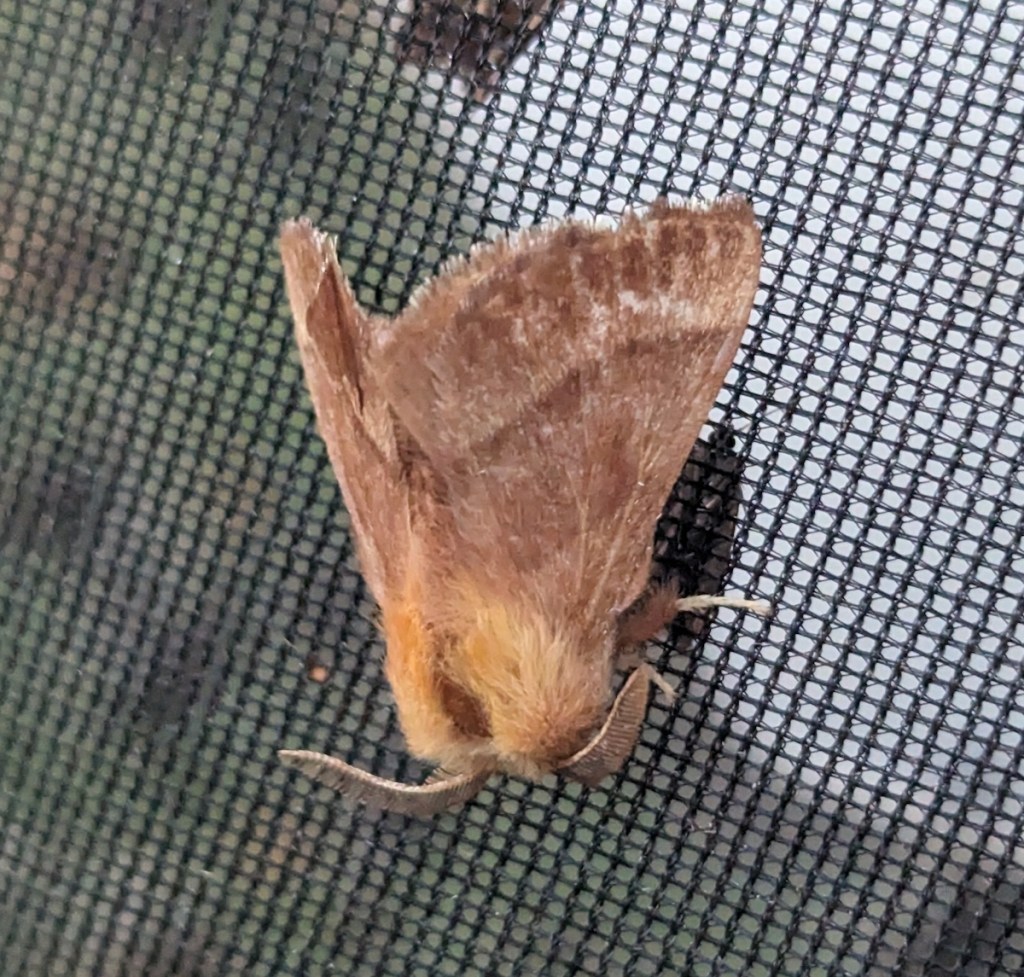
Malacosoma californica (Western tent caterpillar moth)
The Malacosoma are known as tent caterpillars: they’re brightly coloured caterpillars that create large tent-like structures out of silk on trees and bushes. M. californica is well represented here on Bowen Island. I set up my moths nets on the west side of the island during the summer months and a couple of spots are so Malacosoma-heavy I’ve taken to avoiding setting up the moth traps at those locations while they’re erupting. The nets get too full of them.
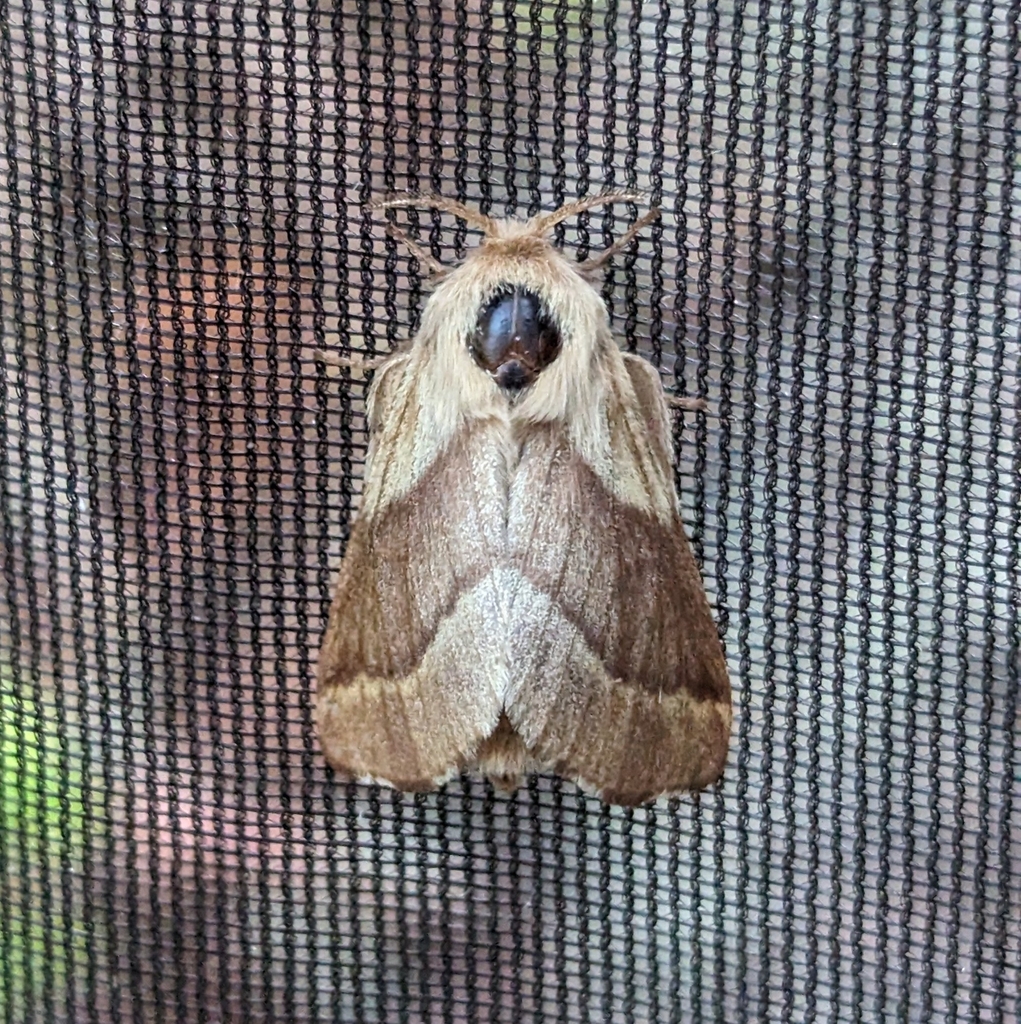
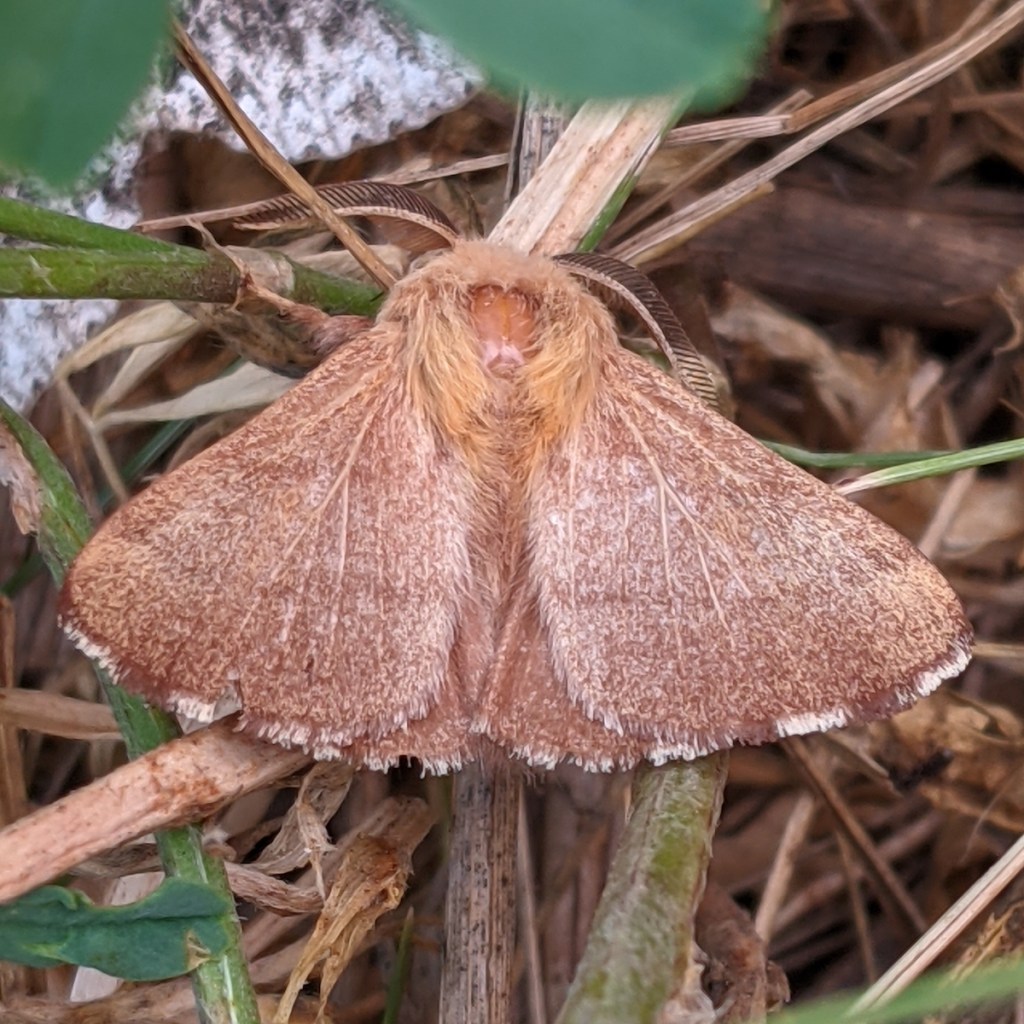
Malacosoma disstria (Forest tent caterpillar moth)
I find this species very similar to M. californica but around here in the lower mainland they’re lighter brown and slightly larger. While some seem to fit nicely into one or other species I’m honestly not sure about many I see. The caterpillars are easy to tell apart however (see images). This would be a good species to rear.
Up in the Peace River region his year I saw a few which I believe to be M. disstria, but are quite morphologically different from the local bunch: much more of a chestnut brown colouration with yellow-orange hairs over the thorax. See the last 2 photos above.
Macromphaliinae
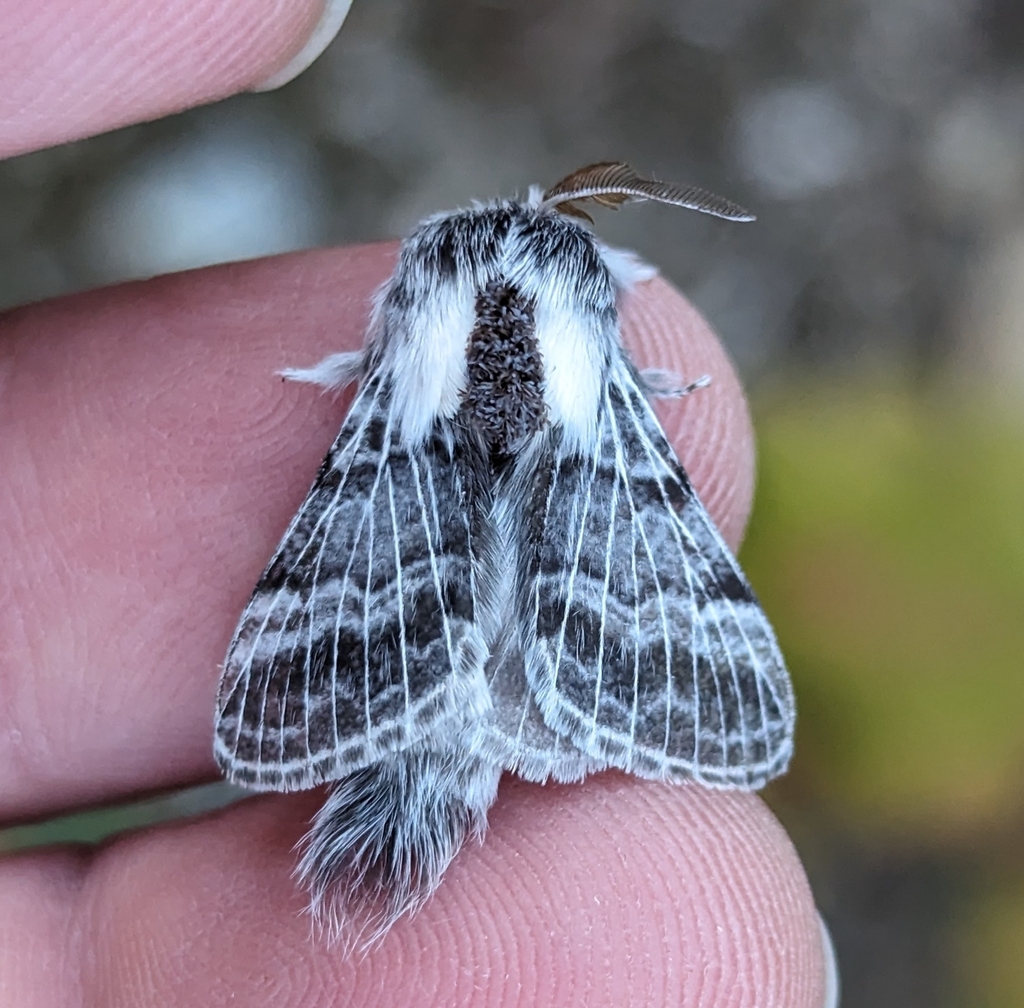
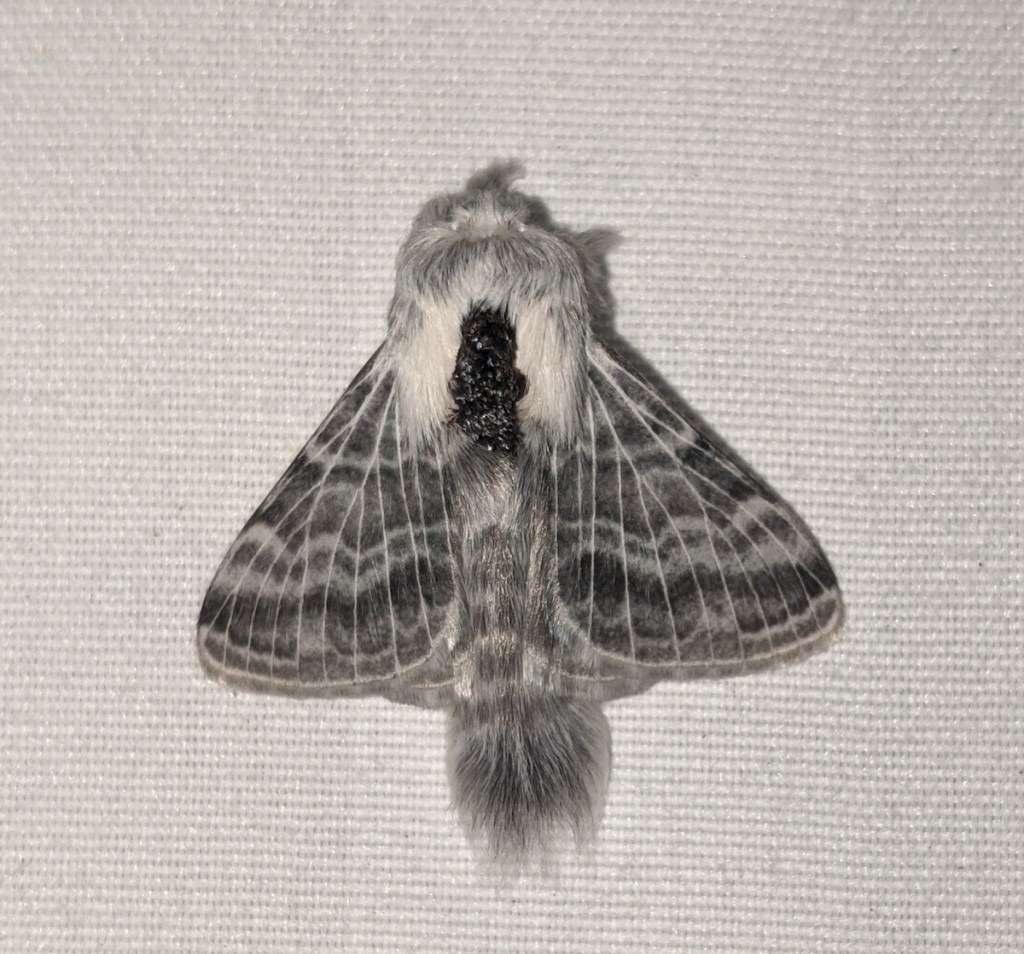
We have a single species of this subfamily in BC: Tolype dayi. A study from 2015 regards this species to be a synonym of T. distincta. I’ve rather hedged on this on iNat and I see I have them listed under both species. Gotta update that… But unless I hear otherwise, I’m logging all new observations will be logged as dayi.
Very unique-looking moth. I’ve found them to be pretty variable in how black they can appear. Total clingers. These can be a royal pain when emptying the moth nets: they won’t let go and can be very difficult to extricate.
- meaning: the sexes are physically dissimilar. ↩︎
 BC Moths