
Sheesh, this blog is only 2 weeks old and this post is already 6 months overdue. Joke!
I’m trying to keep everything here as readable as possible, but now I’ve written a few posts, I’m finding it hard not to use the odd technical term. And while I can keep adding footnotes to explain them, I’m not going to keep defining taxonomic rankings themselves. They’re just so foundational and I’ll be using the terms too often. Knowing how living things are organized is the only way to make sense of it all.
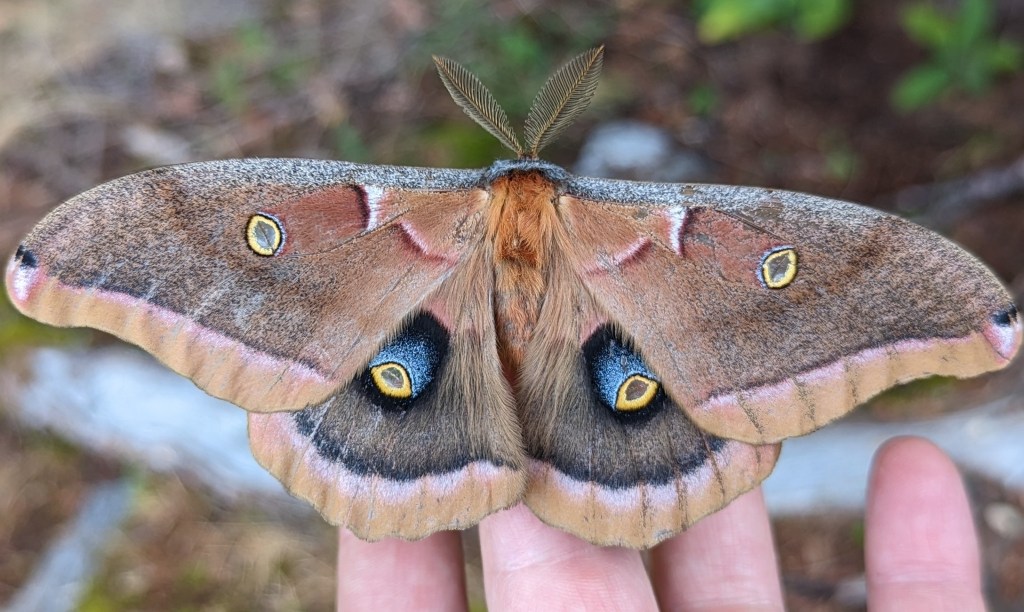
So! This being a moth blog, let’s use a moth as an example – and a particularly large and charismatic BC 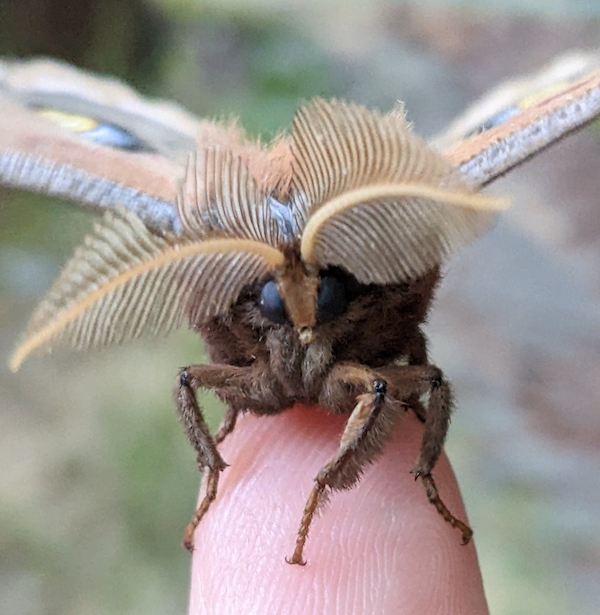 moth at that: Antheraea polyphemus, the Polyphemus moth. I’ve seen this moth all over the province and it never gets old. One morning this summer I pulled 5 out of my moth net here on Bowen Island. Booyah.
Common and scientific names
Species have either one or more names: a scientific name which consists of two parts, genus and species (Antheraea polyphemus), and if they’re common enough, cool enough or a pest species they have a common name as well (Polyphemus moth). Inscrutible species that people seldom encounter often don’t have common names. Common names can change from place to place so they’re a lot less useful when talking about them, but they can be easier to memorize than some impenetrable latin/greek name. For instance, in North America almost everyone uses the common names for birds (crows, ravens, jays etc.) but in South America there are so many different names for the same species people are more likely to use the scientific names just so they can communicate.
Full taxonomy
For our moth, here’s the full taxonomy from broadest (kingdom) to most specific (species):
Kingdom: Animalia
Phylum: Arthropoda
Class: Insecta (insects)
Order: Lepidoptera (moths and butterflies)
Family: Saturniidae (Emperor and giant silk moths)
Genus: Antheraea (Tussar moths)
Species: polyphemus
There’s also an 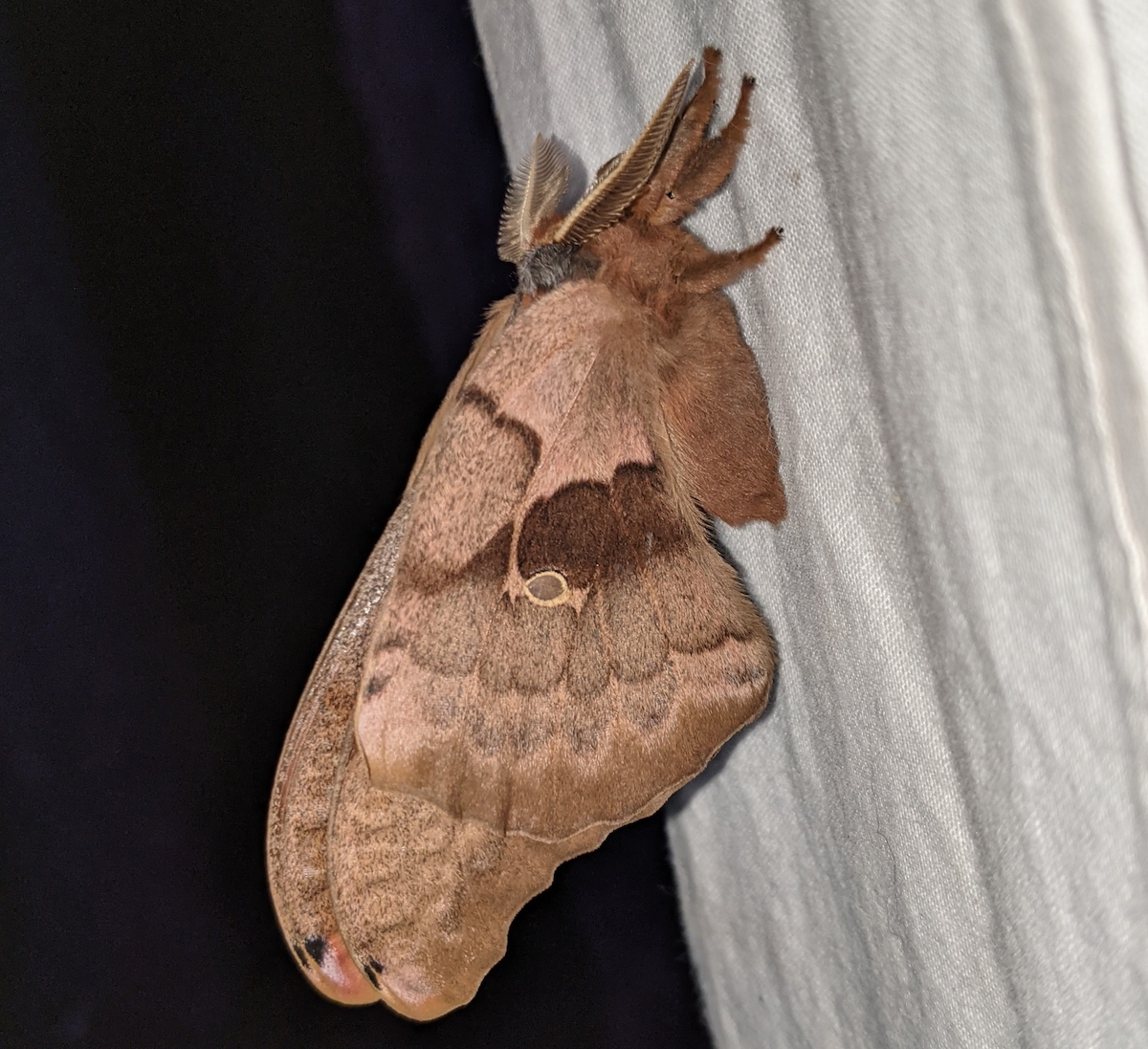 array of intermediary groupings: tribes, subfamilies, subclasses, superfamilies, subspecies and more, which may or may not be present depending on the species and group. But the ones listed above are the central ones.
One key tip which will help a lot on this blog + elsewhere: note the endings of the following taxonomical rankings – these are consistent across all names and vital to memorize.
Families: idae
Subfamily: inae
Tribe: ini
Once you learn that you’ll have your bearings in any taxonomical discussions even if you don’t know the actual taxons. Super handy.
 BC Moths