
Merry Christmas! What could possibly be more festive than examining a family in the Lepidoptera order to see what species are present in BC, Canada? I agree: nothing whatsoever.
So let’s look at the Drepanidae, the false owlets1 and hooktip moths. I’ve seen the bulk of the 11-odd species found in BC, but the radical difference in appearance between their members has often left me wondering.
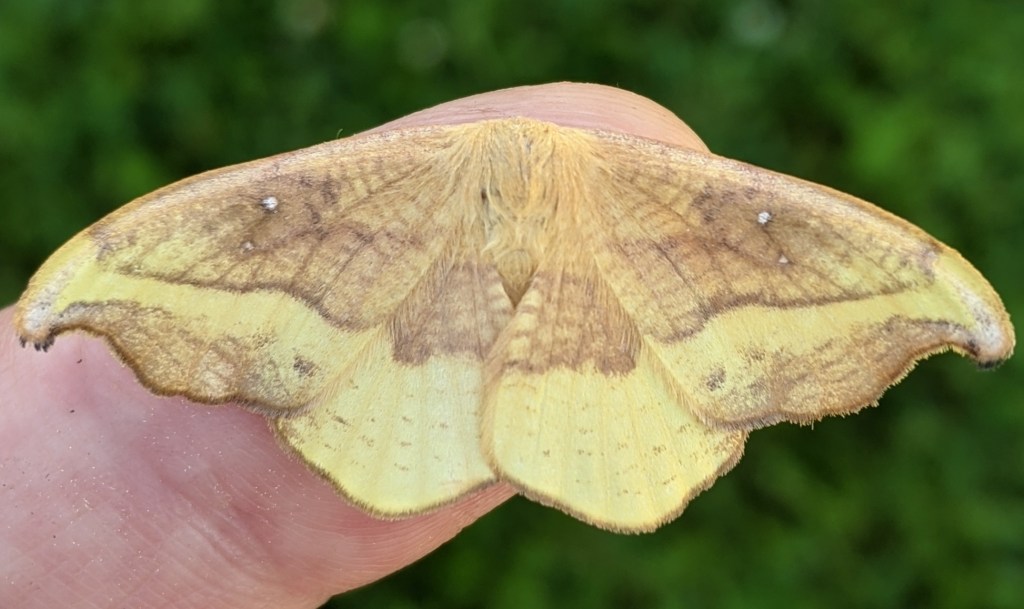
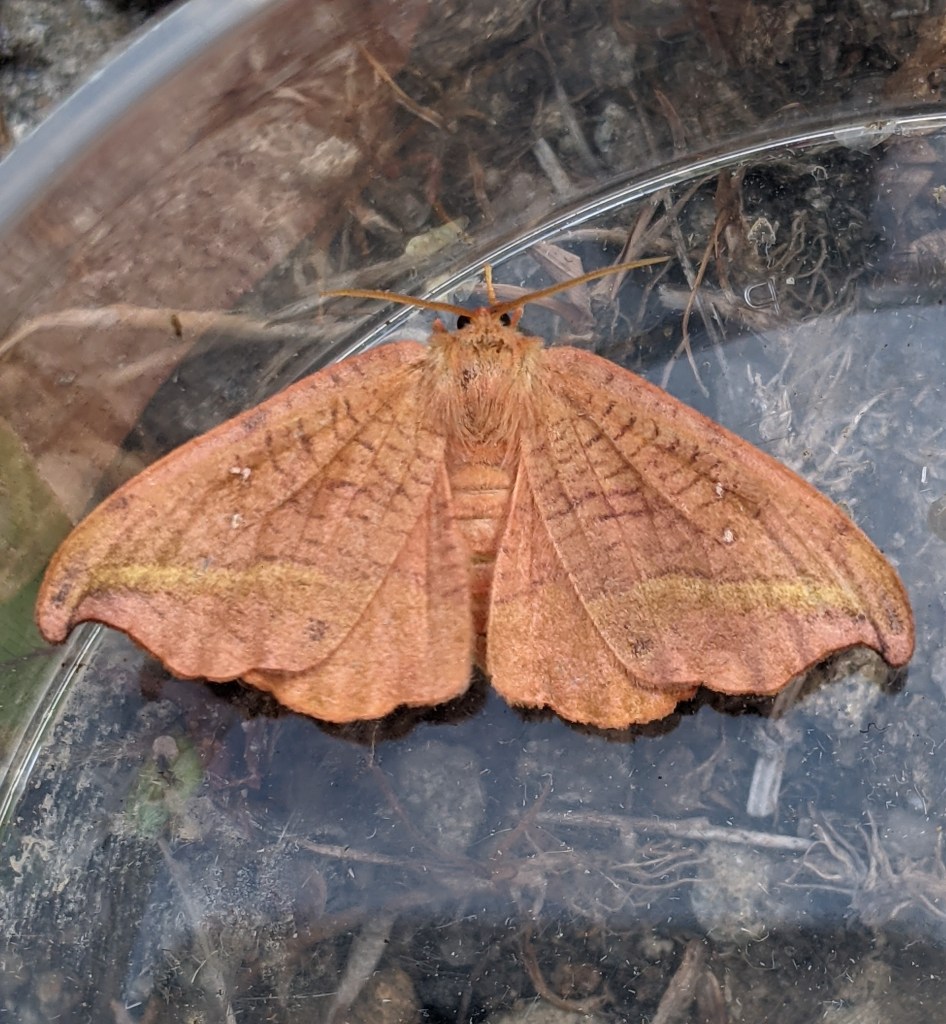
The Drepanidae is the only family in the Drepanoidea found in BC. Most o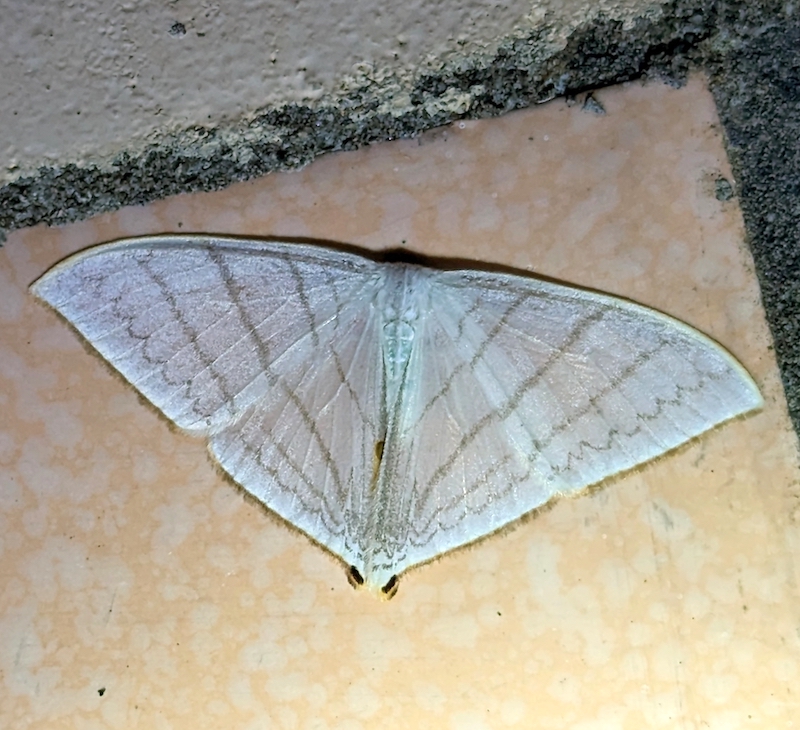 f the species in this superfamily are found in East Asia. While on that tangent, the image to the right is something in the Ditrigona genus that I stumbled upon in Taiwan earlier this year. Hot damn. Etymologically, “drepan” is derived from the Greek “drepanon”, meaning sickle, referring to the hooked wing shape2 of the Drepaninae subfamily, as illustrated in the main post image above of Oreta rosea (Rose hooktip)3.
Drepanids range from 35-45mm and contain two distinct subfamilies. The visual differences between them are considered to be superficial: it’s the unique structure of their tympanum that unites them.
Drepaninae
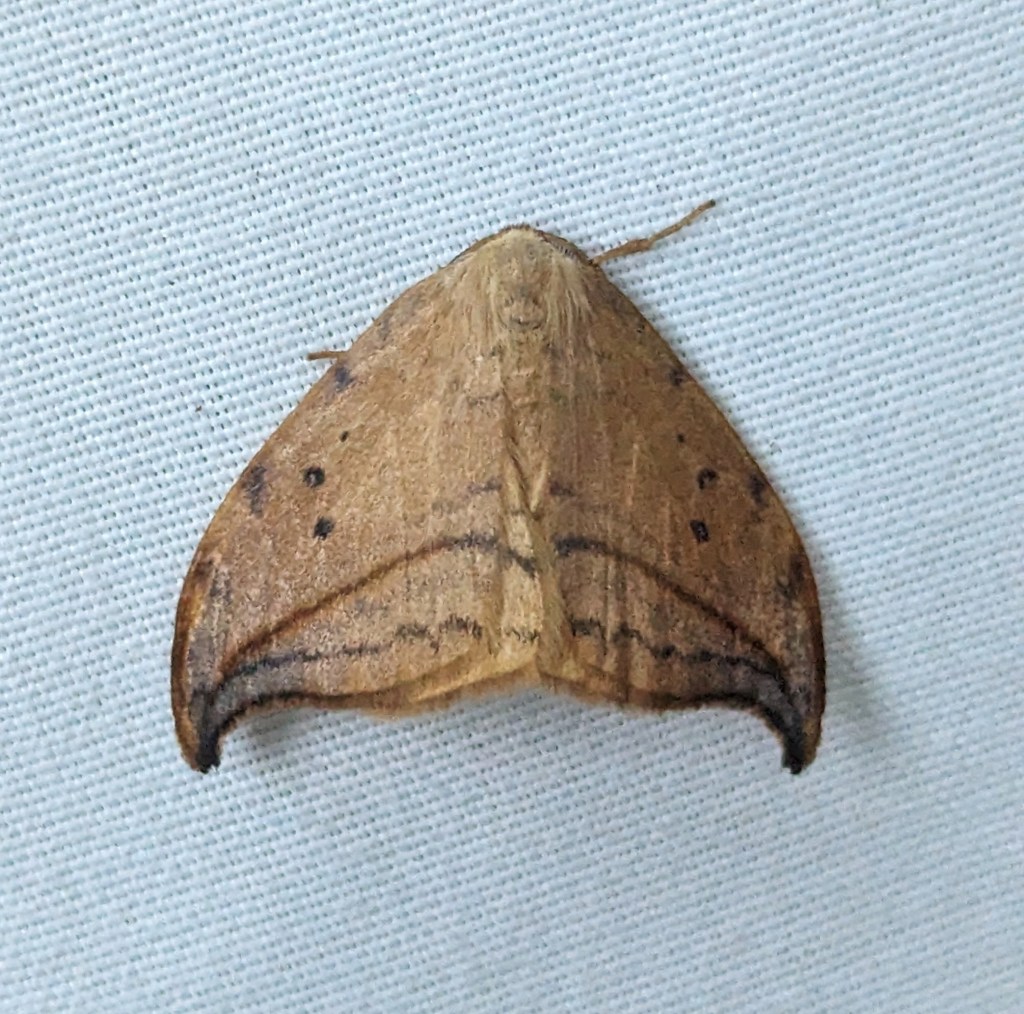
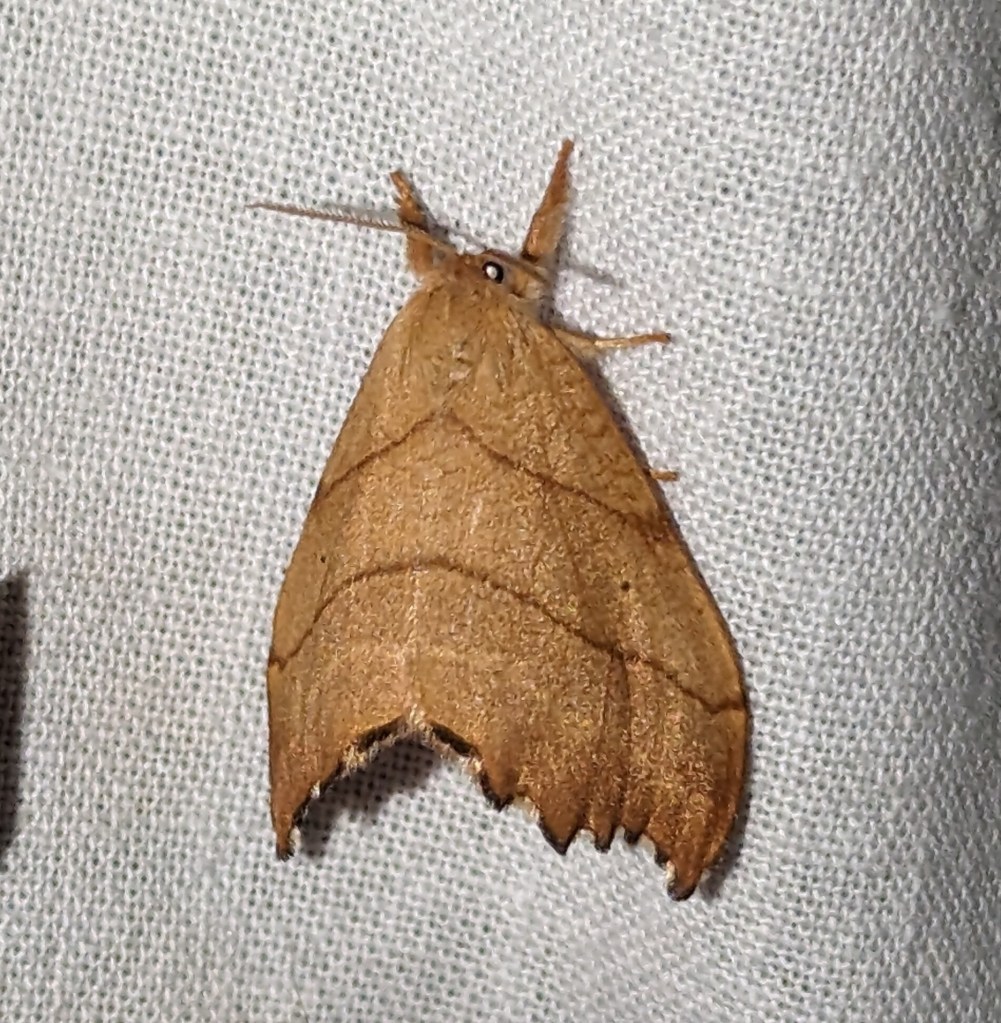
This subfamily have always resembled geometrids to me – I recall being surprised when I saw my first members of the group and iNat insisted on placing them in the Drepanidae (stupid, clearly-wrong iNat). We have 4 species in BC:
- Drepana arcuata (Arched hooktip). Very common throughout the lower half of the province. I regularly see a lot on Bowen Island, May-August.
- Drepana bilineata (Two-line hooktip). Again, extremely common – though less so than D. arcuata. I’ve seen these all over from the Peace River region to the Okaganan to home. From the photos above they may look a little similar, but in practice you’d seldom confuse them. Markings and shape of the wing’s outer margin aside, D. arcuata typically holds itself flat while D. bilineata holds its wings heavily curved over its body, forming a tent.
- Eudeilinia herminiata (Northern Eudeilinia moth). Interesting one! All observations on iNat are from eastern North America, none even faintly close to BC but apparently they’ve been reported here. If the postmedial and antemedial lines were faded I could well imagine this being mistaken for some geometrid genus, Protitame, Scopula, Cabera maybe.
- Oreta rosea (Rose hooktip). A very attractive, distinctive moth. This is also more common out east, but BC has a few observations from the interior and north. They’re pretty variable as you can see from the two photos in this page.
Thyatirinae
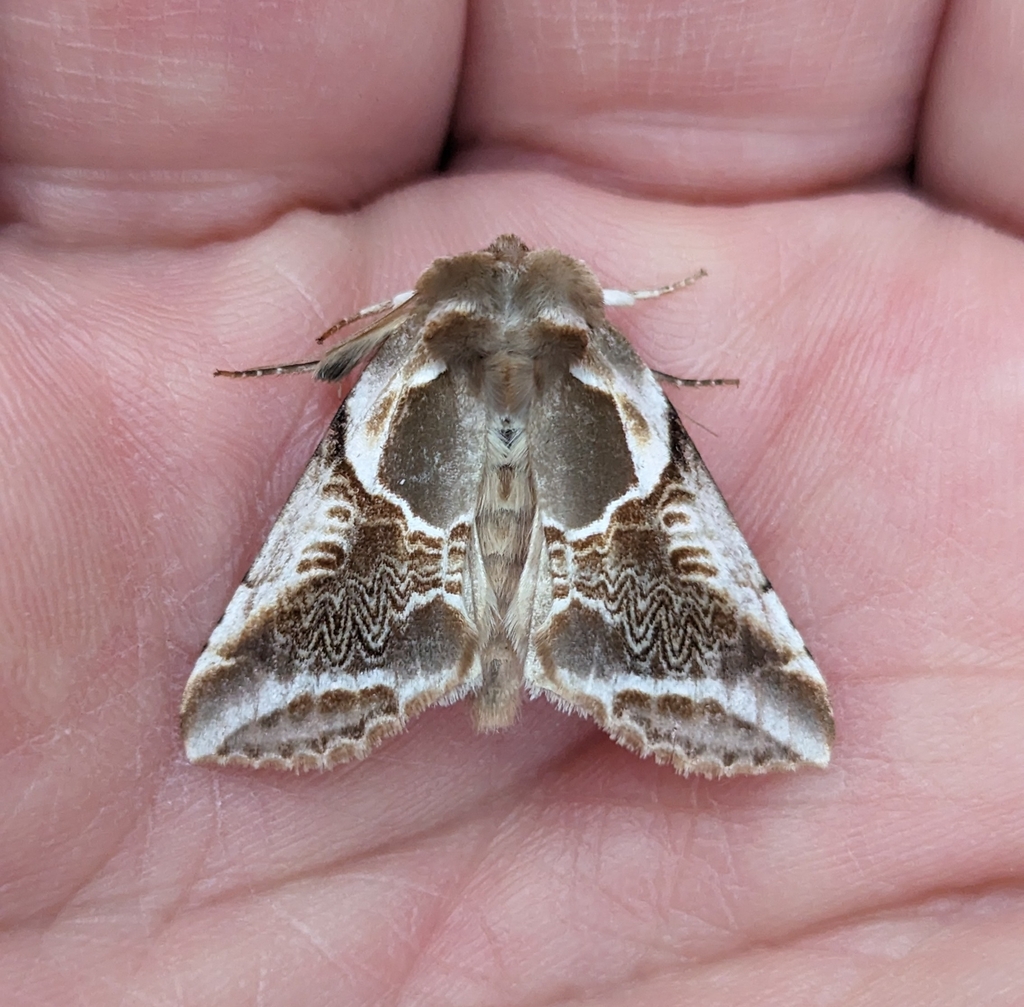

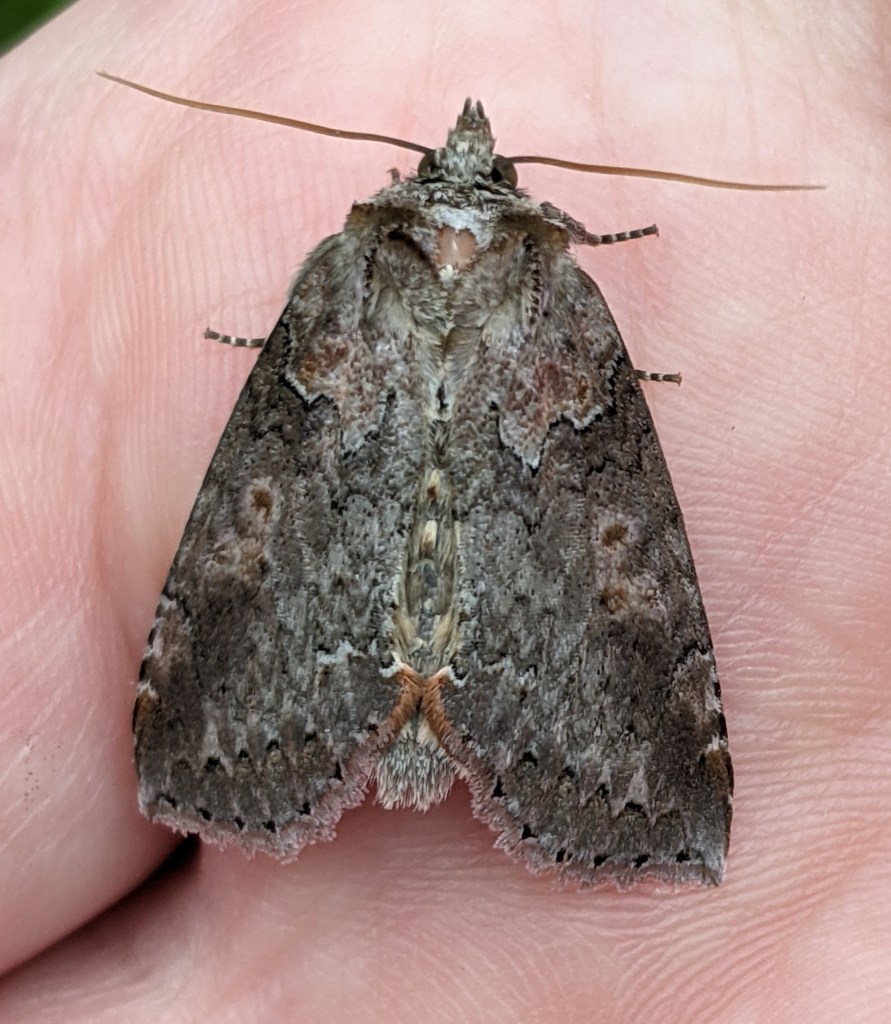
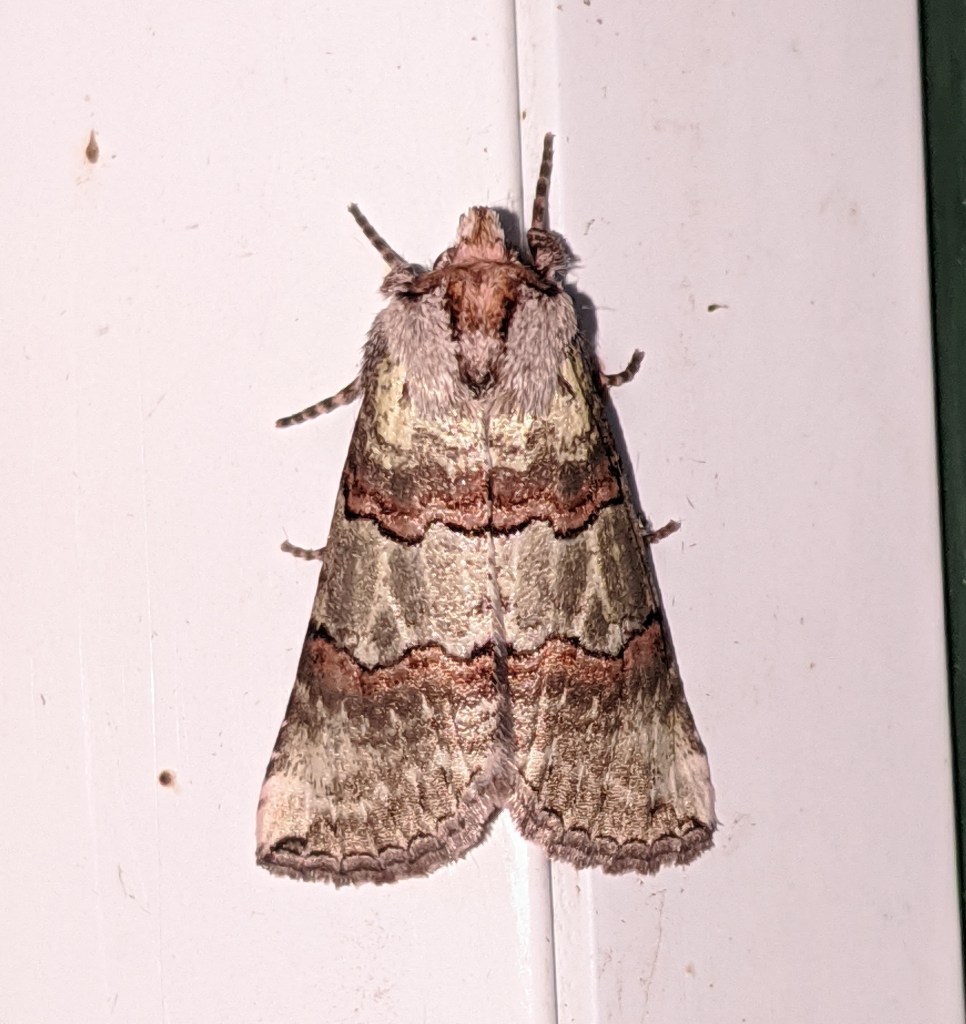

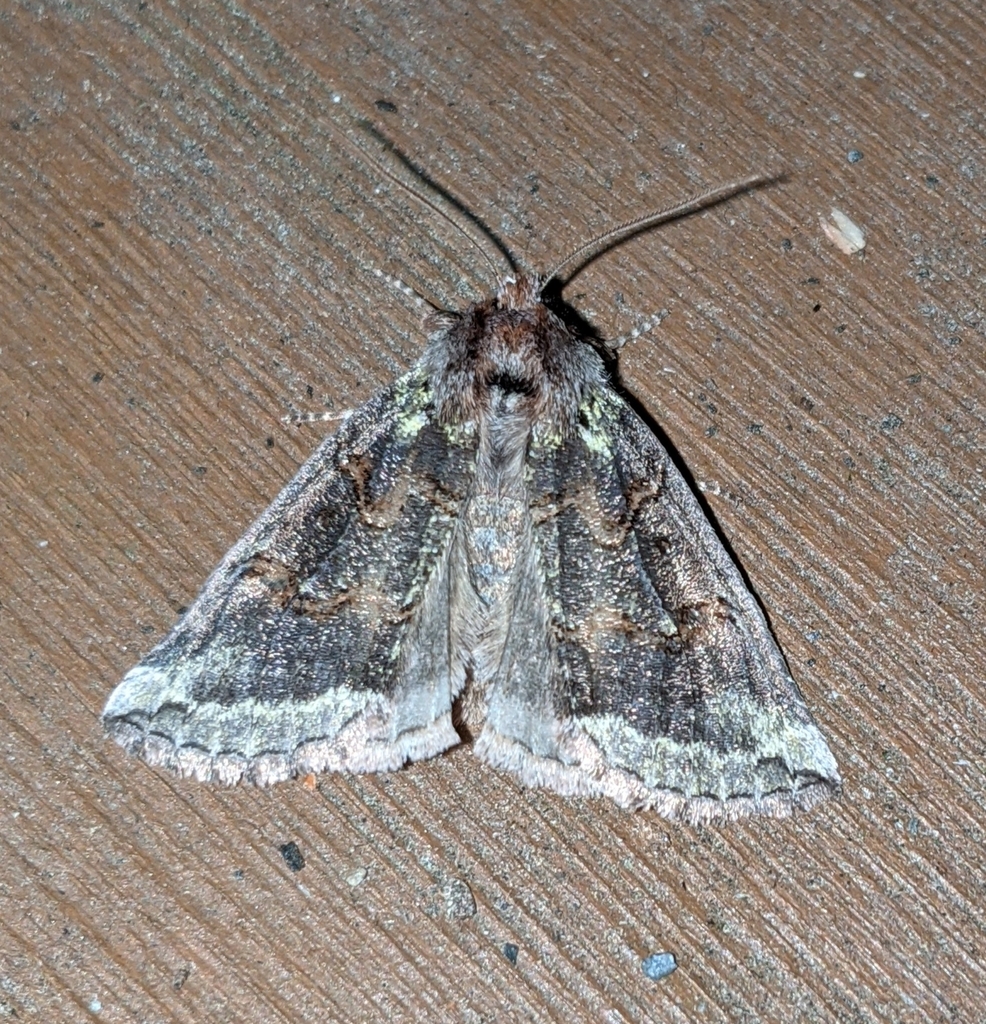
This subfamily is very different-looking indeed – they look like noctuids to me. Convergent evolution? These were previously placed in a family of their own, the Thyatiridae4, but now placed as a subfamily under the Drepanidae. The 2015 BC Checklist lists 7 species in BC, but Dave Holden spotted an unrecorded Ceranemota sp. in Manning Park in 2022. See below.
- Habrosyne scripta (Lettered Habrosyne moth). Ultra-distinctive and super common around the province – so common I tend to just dump them out of the nets instead of photographing them. Not that they aren’t nice to encounter. They look like they’ve been designed in photoshop.
- Pseudothyatira cymatophoroides (Tufted thyatirine moth). Boy what a mouthful; do not under any circumstances attempt to pronounce this at home. Monotypic5 genus.
- Euthyatira pudens (Dogwood thyatirid moth). As the common name suggests, this species is dependent upon dogwoods (Cornus). BC has 9 species of Cornus reported from all over.
- Euthyatira semicircularis. Less common than E. pudens.
- Ceranemota fasciata. I find the ceranemota species quite difficult to tell apart. PNW Moths mentions that C. fasciata is very close to C. tearlei, but the 2018 Canadian checklist says any C. tearlei west of Canada is actually C. albertae. Hmph, fabulous… so yeah, very similar. The bulk of the observations of this genus in the province are logged as C. fasciata.
- Ceranemota improvisa. I’ve only reportedly seen this moth once and definitely don’t have a feel for it, but PNW Moths has a good description of it.
- Ceranemota albertae.
- Ceranemota crumbi. There’s only a single observation of this moth in BC that I know of, spotted by Dave Holden in 2022. This’ll be a new one for the provincial checklist.
It was good writing up this page: good reminder to do work on my Ceranemota spp. identifications!
Drepanoidea
Drepanidae
- The Thyatirinae subfamily seems to be referred to as both False Owlets and Lutestring moths, but the species with “lute strings” in the common names all seem to be in Europe. Looks like False Owlets is the common name here. ↩︎
- See bugguide. ↩︎
- Observation from June 26, Prince George BC. ↩︎
- The etymology of the family isn’t quite clear. indiananature.net suggests the following: Thyatirinae: Thyatira was an ancient Greek city referenced in the Bible as a location of one of the Seven Churches of Revelation. The church contained the teachings of a false prophetess as written in the book of Revelations. The name may be a reference to this subfamily’s common name as False Owlet moths.
↩︎ - Monotypic: when there’s only a single representative species remaining in a group, like genus or species. And by this it means extant species (i.e. still exists; not extinct). Like us! There’s no more Homo species out there besides sapiens, though I have strong doubts about one of my close neighbours. ↩︎
 BC Moths